

Last updated on July 21st, 2026 at 07:23 pm
At first glance, slightly enlarged calves in children can look perfectly normal. It may even be strong or athletic. But sometimes, that change doesn’t belong to the developmental stages of childhood.
Instead, those enlarged calves are actually an early sign of Duchenne muscular dystrophy, a serious genetic condition, for some children. The symptoms usually show up slowly, so it’s easy to miss them or chalk them up to typical childhood growth.
But knowing what to watch out for puts parents ahead in terms of giving their children the right support at the right time. Spotting the signs early lets them get a diagnosis sooner, find the right support, and make better decisions. In the end, that quick action helps children manage the condition more effectively.
Not sure if what you’re noticing is normal? Don’t wait and second-guess.
Get your child’s symptoms reviewed by a specialist and gain clarity early.
Why Are My Child’s Calves So Big?

Most of the time, enlarged calves in children may not be a serious issue. Sometimes it’s how they’re built and may be a result of family genetics, a naturally athletic frame, or just the way their body’s growing.
But if you notice some other signs along with those large calves, like your child falling a lot, running slower than other children, or using their hands to push themselves up from the floor (that’s called Gowers’ sign), it’s a good idea to pay attention. Children who walk on their toes might also need a closer look.
If any of this sounds familiar, check in with your pediatrician. It’s always better to make sure everything’s okay.
What is Calf Pseudohypertrophy?

In calf pseudohypertrophy, the calf looks muscular, but the muscle underneath is actually weaker than it seems. This happens because the healthy muscles are replaced by fat (adipose tissue).
In Duchenne Muscular Dystrophy:
- Muscle fibers slowly break down.
- Fat and connective tissue fill in where muscle gets damaged.
- The calves take on a bulky, strong appearance.
- But real muscle strength keeps dropping as time goes on.
It’s misleading because you might see a larger calf and think it’s strong, but inside, it’s just not working the way it should.
Other Early Signs of Duchenne Parents Often Miss
Children with Duchenne muscular dystrophy usually start having subtle mobility problems early on, but these often slip under the radar or get dismissed as normal childhood clumsiness. Spotting them early can change everything.
Frequent Falls
Trouble Climbing Stairs
Delayed Walking
Toe Walking
Uses Hands to Stand Up (Gowers’ Sign in DMD)
Waddling Walk
These signs can sneak up gradually, but if you notice them together, it’s worth getting a doctor’s opinion. They point to something deeper that needs attention.
Seeing more than one of these signs in your child? It’s worth a closer look.
Speak to a pediatric neurologist and explore the right tests without delay.
At What Age Does This Usually Show Up?
Duchenne muscular dystrophy usually starts to show signs between ages 2 and 5, though the first hints can be easy to miss. Most infants seem to develop normally at first.
When the toddler years hit, that’s when parents sometimes see small differences: their child may walk a little later, struggle to keep up during play, or fall more often than others. As kids get older and face more physical challenges, like running, jumping, or keeping up at preschool, these differences stand out more.
Other early signs appear, too. A child might
- have trouble climbing stairs
- prefer walking on their toes
- or need help rising from the floor.
These changes show up gradually, so parents and even doctors can confuse them for typical awkwardness or just a slower pace of development.
But noticing these early signs matters. The sooner a child is evaluated, the sooner families can get answers and start the right kind of care and support.
| If You Notice | Consider Evaluation |
|---|---|
| Big calves only | Usually less urgent |
| Big calves + frequent falls | Yes |
| Big calves + delayed walking | Yes |
| Big calves + toe walking | Yes |
| Big calves + difficulty climbing stairs | Yes |
How Do Doctors Diagnose Duchenne Muscular Dystrophy Early?
Diagnosing Duchenne muscular dystrophy early makes a real difference, especially when you spot signs like muscle weakness and unusually large calves in children. Doctors follow a step-by-step process to make sure they get it right.
Step 1: Physical Exam
Step 2: CK Blood Test
Step 3: Genetic Testing
Step 4: Specialist Neurology Evaluation
Finding Duchenne early gives kids a head start with treatment, monitoring, and support, which means a better quality of life and a stronger long-term outlook.
What Should Parents Do Right Now?

If you see enlarged calves in your child and notice weakness, don’t wait. Instead, take action early. It is important to take action in time because conditions like Duchenne muscular dystrophy can be serious, and early diagnosis matters.
So here’s what to do:
- Take short videos of your child walking, running, or standing up from the floor. These clips help doctors understand how your child moves.
- Write down how often your child falls or struggles with daily activities.
- Make an appointment with a pediatric neurologist for a full evaluation.
- Ask your doctor about a CK (creatine kinase) blood test and about genetic testing.
But you should also know what not to do. And here’s what you should avoid:
- Don’t wait for months, hoping your child will just “grow out of it.”
- Don’t ignore frequent falls or ongoing movement problems.
Acting quickly with these steps helps make sure your child gets the right diagnosis and care when it matters most.
Can Treatment Help if Diagnosed Early?
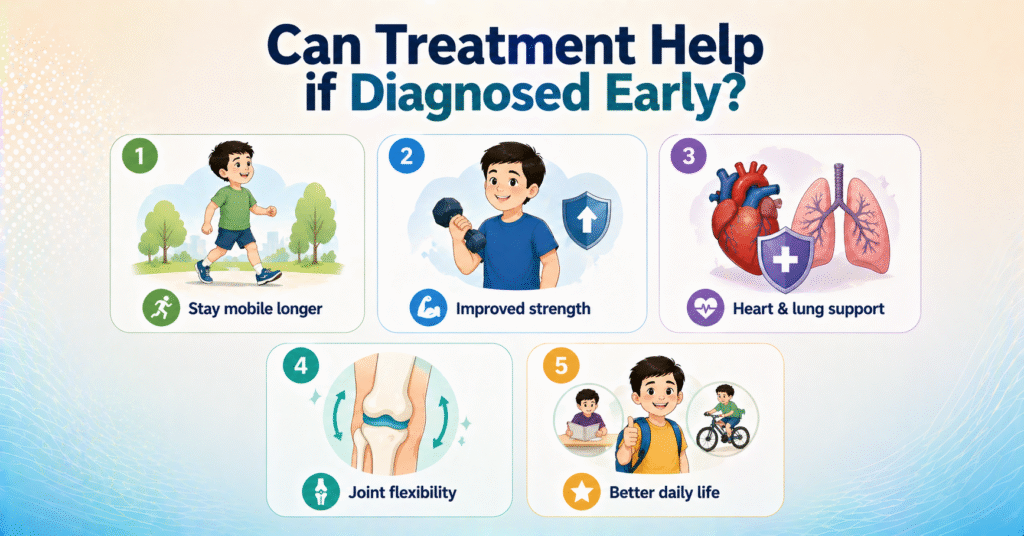
Catching Duchenne muscular dystrophy early lets doctors step in and really change how the disease unfolds.
Starting care right away brings a few big benefits:
- Children stay mobile longer, hanging onto their independence.
- With therapy and the right meds, muscle strength gets a boost.
- The heart and lungs benefit, too. Doctors spot them fast and treat them before they get out of hand.
- Physiotherapy keeps joints flexible, so stiffness doesn’t take over.
- Most importantly, early action gives kids a better shot at day-to-day life, more independence, and just feeling like themselves.
Families also get more options this way and also more time to plan, to find support, and to make smart decisions for their child’s future.
Final Takeaway

Sometimes, a small, harmless difference like enlarged calves in children may need your attention. As a parent, your gut feeling is the first sign that something’s off, and it counts for more than you realize.
If you’ve spotted patterns that stay long or worry you, don’t brush them off or wait too long. One quick check today can give you clarity and make sure you find the right support for your child. You don’t need all the answers, but the willingness to start looking is enough.
There’s no need to panic here. Stay alert. Stay observant. Take action when you need to.
Worried About Enlarged Calves or Frequent Falls?
If your child has large calves along with walking difficulty, repeated falls, or slow motor milestones, early specialist evaluation can make a real difference.
MedicoExperts helps families connect with specialists for:
- CK/Genetic Testing Guidance
- Pediatric Neurology Opinions
- Duchenne Treatment Planning
Frequently Asked Questions (FAQs):
Q1. Are enlarged calves normal in toddlers?
A. Sometimes they are. Some children have enlarged calf muscles because of their genes or body type. But if those enlarged calves come with weakness, frequent falls, or they’re not hitting their usual milestones, it’s important to check in with a doctor.
Q2. Do all children with enlarged calves have Duchenne muscular dystrophy?
A. No, definitely not. Plenty of children with larger calves are perfectly healthy. Still, Duchenne muscular dystrophy can cause enlarged calves, so if there are other symptoms, doctors want to rule it out.
Q3. What is pseudohypertrophy?
A. Pseudohypertrophy happens when a muscle looks large, but it’s not because there’s more muscle. Instead, there’s more fat and connective tissue inside. So the muscle looks strong on the outside, but it’s actually weaker.
Q4. Can large calves be a sign of muscular dystrophy?
A. Yes, in some cases, large or bulky calves can be an early sign of Duchenne Muscular Dystrophy. This happens due to pseudohypertrophy, where muscle tissue is replaced by fat and connective tissue, making the calves look bigger but weaker. However, not all children with large calves have muscular dystrophy—other signs like weakness, frequent falls, or delayed development are important to consider.
Q5. What test confirms Duchenne?
A. Doctors rely on genetic testing. It’s the main way to confirm a Duchenne diagnosis, as it detects mutations in the dystrophin gene.
Q6. When does Duchenne start?
A. Symptoms tend to show up between ages 2 and 5. Early signs can be pretty subtle, so people sometimes miss them at first.
Q7. What causes enlarged calves in boys?
A. Enlarged calves in boys are often due to normal factors like genetics, body type, or an athletic build. In some cases, they may be linked to conditions like Duchenne Muscular Dystrophy, especially if seen with weakness or delayed development.
References
Relevant Articles For You
Why DMD is Progressing Faster?
Not all children with DMD lose muscle strength at the same speed. Some stay active longer, while others see…..Read More
Gowers’ Sign in DMD
Gowers’ sign shows up in children with DMD as a peculiar way of getting up from the floor. Their hip and…..Read More
DMD Cognitive Challenges
Duchenne muscular dystrophy primarily draws attention for its impact on muscles, but this is only a partial…..Read More
DMD Child Heart Problems
Your heart is also made of muscle, and DMD damages the muscles of your body. Which means children with…..Read More
How Does DMD Affect Daily Life?
DMD impacts the movement, breathing, heart health, bone health, cognitive skills, and behaviour of the…..Read More
Recommendations To Understand Different Treatments
DMD Treatment in India
There are different types of treatment options available for DMD in India. Let’s check some of the…..Read More
Combination Therapy for MD
Muscular dystrophy affects every patient differently. So we don’t believe in single-track treatments. Our approach blends…..Read More
Medically Reviewed by MedicoExperts Editorial & Clinical Review Board on 29 April 2026
Medical Disclaimer: This content is for informational purposes only and is not intended as medical advice, diagnosis, or treatment. Always seek the advice of your physician or other qualified healthcare provider regarding any medical condition or dietary needs.