
Last updated on April 29th, 2026 at 05:03 pm
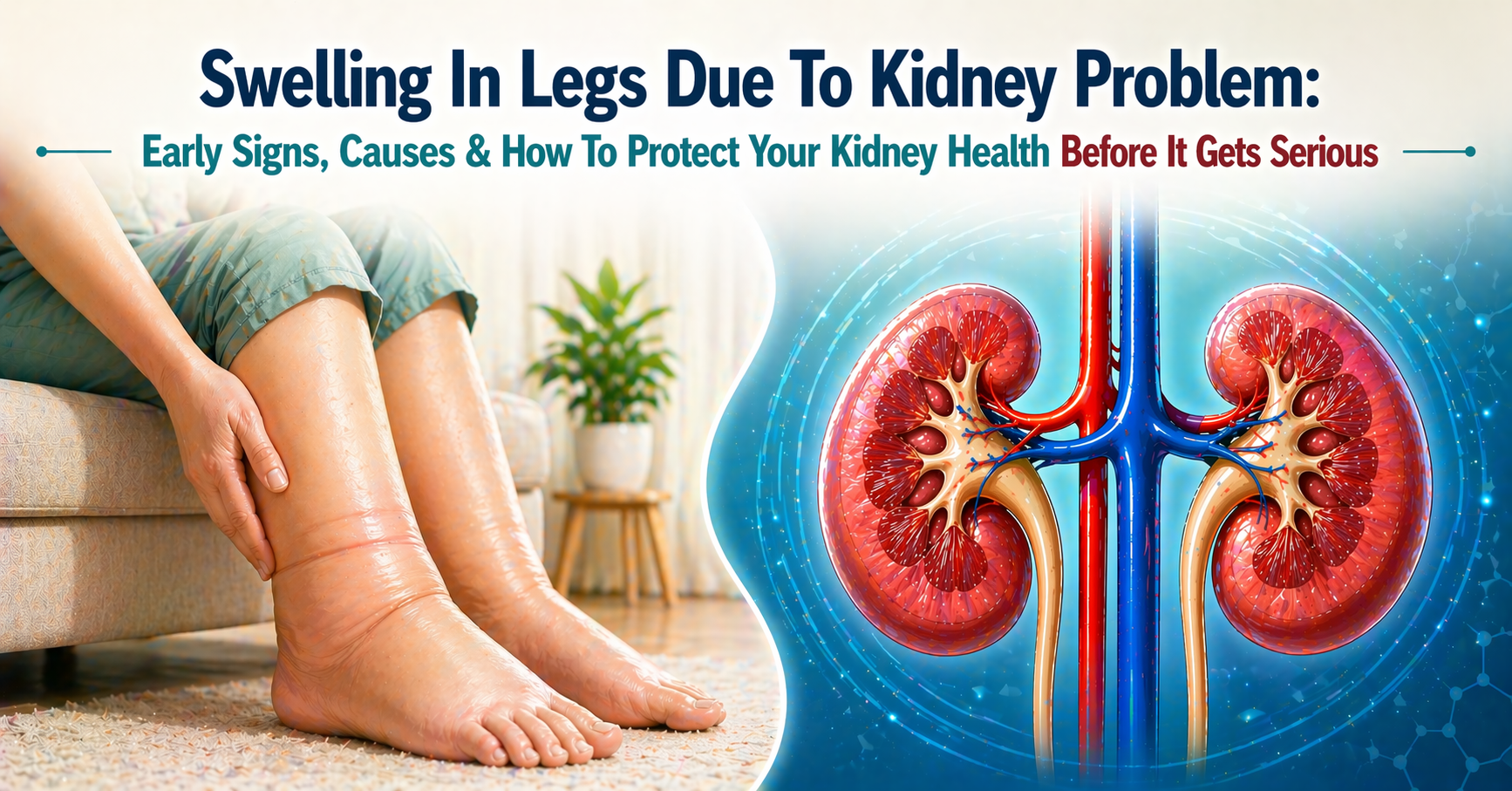
Swollen legs at the end of the day might seem normal, but sometimes there’s more to it. Many people blame it on being tired or standing too long, but in some cases, it’s an early sign of a health problem, like a kidney issue.
Kidney problems develop slowly and silently, showing only mild symptoms that are easy to dismiss. If your kidneys aren’t working, your body starts to hold onto extra fluid, which can show up as swelling in your legs. Spotting this link early helps prevent more serious future health issues.
Swelling in legs due to kidney problems is not uncommon, and in this blog, we will help you understand why it happens, along with the warning signs that shouldn’t be ignored, when to get checked by a doctor, and some practical steps for keeping your kidneys healthy before the situation gets worse.
Why Are My Legs Swelling Suddenly?
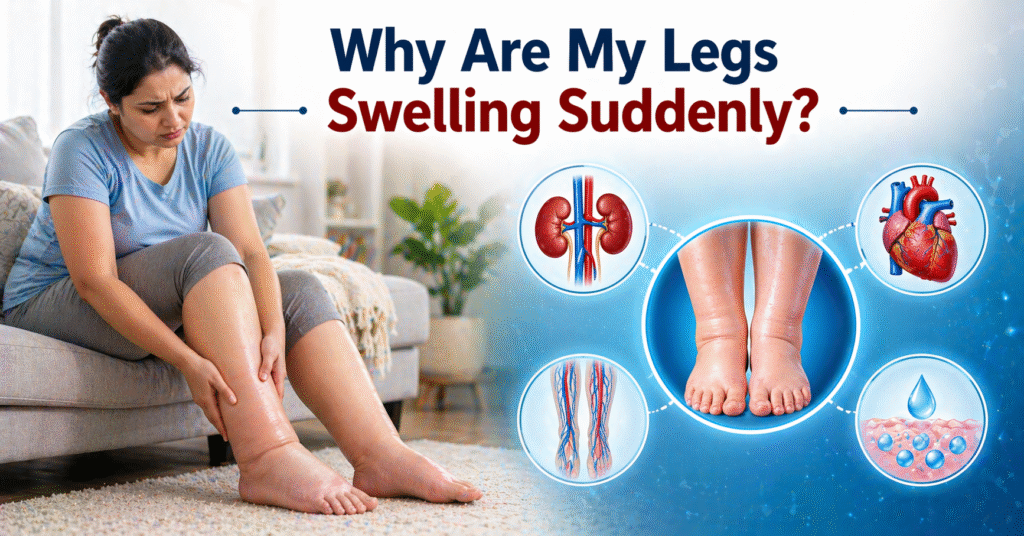
Swelling in your legs can be scary, especially when you don’t know what’s causing it. Sometimes, sure, your legs might puff up after standing or sitting for too long. But if the swelling feet show up out of nowhere or stick around, there could be something more serious happening underneath.
One frequent reason for leg swelling in kidney issues is fluid retention, or edema. Because of fluid retention, extra fluid accumulates in your body. Gravity tends to pull it down into your feet and lower legs, making them swell.
Why does this happen?
Sometimes there’s too much salt in your diet. You may haven’t been moving much, or you’re on certain medications that mess with your body’s ability to handle fluids.
But swollen legs aren’t always caused by salt or sitting for too long. The kidneys perform an essential function for your body. They filter out waste and excess fluid. If they’re not working right, that liquid builds up, showing first in your legs. If this kind of swelling doesn’t go away, gets worse, or comes along with feeling tired, changes in how you pee, or puffiness around your eyes, your kidneys could be to blame.
Heart problems, liver disease, poor circulation, or hormonal shifts can cause swelling, too. Sometimes it’s varicose veins or even an infection.
If your legs swell up suddenly, don’t go away in a few days, or you notice pain, trouble breathing, or anything else unusual, talk to a doctor soon. Learning about the reason means you’ll get the care you need before things get worse.
Worried about unexplained leg swelling?
Get your symptoms checked early and understand what your body is trying to tell you.
How Kidneys Cause Swelling in the Body
Swelling (doctors call it edema) shows up in kidney disease for clear reasons grounded in how the body manages fluids, salt, and proteins. Let’s break down what’s happening inside your body, based on what we know from medical research:
Fluid and Sodium Build-Up
Protein Leakage (Nephrotic Mechanism)
Reduced Oncotic Pressure (Fluid Balance Trouble)
Kidney-Driven Fluid Retention Cycle
Why the Legs Swell the Most
Swelling from kidney disease isn’t “water retention.” It’s a tangled problem involving salt handling, protein loss, and the body’s control over where fluid goes. If swelling won’t go away or keeps getting worse, take it seriously. It’s not something to brush off.
Swelling in Legs Due to Kidney Problem
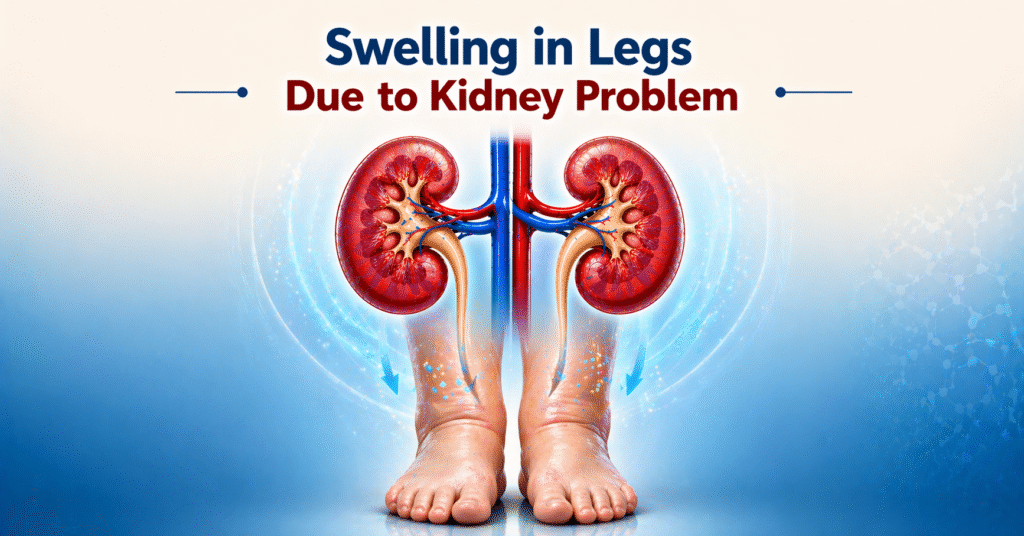
Swelling in your legs is one of the first signs that your kidneys aren’t working right. There are plenty of reasons your legs might swell up, but when the kidneys are involved, the swelling tends to show up in a certain way, and the warning flags are easy to spot if you know what to look for.
What Does This Kind of Swelling Look Like?
Usually, you’ll notice your feet, ankles, or lower legs starting to puff up. The skin might appear stretched, shiny, or tighter than normal. If you press a finger into the swollen area, you can leave a dent. Doctors call that “pitting edema.”
Normally, the swelling gets worse as the day goes on, and by evening, your shoes might feel uncomfortably tight, or your socks leave deep marks. This is classic swelling from a kidney problem, especially if it doesn’t go away.
When Swelling is a Warning Sign of Kidney Disease
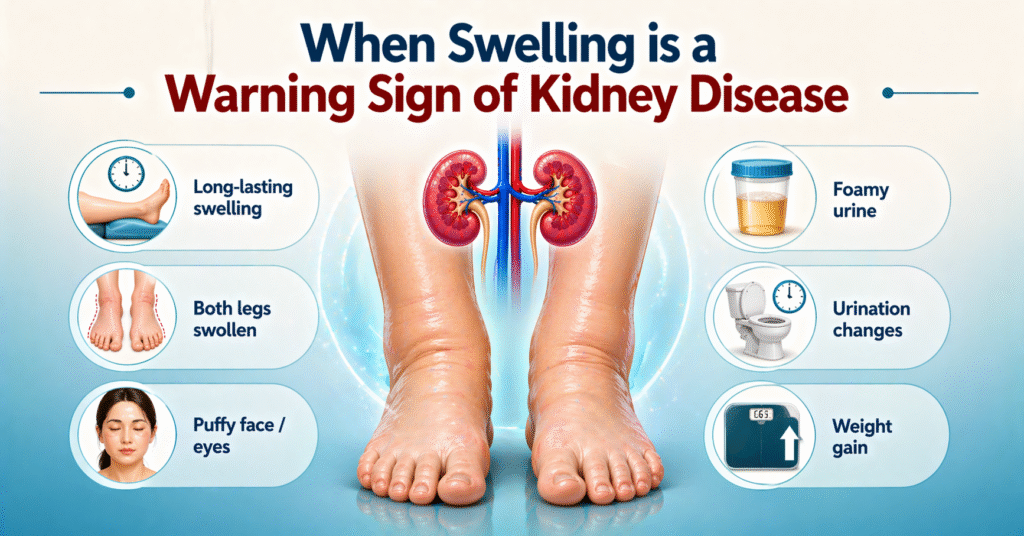
Swelling in your legs isn’t always something to worry about, but sometimes it signals kidney disease. The tricky part is figuring out when the swelling is more than a passing issue, when it hints at something deeper.
Watch for these red flags:
- Swelling that stays for a long time, even after you rest or prop your legs up
- Both legs, ankles, and feet are swelling in a symmetrical pattern
- Puffiness in your face or swelling around your eyes, especially first thing in the morning
- Urine that looks foamy or bubbly. This often means you’re losing protein
- Sudden changes in how often you urinate, for no obvious reason
- Unexplained weight gain from fluid buildup
When you see these signs, it usually points to kidney-related swelling, not something caused by a sedentary lifestyle or temporary water retention.
As kidney issues progress, other symptoms tend to appear:
- You feel tired all the time, no matter how much you rest
- You lose your appetite or feel nauseous
- It gets harder to focus or concentrate
- Muscle cramps crop up, especially at night
- Your skin becomes dry and itchy
These changes mean your body isn’t clearing out waste and excess fluid the way it should.
Some situations call for medical attention right away. If you have swelling and:
- Shortness of breath, which could signal fluid in your lungs
- Chest pain or pressure
- Swelling that comes on suddenly and is severe
- Barely any urine, or none at all
These symptoms point to serious kidney trouble and complications. Don’t wait.
Swelling is a warning sign when it won’t go away, comes out of nowhere, and shows up with other issues. If you recognize this pattern, don’t brush it off. Getting checked early can really make a difference in protecting your kidneys.
Not sure if your swelling is kidney-related?
Share your reports and get clarity from experts before it gets worse.
Edema in Kidney Disease: What’s Really Happening Inside?
Edema (swelling) in your legs, ankles, face, or around your eyes shows up a lot when your kidneys aren’t working well. So, what’s going on inside? It comes down to how healthy kidneys handle fluid and what falls apart when they get damaged, especially in chronic kidney disease.
Fluid Balance is Disrupted
Protein Loss Reduces Oncotic Pressure
Hormonal Systems Worsen Fluid Retention
Capillary Pressure Increases
Why Does Edema Appear in Specific Areas?
How to Reduce Swelling in Legs Due to Kidney Problems?
When your kidneys aren’t working well, swelling in your legs (edema) occurs because your body holds onto extra fluid and can’t handle salt the way it should. Sure, you’ll need to follow your doctor’s advice, but some small changes in your day-to-day routine can help manage the swelling.
Cut Down on Salt
Smart Hydration
Put Your Feet Up
Move (Even a Little)
Support Kidney Function Naturally
When You Should Not Ignore Swelling?
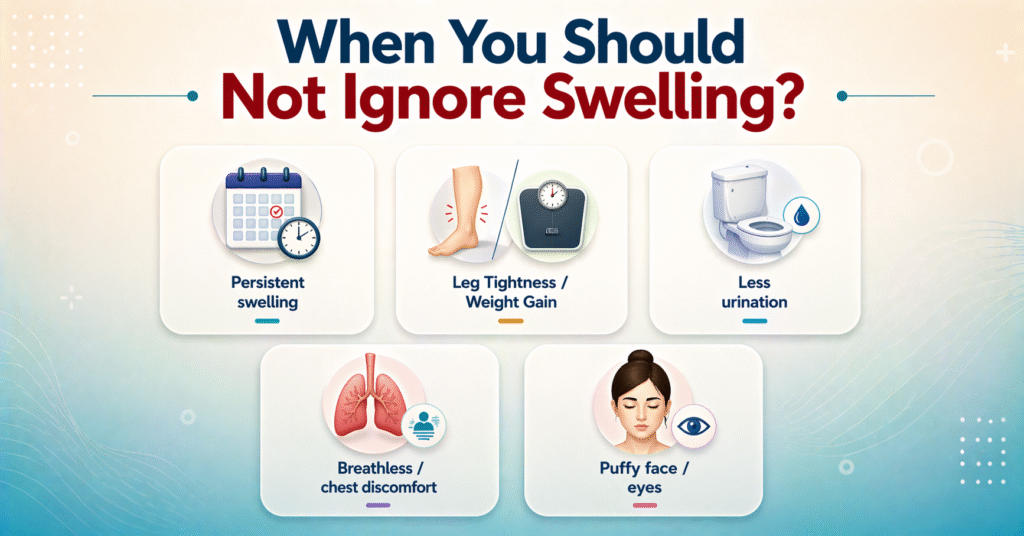
Sometimes swelling cannot be ignored, especially if you have chronic kidney disease. It’s one of the first signs your kidneys aren’t working well or that fluid is building up where it shouldn’t.
Here’s when you shouldn’t brush off swelling:
- It stays for a long time or keeps getting worse.
- You notice your legs or feet feel tighter, or you suddenly gain weight.
- You aren’t peeing as much as usual.
- You feel out of breath or get uncomfortable in your chest.
- Your face or eyes look puffier, especially in the morning.
If any of this sounds familiar, don’t wait. These are red flags that your kidneys might be struggling.
What should you do?
Get checked as soon as you can. Ask for basic tests like creatinine, urine, and eGFR. Follow your doctor’s advice. Catching things early makes a difference and helps keep bigger problems at bay.
Conclusion

Your body has its ways of telling you something’s off: swelling that won’t go away, weird changes in your urine, feeling wiped out, or gaining weight all of a sudden. Don’t brush these off.
But there’s an upside, too. Acting early helps. Cutting back on salt, keeping active, and sticking to your treatment plan can ease symptoms and protect your kidneys in the long run. The sooner you get the right diagnosis, the better your chances of slowing things down and dodging the complications.
Noticing these issues already?
Don’t wait it out. A tailored approach, like the combination care models at Medicoexperts, gives you more control over swelling and helps you feel better and safer.
Your next move is the most important thing. Don’t delay. Take action now.
Still unsure what your swelling means?
Talk to a specialist and get a personalized plan to manage your kidney health safely.
Frequently Asked Questions (FAQs):
Q1. Can kidney problems cause swollen feet?
A. Yes, kidney problems can lead to swollen feet. When your kidneys stop filtering well, extra fluid and sodium pile up in your body. This buildup tends to show up as swelling in the feet, ankles, and lower legs. With chronic kidney disease, this kind of swelling doesn’t usually let up and happens on both sides.
Q2. Is swelling in the feet a sign of kidney failure?
A. Swollen feet can signal kidney failure, especially when it stays around, gets worse, or comes with other symptoms like less urine, feeling tired all the time, or puffiness around your eyes. It’s true that not every case of swelling points to kidney failure, but if the swelling won’t go away, you need to get it checked.
Q3. Why do kidneys cause swelling in the body?
A. People want to know why kidney issues cause swelling. It all comes down to the kidneys’ job of handling fluid and sodium. Damaged kidneys can’t get rid of excess fluid, so it collects. Also, if you’re losing protein in your urine, your body struggles to keep fluid inside your blood vessels, and swelling (edema) follows.
Q4. What causes fluid retention in kidney problems?
A. Fluid retention happens when your kidneys can’t remove enough water and sodium. This keeps more fluid in your blood, which eventually seeps into surrounding tissues and causes swelling, especially in your legs and feet.
Q5. How to reduce swelling in legs naturally?
A. If you want to reduce swelling in your legs naturally, try a few things: cut down your salt intake, stay properly hydrated (ask your doctor, since kidney patients need to be careful), put your feet up now and then, and try gentle exercise. None of this replaces real medical care if you have kidney disease. It should go hand-in-hand with your treatment.
Q6. Are home remedies for edema in the legs effective?
A. A few home remedies, like cutting salt and improving circulation, might ease mild swelling. But if kidney disease is behind the swelling, you need a doctor. Home remedies aren’t enough on their own.
Q7. Can combination therapy delay the need for dialysis?
A. Sometimes, a carefully managed, tailored treatment approach can slow kidney disease. Combination therapy, combining allopathy with other supportive treatments, aims to control symptoms, help you feel better, and possibly hold off serious complications. Everyone responds differently, so staying under close medical supervision is key.
Q8. Will I have to stop my current medicines if I start combination therapy?
A. No. Standard medical treatments continue as your main therapy. Doctors add in any new therapies after making sure they’re safe and won’t clash with your current medicines.
Q9. How long does it take to see improvement in swelling?
A. Some people notice less swelling within a few weeks if they manage fluids and diet well and stick to their treatment plan. Bigger changes in kidney function can take longer, though, and need steady monitoring.
Q10. Is combination therapy safe for kidney disease patients?
A. Combination therapy is safe as long as it’s guided by a team of specialists. Medicoexperts create treatment plans that are result-driven, considering your kidney function and overall health to keep things both safe and effective.
Q11. Is swelling in the feet a sign of kidney failure?
A. Yes, swelling in the feet (edema) can be a sign of kidney failure, as the kidneys may not remove excess fluid properly.
But it’s not specific. Other causes include heart failure, liver disease, or prolonged standing.
If the swelling is persistent or comes with symptoms like fatigue or reduced urine, seek medical advice.
References
Relevant Articles For You
Exercise For Kidney Patients
Exercise for kidney patients may sound impossible or confusing. It may sound intimidating if you are not sure about…..Read More
Best Food For Kidney Disease
Diet plays a critical role in managing kidney disease and can help avoid the need for dialysis or kidney…..Read More
Why CKD is Getting Worse?
Is your CKD getting worse despite treatment? Many people with stage 3 or stage 4 chronic kidney disease…..Read More
Habits That Damage Kidneys
Some everyday habits you have may slowly damage your kidneys. You may not realize it until it’s too late. These small…..Read More
What is Chronic Kidney Disease?
In chronic kidney disease (CKD), your kidneys lose their function gradually. If the CKD reaches advanced…..Read More
Early Signs of CKD
CKD develops silently and slowly, and you may mistake those symptoms for tiredness or aging. So here are the…..Read More
Recommendations To Understand Different Treatments
Combination Therapy For Chronic Kidney Disease
Chronic Kidney Disease affects every patient differently. Our personalized care model blends advanced medical science with holistic practices to support…..Read More
Medically Reviewed by MedicoExperts Editorial & Clinical Review Board on 24 April 2026
Medical Disclaimer: This content is for informational purposes only and is not intended as medical advice, diagnosis, or treatment. Always seek the advice of your physician or other qualified healthcare provider regarding any medical condition or dietary needs.