
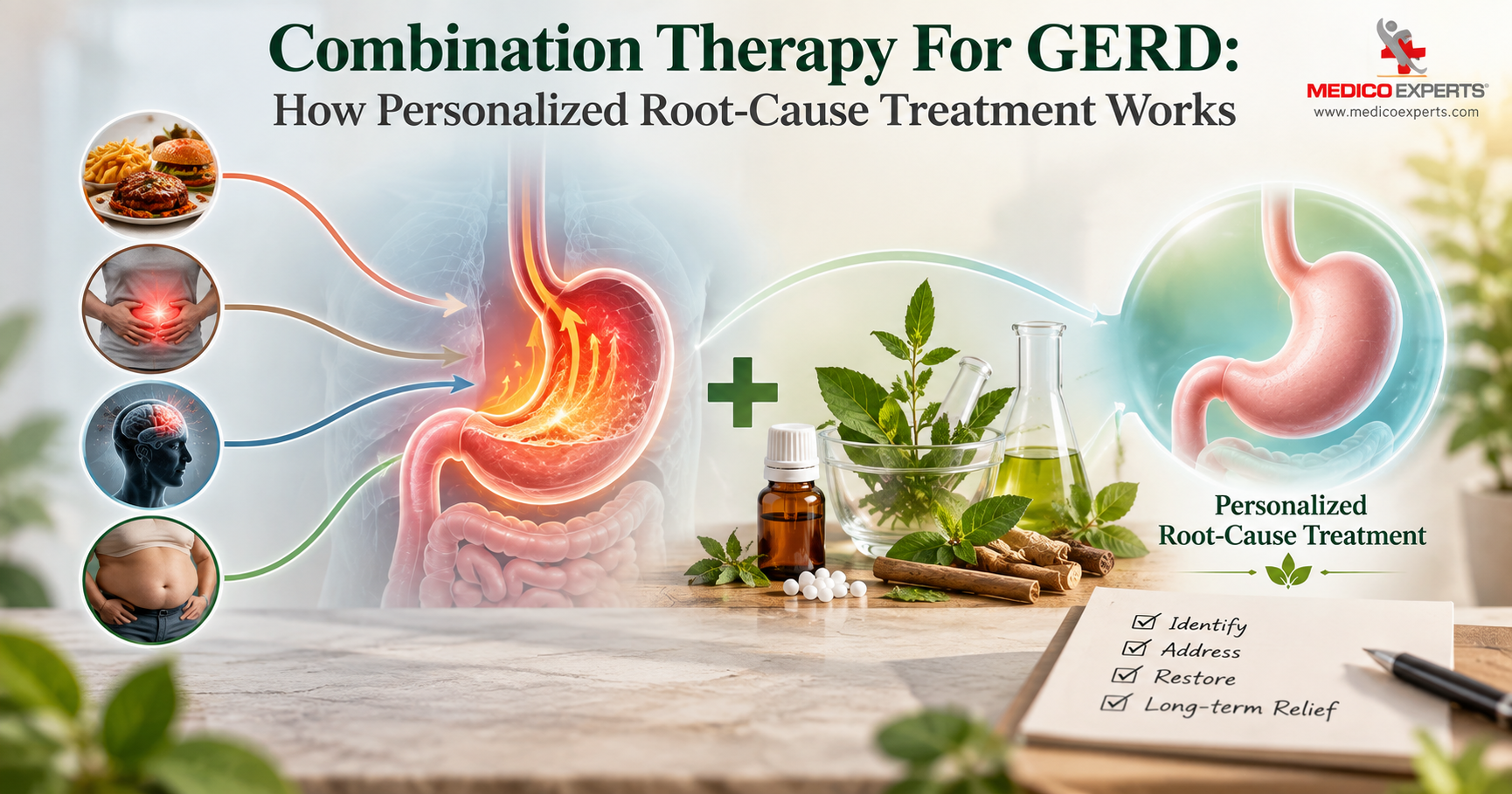
Struggling with heartburn even after taking your GERD or gastroesophageal reflux disease medicine?
Combination therapy for GERD is an option that you can consider when you see symptoms continuing even after properly undergoing treatment.
That doesn’t mean taking more medicine will solve your issues.
For that, you will need the right combination of treatment and therapy, which depends on why symptoms persist, whether reflux has been objectively confirmed, and whether symptoms occur mainly after meals, at night, or with regurgitation.
Right now, gastroenterology guidance recommends personalizing additional treatment to the patient rather than routinely combining medications.
In this guide, we are going to help you understand what combination therapy involves, when your doctor may add another treatment, which approach is going to help for different GERD patterns, and when continuous symptoms need further testing.
The goal you should have is better symptom control with a personalized treatment plan that focuses on more than just medication.
Here’s a More Direct Answer

Using combination therapy for GERD means bringing together two or more complementary treatment approaches when needed. Here, the intent is to control continuous reflux symptoms. Also, it is personalized and doctor-supervised, not a routine strategy for everyone.
It is created based on your symptoms and diagnosis, and treatment may include reflux suppression with the help of alginate, lifestyle changes, or other targeted therapies. If the symptoms continue after therapy, you may need to undergo further evaluation instead of simply adding medicines.
Our guide on GERD will help you learn about its symptoms, causes, and treatment options. Have a read: GERD: SYMPTOMS, CAUSES & TREATMENT
Think you might have GERD? Find out whether your symptoms could be related to acid reflux with our 2-minute self-assessment.
Why Most GERD Treatments Don’t Deliver Permanent Results?
If you are taking medicine for GERD but still find yourself reaching for an antacid after a heavy meal, waking up with heartburn in the middle of the night, or experiencing the same symptoms whenever you stop treatment, it is understandable to wonder why your medicines are not working or why the symptoms keep coming back.
You cannot simply define GERD as a condition related to “too much stomach acid.” Acid suppression can reduce the acidity of the reflux and allow the esophagus to heal.
But reflux itself can have many contributing factors, like weakness or improper functioning of the muscle that keeps stomach contents from flowing back into the food pipe, hiatal hernia, irregular esophageal clearance, and increased sensitivity to reflux.
What Antacids, H2 Blockers, and PPIs Actually Do?
Why Symptoms Can Return After Stopping PPIs?
What About Long-Term PPI Use?
Why Surgery Isn’t the Answer for Everyone?
Where Does a Combination Therapy Approach for GERD Fit?
Why Single-System Natural Approaches Fall Short?
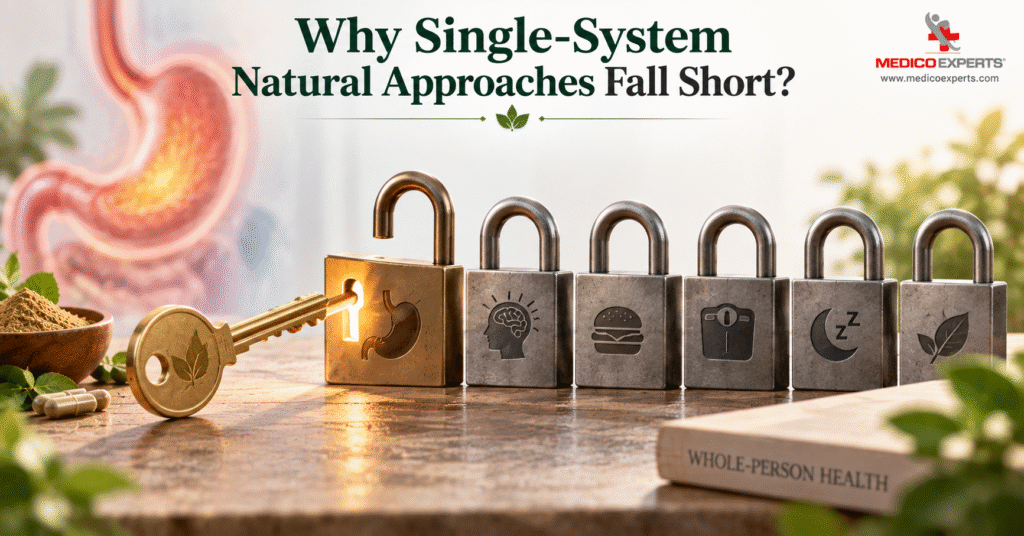
With the persistence of symptoms in GERD, it becomes natural for people to venture outside the realm of orthodox medicines and explore alternatives like Ayurveda or homeopathy.
These two systems certainly have their place within the wider discourse surrounding personalized medicine, but one must be realistic as regards the scientific literature available on these. Neither of these can be presented as having a proven track record for fixing everything that can go wrong with GERD.
Ayurveda: A Broader Approach, but Not a Complete GERD Solution
Ayurvedic care may include changes in diet, lifestyle practices, herbal preparations, and other personalized measures. From an Ayurvedic perspective, GERD-like symptoms may be related to an imbalance of pitta, and the treatment aims to restore balance and support digestive health.
But claims that Ayurveda alone can heal the gut lining or correct the underlying cause of GERD have not been established to the same standard as proven GERD treatments. Some complementary approaches may help with the symptoms, but Ayurvedic therapies that help with GERD have limited evidence. The evidence also varies between the treatments.
Homeopathy: Individualized Treatment With Important Evidence Limitations
The process of homeopathy is personalized in that medications are chosen based on the symptom profile and general constitution of the patient. Such an individual approach may attract those looking for a treatment specifically suited to them.
On the other hand, there is no strong, disease-specific evidence that homeopathic medications are effective in the treatment of the physiological processes involved in GERD and the repair of oesophageal lesions. The systematic literature reviews concluded that the available evidence regarding homeopathy was not conclusive enough.
The point is not to deny either of the approaches but to know their limitations and refrain from assuming that one method alone is able to deal with all the aspects of the problem.
What Each Approach Addresses, and What It May Not?
| Approach | What It Addresses | What It Leaves Unaddressed | Lasting Relief? |
|---|---|---|---|
| PPIs | Reduce stomach acid and help heal acid-related oesophageal damage | Do not necessarily prevent reflux itself or correct structural problems | Effective for many patients when appropriately prescribed |
| Antacids | Neutralise existing stomach acid for short-term relief | Do not address the underlying cause of recurrent reflux | Useful for occasional or breakthrough symptoms |
| Surgery | Can mechanically reduce reflux in appropriately selected patients | Does not eliminate every possible cause of symptoms and carries procedural risks | Can provide durable control in suitable patients |
| Lifestyle Changes Alone | Can reduce triggers and reflux burden in some people | May not adequately control established or complicated GERD | Important part of management, but not sufficient for everyone with GERD |
| Ayurveda Alone | May provide personalised dietary, lifestyle and traditional supportive care | Evidence is insufficient to establish that it corrects all GERD mechanisms or heals oesophageal damage | May be considered complementary, with appropriate medical oversight |
| Homeopathy Alone | Provides an individualised treatment framework | No robust evidence that it heals GERD-related oesophageal injury or corrects reflux physiology | Should not replace proven GERD evaluation or treatment |
| Combination Therapy | Can combine appropriate medical treatment, lifestyle measures and carefully selected complementary care | Structural or complicated GERD may still require specialist evaluation or surgery | Individualised according to the patient’s diagnosis and response |
What needs to be highlighted here is the fact that the combination approach should not necessarily imply a combination of medications or suggest that the use of both alternative systems would be a cure for GERD.
The truly integrated approach implies the correct diagnosis of the problem, along with the identification of the causes of the problem and the use of medication that has been proven to be effective.
How Does Combination Therapy Treat GERD at the Root?
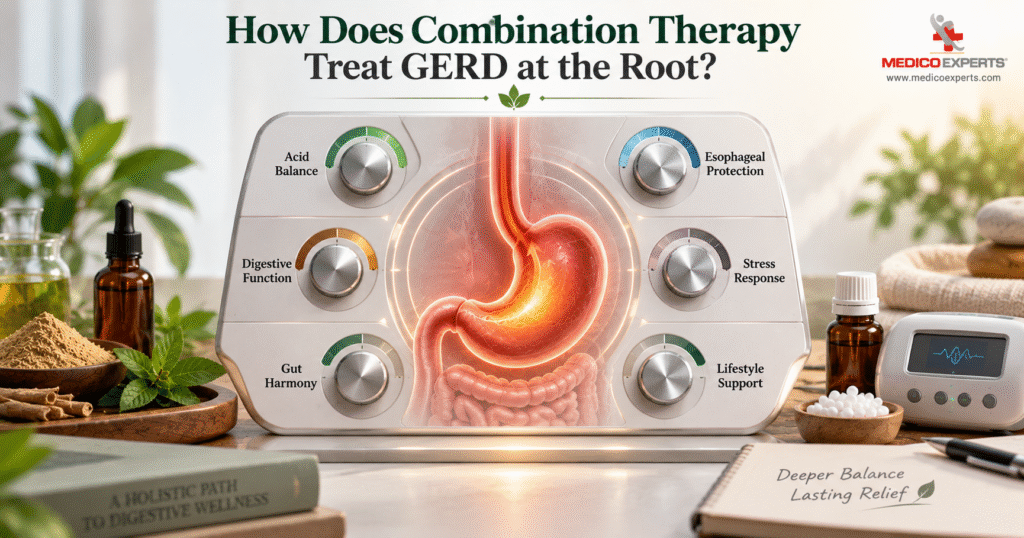
Combination Therapy for GERD is a more personalized approach to treatment, involving many elements combined rather than just multiple medications being taken at the same time.
It means looking at everything together: symptoms of the reflux, dietary habits, stress, reaction to the medications, and testing in cases where necessary.
The goal is to find out what causes the symptoms and address it through a proper combination of treatment methods.
Understanding the Unique Patterns in GERD
The unique experience of each patient with GERD means that one patient will have predominantly heartburn after meals, one will have regurgitation at night, and yet another patient might have symptoms even though acid-blocking treatment has been done.
Thus, the personalized assessment process would involve looking into the individual’s Prakriti and Vikriti in accordance with the Ayurvedic system, along with the level of symptom manifestation, food triggers, mealtime patterns, sleeping pattern, stress level, bowel and digestive functions, past medications, and response to treatment. However, these traditional methods of assessment must be considered as complementary to medical diagnosis but not as replacements.
In cases where there are persisting symptoms, gastroenterological protocols of treatment also call for a personalized approach based on circumstances. This includes endoscopy or ambulatory reflux testing to ascertain whether persistent acid or non-acid reflux is causing the symptoms.
Building One Treatment Plan Around the Patient
Then an integrative approach is applied in order to bring the related aspects together rather than treat each system separately.
Medical therapy may be used where acid suppression or some other evidence-based therapy is needed. Changes in diet and lifestyle may aim at particular triggers, timings of meals, body weight issues, and other factors that affect reflux.
Several complementary methods can be added depending on the preferences and clinical indications. But one should be aware of the evidence available: there is currently no sufficient high-quality evidence to claim that Ayurveda or homeopathy may independently change the physiological processes in GERD, repair esophageal damage, or cure the disease. Thus, complementary therapies should not substitute for evidence-based diagnosis and therapy.
This point becomes especially critical in the case of persistent symptoms, as ACG recommends optimizing PPI therapy before starting any other medication to find out the reasons for persistent symptoms.
Designed for Your Body, Not a Standard Formula
This approach has an additional practical benefit: personalization. There is no single combination prescribed to all patients, but rather an evolving one depending on their symptoms and response to them.
For instance, those patients who are suffering from symptoms that are associated with eating late at night may need another treatment option compared to those patients whose major symptom is regurgitation or continuing symptoms despite sufficient suppression of acid production.
In MedicoExperts, this approach means that the goal of the treatment should be to understand the root cause of the symptoms that should be treated. It should be emphasized that the promise of being symptom-free within three to four months is neither realistic nor safe. Thus, the process of treatment should be assessed over time based on the response to it.
There is no scientific proof that such promises are true for everybody in the case of GERD. Some patients may have good long-term control of their symptoms, whereas others need constant maintenance therapy or even the intervention of specialists.
That’s why the safest combination of therapy consists of an individual approach, evidence-based GERD treatment, and appropriate complementary treatment.
What Happens During Treatment? Step-by-Step Process
Beginning therapy may seem overwhelming, particularly if you have concerns regarding recurrent GERD symptoms or the possibility of drug dependency.
The implementation of a clear and personalized protocol will facilitate the process for you. Although there is some variability in this regard, treatment usually proceeds through four phases.
Stage 1: Weeks 1 & 2 – Evaluation & Protocol Development
Stage 2: Weeks 3 & 4 – First Symptom Relief
Stage 3: Weeks 6 – 12 – Progressive Healing + Medical Review
Stage 4: Months 3 – 4 – Protocol Completion + Long-Term Management
Ready to take the first step toward better digestive health?
Book a free 15-minute consultation to discuss your symptoms, understand your treatment options, and find out whether a personalized approach is right for you.
Mr. Siddharth’s Story: From 4 Years of PPIs to Lasting Relief

Mr. Siddharth is a 41-year-old CEO from Mumbai who has been consuming pantoprazole daily for quite some time. Pantoprazole has helped him manage the burning and reflux for about four years; however, each time he tried to discontinue its use, he experienced a relapse of these issues. He tried three times to discontinue his pantoprazole, but in vain.
In the end, his wife stumbled upon MedicoExperts, and he decided to try combination therapy tailored specifically to him because of his GERD. Instead of solely dealing with acid suppression, his protocol took into account his symptoms, digestion, and future goals.
He did not have a breakthrough; his improvement was gradual.
Week 3: Siddharth experienced his first whole night of sleep without the characteristic burning pain.
Week 6: He could eat a whole meal at the restaurant without the pain he expected before.
Week 10: As his symptoms became better controlled, his consumption of pantoprazole was down to about twice a week.
Month 4: He had ceased consuming any pantoprazole and was enjoying a good feeling of being free from the problem.
The most important thing for Siddharth was that his problems were more than just having fewer pills to take. It was the confidence in eating and sleeping without fear of getting symptoms back.
“After years of depending on pantoprazole, being able to eat, sleep, and get through my day without constantly thinking about reflux felt like getting my normal life back.”
Experiences may differ among patients. Medications like pantoprazole prescribed by a doctor should never be stopped or decreased on their own initiative.
Who is Combination Therapy for?
Combination therapy can also be used by people who have continuous GERD symptoms and prefer to deal with the problem more holistically than just managing their symptoms. But combination therapy is not for everyone, and knowing when to use it is an essential aspect of appropriate medical practice.
Who Might Be a Good Fit for This?
Who are the People Not Suitable for Combination Therapy?
This is not an attempt to say that the above works for everyone. The important thing is proper assessment, and prescription drugs must never be stopped or cut back on without proper medical advice.
Breaking Free from PPI Dependency
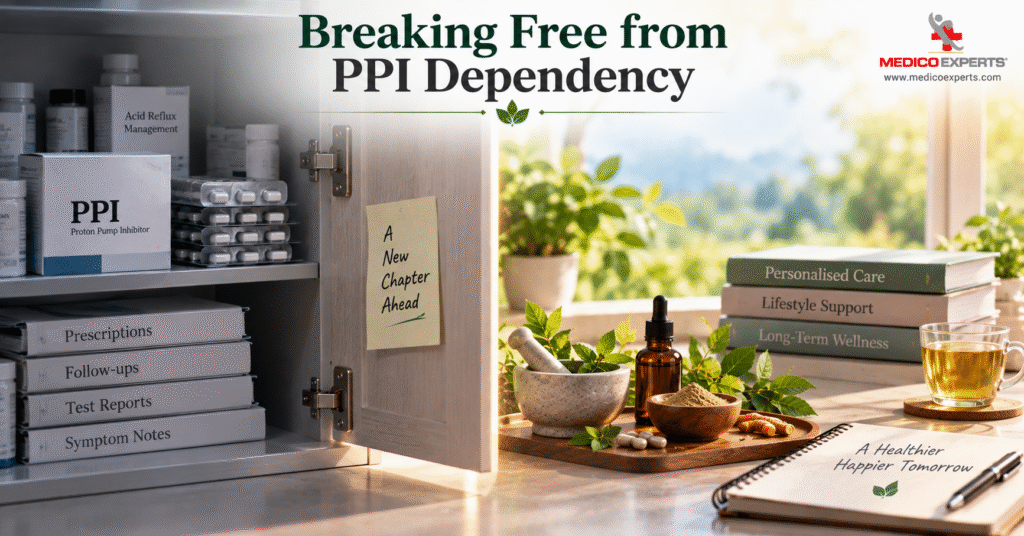
Is it possible to discontinue these drugs without symptom recurrence?
It is important to remember that abrupt discontinuation is never a good choice. Indeed, some patients who have used PPIs for long periods of time experience the rebound acid hypersecretion effect, characterized by the return of symptoms such as acid reflux after withdrawal.
Reimer et al. (2009) showed that otherwise healthy patients could experience acid-related symptoms after discontinuing a PPI drug after several weeks of its use.
Therefore, the tapering or lowering of PPI doses should always be carried out gradually under the supervision of a specialist. Combination Therapy helps to implement an individualized approach to the identification and management of GERD-associated factors during PPI reduction.
Every person will have their own schedule for tapering because it will depend on the dosage of the drug you take, the period of PPI use, your symptoms and medical history, and the way your body reacts to the process of withdrawal.
Under no circumstances do you have to discontinue pantoprazole or any other PPI prescribed to you without consulting your physician.
For more details about the use of pantoprazole, consult our Pantoprazole Side Effects guide.
What Does Combination Therapy Cost?
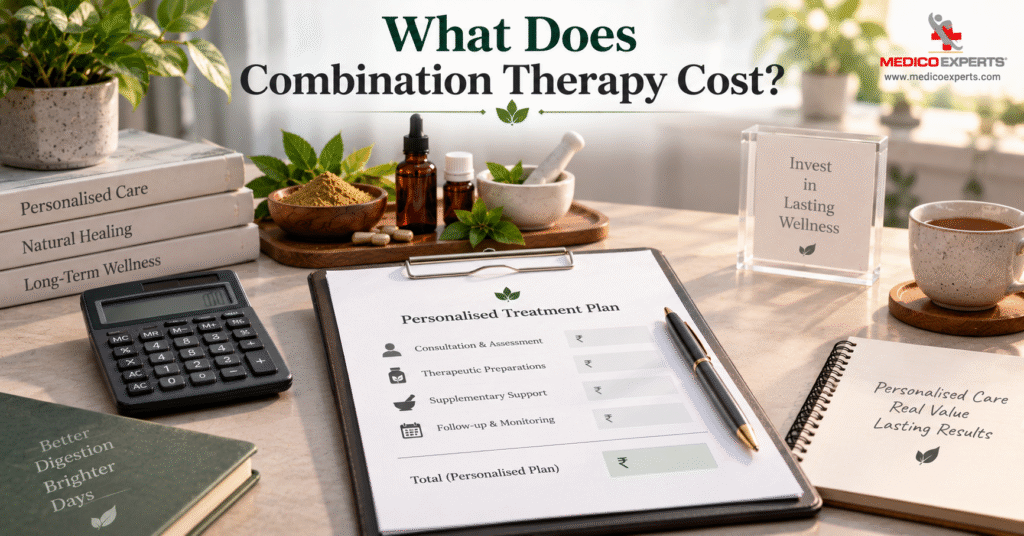
If you are planning your treatment for GERD, it is helpful to look at it from a bigger perspective instead of the cost of medications per pill.
If one takes a medicine like pantoprazole daily, one will spend about ₹ 30 – ₹ 50 per day on the drug. In five years, the figure becomes ₹55,000-₹90,000 without counting consultations, investigations, or other medications.
Combination Therapy has a different concept altogether. It is not offered as a medication cost that one will incur forever but as a defined-period, customized program for the individual, usually for some months ahead to manage their problem effectively.
But combination therapy cannot be given at any fixed rate because it depends upon how much each individual patient requires after the assessment, their symptoms, history, and personalized program to be followed. It wouldn’t make sense to give any particular cost figure.
In fact, the consultation can help you understand if this is the right treatment for your case and what the customized protocol and its cost would be. This is not just a comparison of prices but more about choosing the right form of treatment.
What Makes MedicoExperts Different?

MedicoExperts adopts a comprehensive, multidisciplinary approach to healthcare, facilitated by its concept of the Global Virtual Hospital, which links patients to specialists from different medical spheres. The network covers patients from 25+ countries and has 2,500+ doctors in its database, with NABH accreditation reinforcing its structured approach to healthcare.
Regarding GERD, what is unique about the approach is that the healthcare professionals collaborate to come up with the treatment recommendations. In contrast to other practices where patients are recommended to follow separate advice concerning Ayurveda and Homeopathy, the proposed solution is grounded in a combination therapy protocol. Specialists analyze the case and the patient’s needs collectively to be able to develop a unified recommendation.
This is especially helpful if you are experiencing recurring symptoms despite receiving conventional treatment or have been facing difficulties reducing the amount of long-term PPI intake. The focus is on personalization and monitoring rather than the promise of a complete remedy.
MedicoExperts’ GERD program is headed by Dr. Rahul Sharma, the clinician whose qualifications, professional experience, and area of expertise are an integral part of the team.
Find out more about Dr. Rahul Sharma’s credentials.
When to See a Doctor for GERD?
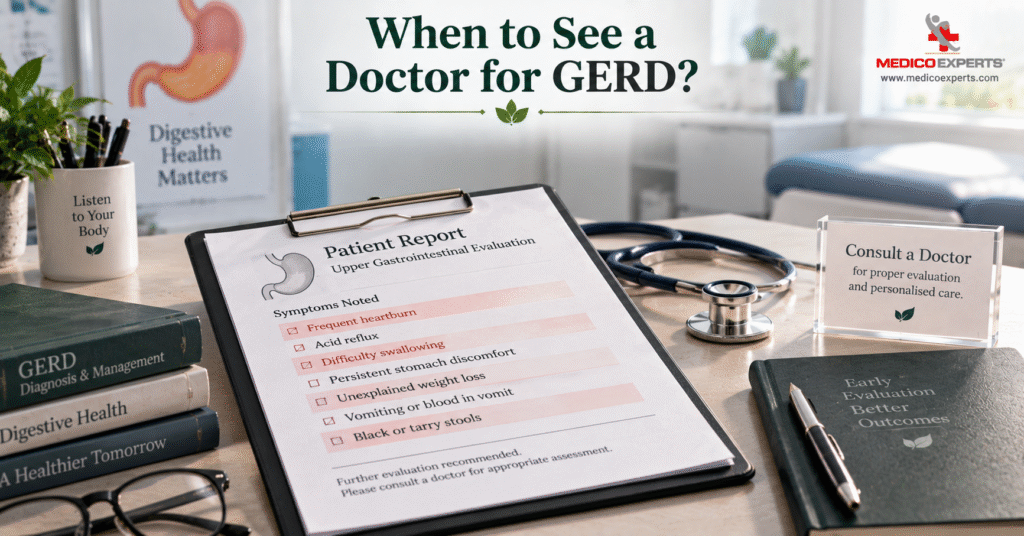
GERD can be controlled effectively in most cases, but when there are worsening symptoms, it is better to be examined by a physician. You should visit the doctor in case of the following symptoms:
- It is hard for you to swallow, or you have trouble swallowing with discomfort.
- You suffer from inexplicable weight loss, vomiting, or reduced appetite.
- You notice blood in your vomit or dark-coloured faeces, which may signify internal bleeding.
- You experience chronic chest pain, especially if it is severe and combined with breathing difficulties, sweating, vertigo, or chest pain spreading to the arm or jaw.
- You have frequent, severe, or recurring GERD symptoms even under treatment.
- Your symptoms recur on the reduction or discontinuation of prescribed drugs reducing acid.
- You have new symptoms appearing after the age of 55, or you have other medical disorders that may raise the risk of complications.
The symptoms mentioned are not always a sign of serious disease, but you still need a proper medical examination. It is important not to change the regimen of drugs prescribed by your doctor without his consent.
Final Takeaways

- GERD is a chronic disorder, meaning that its management might go beyond the temporary relief of symptoms, especially if they continue coming back.
- Combination Therapy is tailored and time-limited therapy that takes into account the individual’s symptoms, digestive system, and previous treatment methods.
- Long-term use of PPIs shouldn’t be ceased abruptly. PPI dose reduction should always be planned and medically monitored to address potential side effects.
- Every individual might not be a good candidate for combination therapy. Assessment is crucial, especially in case of the presence of alarming symptoms or disorders that need traditional treatment.
If you’ve been having trouble with constant GERD or being too dependent on medications, your next step would be to find out what would suit you.
Ready to Take Control of Your GERD?
Find out whether MedicoExperts’ personalized combination therapy may be suitable for your symptoms and treatment history.
Frequently Asked Questions (FAQs):
Q1. Is there a permanent cure for GERD with combined ayurveda and homeopathy?
A. There is not enough high-quality scientific evidence available at this time to determine that the combination of Ayurveda and homeopathy can permanently cure GERD. Ayurvedic approaches may help manage digestive symptoms in some cases. Evidence for the use of homeopathy for GERD is limited.
The treatment of GERD depends on the cause and severity and may involve lifestyle measures, medications, or, when appropriate, surgery. Talk to your health care provider about treatment.
Q2. How does combination therapy differ from PPIs alone?
A. PPIs decrease the production of stomach acid, which is known to effectively treat GERD. However, PPIs mostly take care of the acid-related issues without considering all the other factors that may lead to the development of the disease.
Although combination therapy might include complementary treatments along with conventional medical treatment, this treatment cannot be considered an effective alternative to PPIs. Discontinuing the use of PPIs abruptly leads to rebound acid-related issues.
Q3. Are there any side effects of combination therapy?
A. This depends on what type of Ayurvedic or homeopathic products are being used, along with their active components and the amount of the dose.
“Natural” doesn’t always mean “risk-free.” Some herbs can interfere with prescription medications and may also have unwanted effects, but whether there are adverse effects due to homeopathic remedies that are highly diluted is not certain.
Q4. Is combination therapy suitable for all patients with GERD?
A. Not necessarily. It depends on a person’s diagnosis, symptoms, and requirements for treatment. Patients who have difficulty swallowing, bleeding in their GI tract, inexplicable weight loss, frequent vomiting, and intense chest pain should undergo a proper medical assessment.
Those who suffer from a large hiatal hernia or any other condition that requires surgical or conventional therapy would not be good candidates for combination therapy either.
Q5. What is a natural root cause treatment for acid reflux?
A. Natural root cause treatment for acid reflux focuses on identifying and managing factors that may contribute to reflux, such as diet, meal timing, excess weight, stress, digestive habits, and certain medications.
Lifestyle changes can help reduce symptoms, while some complementary approaches may be considered under professional supervision. However, no natural treatment has been proven to permanently eliminate acid reflux in everyone. Persistent or severe symptoms should be medically evaluated.
Q6. What is the best treatment for GERD in India?
A. The best treatment for GERD in India depends on the cause and severity but commonly includes lifestyle changes and proven medicines such as proton pump inhibitors (PPIs), with procedures or surgery considered for selected patients.
Persistent or severe symptoms should be evaluated by a qualified gastroenterologist rather than treated through self-medication or unproven remedies.
Q7. How long does the combination therapy protocol take?
A. Most patients complete the protocol in 3 to 4 months. Initial symptom improvement typically begins within 3 to 6 weeks. PPI reduction usually starts around week 6 to 10 and progresses gradually. Individual timelines depend on how long you have had GERD, symptom severity, and overall health.
References
Relevant Articles For You
Is Your Acidity Actually GERD? Take the 2-Minute GERD Symptoms Assessment Quiz
Most people who live with recurring acidity assume it is normal. You pop an antacid after meals, keep a strip of Pantocid in your desk drawer, and…..Read More
Recommendations To Understand Different Treatments
GERD (Gastroesophageal Reflux Disease): Symptoms, Causes & Treatment
Gastroesophageal reflux disease (GERD) is a chronic digestive condition where stomach acid repeatedly flows back into your esophagus, causing…..Read More
Medically Reviewed by MedicoExperts Editorial & Clinical Review Board on 3 September 2026
Medical Disclaimer: This content is for informational purposes only and is not intended as medical advice, diagnosis, or treatment. Always seek the advice of your physician or other qualified healthcare provider regarding any medical condition or dietary needs.