
Last updated on July 9th, 2026 at 05:04 pm
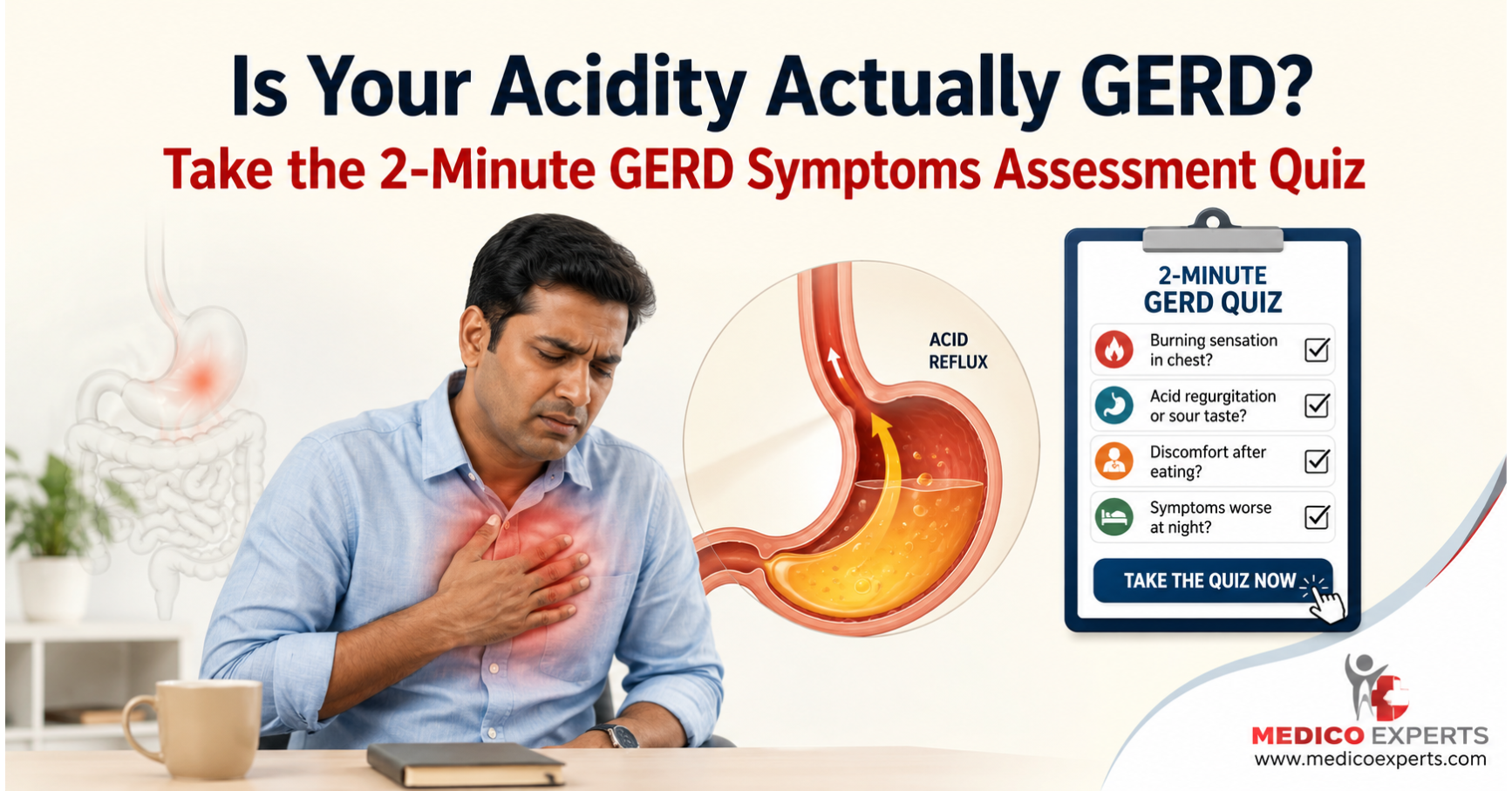
Most people who live with recurring acidity assume it is normal. You pop an antacid after meals, keep a strip of Pantocid in your desk drawer, and carry on. But if your acidity keeps coming back week after week despite medication, your GERD symptoms may point to more than simple acidity. It could be gastroesophageal reflux disease (GERD), a chronic condition that affects an estimated 7–20% of Indian adults (Bhatia et al., Indian J Gastroenterol, 2019). This 2-minute self-assessment helps you evaluate your GERD symptoms, understand your potential risk, and decide whether it’s time to seek medical advice. Answer 10 simple questions, get a personalised risk score, and discover the right next step.
How is GERD Different from Normal Acidity?
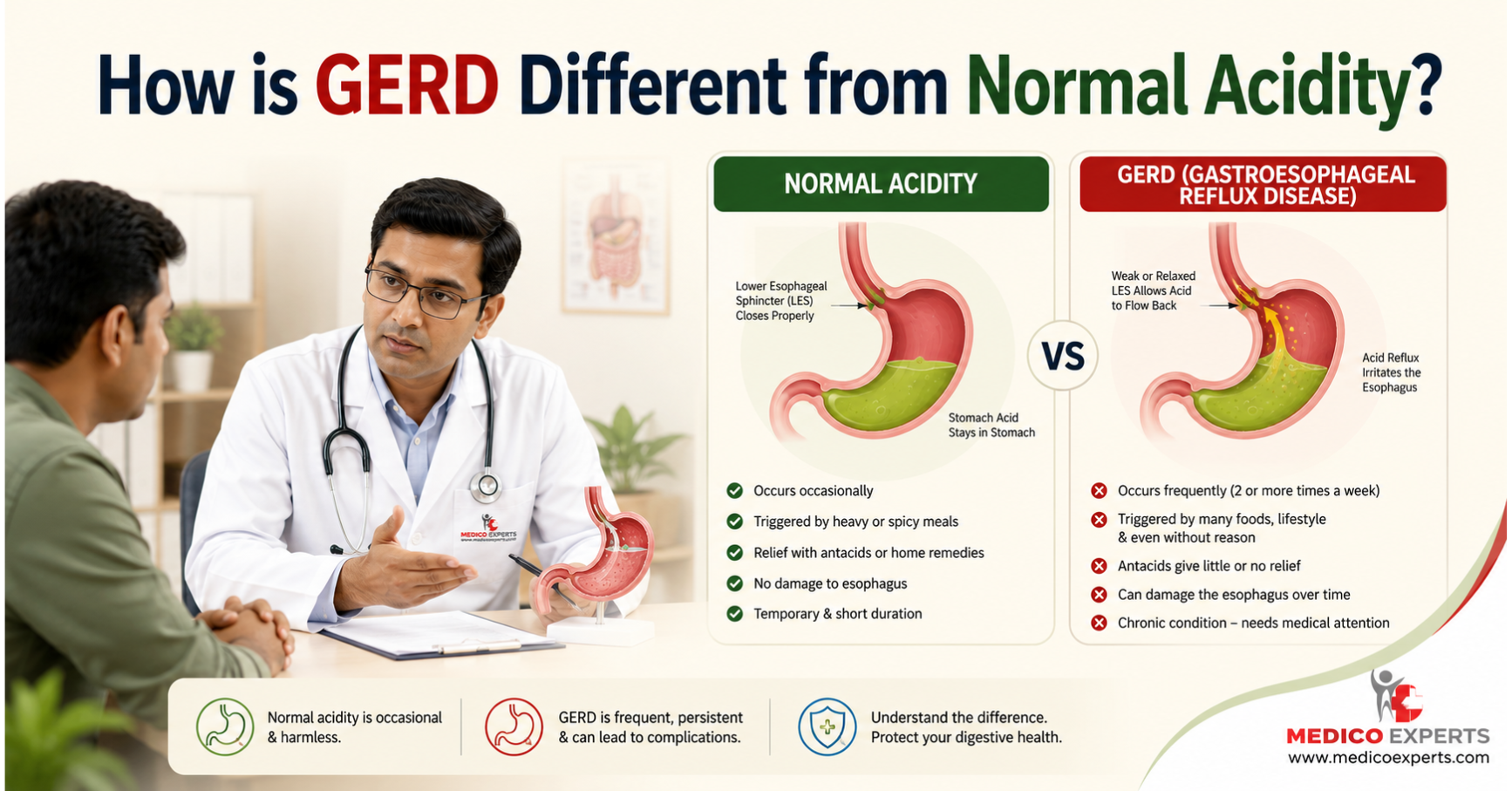
Everyone experiences acidity once in a while, after a heavy biryani, an extra cup of chai on an empty stomach, or a late-night dinner. That is occasional acid reflux, and it usually goes away on its own or with a simple antacid.
GERD is different. It is diagnosed when acid reflux happens two or more times per week, continues for several weeks, and starts affecting your daily life – your sleep, your eating habits, your comfort at work. The lower esophageal sphincter (LES), a muscle that normally keeps stomach acid from flowing backwards, stops working properly. Acid keeps rising into your esophagus, and no amount of antacids fixes the underlying problem.
Here is a quick way to tell:
| Occasional Acidity | Likely GERD |
|---|---|
| Happens after specific trigger foods or overeating | Happens regularly, often without a clear trigger |
| A few times a month | Two or more times a week, for several weeks |
| Antacid resolves it within minutes | Antacids help temporarily, but symptoms keep returning |
| Does not disrupt your sleep or routine | Disturbs sleep, limits what you can eat, affects daily life |
| No lasting damage | Can cause esophageal inflammation, strictures, or Barrett’s esophagus over time |
If the right column sounds more like your experience or the experience of someone in your family, this quiz is for you.
Signs That Your Acidity Might Be GERD
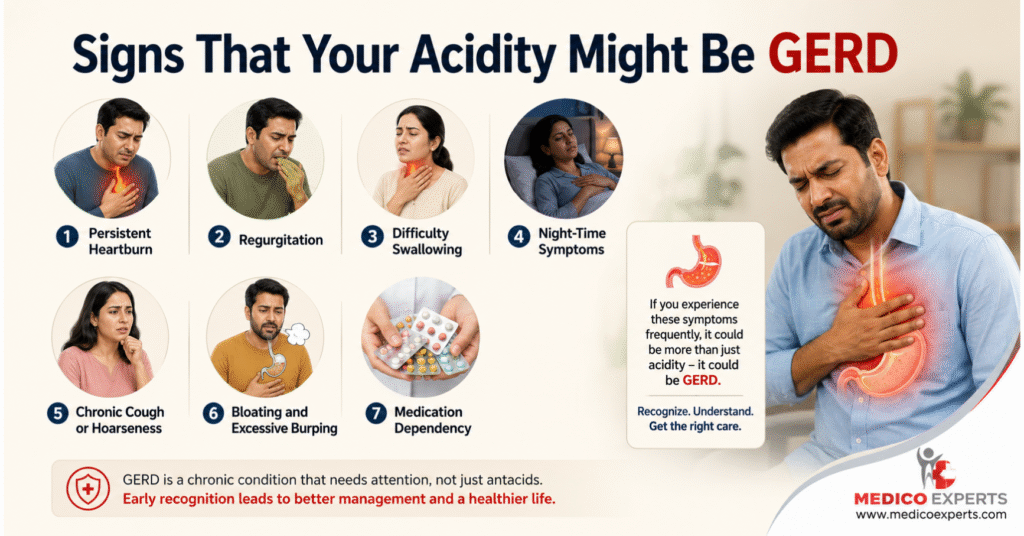
Before you take the quiz, here are the symptoms it evaluates. You may recognise some that you have been ignoring or attributing to other causes:
- Persistent Heartburn — a burning sensation in your chest that comes back most days, not just after heavy meals.
- Regurgitation — food or a sour, bitter liquid rising back into your mouth, sometimes unexpectedly.
- Difficulty Swallowing — a feeling that food gets stuck in your chest or throat when you eat.
- Night-Time Symptoms — waking up with chest burning, a sour taste, or a cough that has no other explanation.
- Chronic Cough or Hoarseness — a dry cough or morning sore throat that your ENT doctor cannot explain.
- Bloating and Excessive Burping — feeling uncomfortably full even after small meals.
- Medication Dependency — you take antacids, Pantocid, Pan-D, or similar PPIs regularly, and symptoms return the moment you stop.
If three or more of these apply to you, your quiz score will likely confirm what you may already suspect.
Take the GERD Symptoms Self-Assessment Quiz
This quiz asks 10 questions about the frequency, duration, and impact of your symptoms. It takes under 2 minutes.
You can take it for yourself or on behalf of a family member, a spouse, parent, or elderly relative whose daily acidity concerns you.
Is Your Acidity Actually GERD?
Answer 10 simple questions about your symptoms. Get a personalised risk assessment in under 2 minutes.
Who is this assessment for?
This quiz is for educational purposes only and does not replace a medical diagnosis. Always consult a qualified doctor for health concerns.
What we recommend
This assessment is for educational purposes only and does not constitute a medical diagnosis. A GERD diagnosis requires clinical evaluation by a qualified medical professional. Always consult your doctor before making any changes to your medication or treatment plan.
Your score is calculated out of 30. Here is what each range means:
| Score | Risk Level | What It Means |
|---|---|---|
| 0–8 | Low | Your symptoms suggest occasional acidity, not GERD. Manageable with dietary and lifestyle changes. |
| 9–16 | Moderate | Recurring symptoms that warrant a closer look. A medical evaluation can clarify whether GERD is the cause. |
| 17–24 | High | Persistent symptoms consistent with GERD. Continuing with antacids alone is unlikely to be enough. |
| 25–30 | Very High | Severe, long-standing reflux significantly affecting daily life. Specialist consultation recommended promptly. |
What Should You Do with Your Score?
If You Scored Low (0–8)
If You Scored Moderate (9–16)
If You Scored High or Very High (17–30)
Scored 9 or above? Talk to our specialists. Book a free 15-minute consultation to discuss your results and explore your treatment options.
Why This Quiz Matters
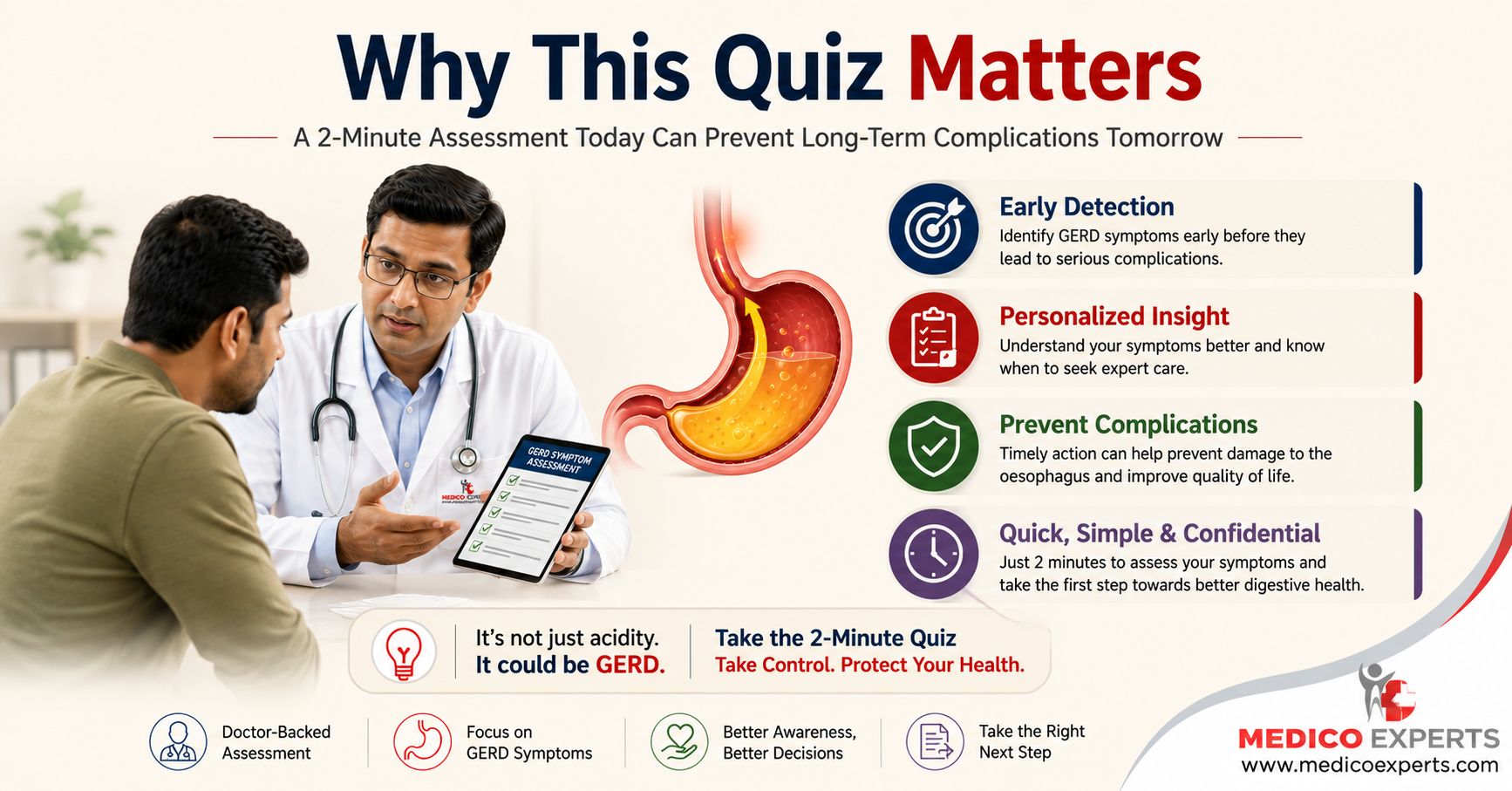
Many people live with GERD for years without realising it. They normalise the heartburn, adjust their eating habits around the pain, and stockpile antacids. Meanwhile, chronic untreated acid reflux can slowly damage the esophageal lining, leading to inflammation (esophagitis), narrowing of the esophagus (stricture), and in some cases, a precancerous condition called Barrett’s esophagus.
Early recognition changes the outcome. When you know what you are dealing with, you can choose a treatment that matches the severity, whether that is lifestyle changes for mild cases or a structured root-cause protocol like Combination Therapy for chronic GERD. This quiz is not a medical diagnosis. It is a starting point, a way to take your symptoms seriously and have a more informed conversation with a specialist.
Share this quiz with someone who needs it. If someone in your family takes daily antacids or PPIs, this 2-minute assessment could change how they think about their acidity.
Frequently Asked Questions (FAQs):
Q1. Is this quiz a medical diagnosis?
A. No. This self-assessment is an educational tool designed to help you evaluate the frequency, duration, and severity of your acid reflux symptoms. It provides a risk score based on your responses, not a clinical diagnosis. A GERD diagnosis requires evaluation by a qualified gastroenterologist or integrative medicine specialist, which may include a symptom review, endoscopy, or pH monitoring.
Q2. Can I take this quiz for someone else?
A. Yes. The quiz includes an option to answer on behalf of a family member, a spouse, a parent, or an elderly relative. Many of our users are wives or adult children concerned about a family member who takes daily antacids or PPIs. Answer based on their symptoms as accurately as you can, and share the results with them.
Q3. What if I scored high, but I am already on PPIs?
A. A high score while already taking PPIs suggests that acid suppression alone is not adequately controlling your symptoms. This is a common pattern: PPIs reduce acid production but do not fix the underlying dysfunction causing reflux. A root-cause approach such as Combination Therapy addresses both the constitutional imbalance and gut damage, aiming to reduce your dependency on daily medication over time.
Q4. How is this quiz different from a GerdQ questionnaire?
A. The GerdQ is a clinician-administered screening tool used in medical settings for standardised GERD assessment. This self-assessment is adapted for patient use with simpler, non-clinical language, India-specific medication references (Pantocid, Pan-D, Gelusil, ENO), and additional questions about medication dependency and symptom duration that the GerdQ does not cover. It is designed for educational self-awareness, not clinical scoring.
Q5. What is Combination Therapy mentioned in the results?
A. Combination Therapy is a doctor-supervised protocol that uses Advanced Homeopathy and customised Ayurveda together to treat GERD from the root. Homeopathy addresses your individual constitutional imbalance, while Ayurveda heals and strengthens the gut lining. The treatment is personalised to each patient; no two protocols are the same. You can read more on our complete Combination Therapy page.
Q6. Should I stop my PPI medication after taking this quiz?
A. No. Never stop any prescribed medication without consulting your doctor first. This quiz is an awareness tool, not a treatment recommendation. If your score suggests your current approach may not be sufficient, the right next step is a consultation with a specialist who can evaluate your situation and discuss alternatives safely.
References
Medical Disclaimer
This self-assessment quiz and accompanying content are for informational and educational purposes only. They are not a substitute for professional medical advice, diagnosis, or treatment. The quiz provides a risk indication based on self-reported symptoms and does not constitute a clinical GERD diagnosis. Always consult a qualified doctor before making decisions about your health or changing any medication. Never stop prescribed medication without medical supervision.