
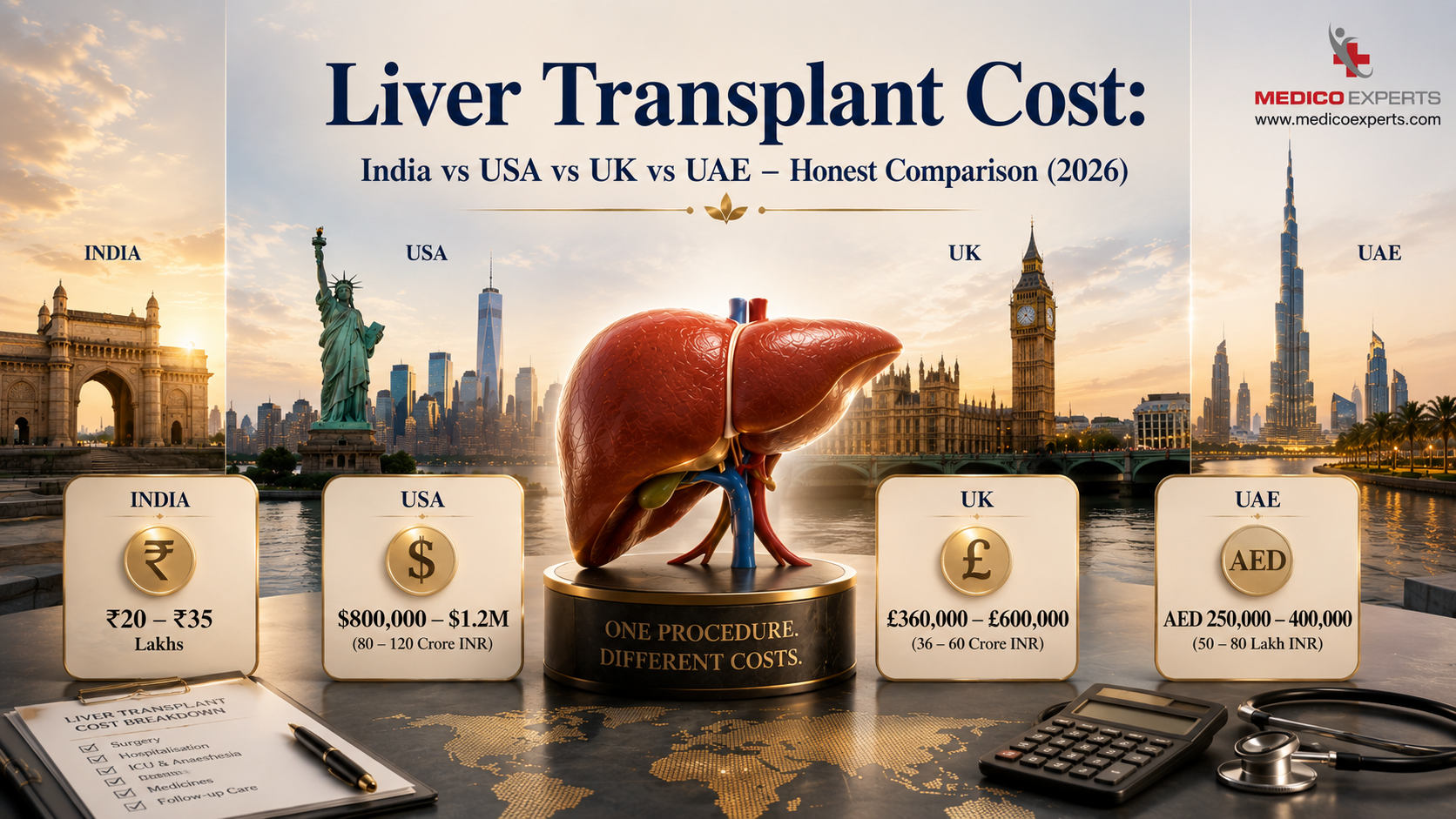
Comparing the cost of a liver transplant in India vs. the USA does not only involve finding out numbers but also seeking the best chance for your recovery without putting excessive financial pressure on yourself and your family members.
For many patients with end-stage liver disease and their relatives, there are two major questions: “Where could I afford treatment?” and “Would I get proper care?”
In this article, we provide an honest comparison of liver transplant costs in India, the USA, the UK, and the UAE. We will discuss how such services are billed in general and why these costs are different. We will also explain the criteria, which should help you make your choice despite the cost factor.
By the time you finish reading this article, you will learn about cost differences between countries and their value and what other factors you need to take into account.
India vs USA vs UK vs UAE
The cost of a liver transplant in India vs. the USA is different. In 2026, the cost of a liver transplant is approximately $22,000-$35,000 in India, while it comes to around $400,000-$800,000 in the USA, £150,000-£250,000 for private care in the UK, and $150,000-$250,000 in the UAE.
Opting for India as a destination may bring about savings of up to 85-95% of the total cost of the procedure for suitable candidates without sacrificing 90% survival rates following a liver transplant.
For international patients who qualify to receive the treatment in India, there may be significant financial advantages compared to other countries like the United States. This is subject to variation based on factors such as the hospital where the procedure will take place, the type of donor, and the health status of the patient, among others. In addition, survival rates are not guaranteed based on either the cost or the treatment facility.
Cost shouldn’t be the deciding factor in your decision, yet knowing what the estimate entails will give you a chance to make a wise choice. Find below a straightforward country-wise analysis of costs, inclusions, and the real influencing factors.
Why Cost Comparisons Are Misleading, And How to Read This Guide?
But direct comparison of liver transplant costs between different countries can be misleading when it is based on sticker prices. The package quoted at around $30,000 in India could already cover the transplant operation, hospital fees, ICU, surgeon’s fee, donor evaluation, and even international patient care coordination.
Whereas the cost starts from around $400,000 in the USA, it may not necessarily be inclusive of all costs associated with liver transplantation, like full pre-op evaluation, living donor workup, doctor’s fees, lifelong immunosuppressive medicines, and rehabilitation, among others.
That’s why, to give you a comprehensive estimate of the actual costs that would be involved in a liver transplant abroad, we are going beyond simply providing figures on how much the operation will cost.
It covers the cost of everything from pre-operative evaluation to liver transplant surgery, hospitalization, first-year immunosuppressive drugs, and expected travel expenses, among other things.
Liver Transplant Cost Comparison by Country – Complete Table
Table 1 provides the approximate costs needed for liver transplantation at different LDLT and DDLT destinations. These costs are not fixed and can vary based on several factors, such as the hospital, the patient’s condition, surgical complications, duration in the intensive care unit, and post-operative care.
| Country | LDLT Cost (USD) | DDLT Cost (USD) | Typical Wait Time | 1-Year Survival* | What’s Usually Included | What’s Usually NOT Included |
|---|---|---|---|---|---|---|
| India | $22,000–$35,000 | $20,000–$32,000 | 2–6 weeks (LDLT); variable for DDLT | ~90% | Surgery, donor surgery, ICU, hospital stay, surgeon fees, routine investigations | Long-term medicines, international airfare, extended stay beyond package |
| USA | $400,000–$800,000 | $400,000–$800,000 | Months to years (DDLT); LDLT depends on donor | ~90–92% | Surgery, hospitalization, ICU, inpatient care | Insurance deductible, travel, lodging, lifelong medicines, some physician fees |
| UK (NHS / Private) | NHS: Eligible residents only; Private: £150,000–£250,000 | NHS: Eligible residents only; Private: £150,000–£250,000 | NHS waiting list may extend several months; Private depends on donor | ~90% | Surgery, hospitalization, ICU, inpatient care | Private consultation fees, travel, accommodation, long-term medicines |
| UAE | $150,000–$250,000 | $150,000–$250,000 | Weeks to months | ~88–90% | Surgery, hospital stay, ICU | Travel, accommodation, long-term immunosuppressants |
| Turkey | $45,000–$70,000 | $50,000–$75,000 | 2–8 weeks (LDLT) | ~90% | Surgery, donor procedure, ICU, hospitalization | Flights, long-term medications, rehabilitation |
| Thailand | $80,000–$120,000 | $90,000–$130,000 | Several weeks to months | ~88–90% | Surgery, ICU, hospital stay | International travel, accommodation, lifelong medicines |
| Singapore | $180,000–$300,000 | $180,000–$320,000 | Weeks to months | ~90% | Surgery, ICU, hospitalization | Travel, accommodation, post-transplant medications |
*The 1-year survival rates on a country-by-country basis do not exist consistently in comparable databases; the ~85% rate is based on an Asian pooled figure, while the above US and UK rates have more specific data backing them up.
The costs of transplantation for international patients are significantly lower in India and Turkey than the costs in the US, UK private health care, the UAE, and Singapore. Yet, cost cannot be the sole determining factor in selecting a center for the procedure.
Liver Transplant Cost in the USA – Why It’s So Expensive
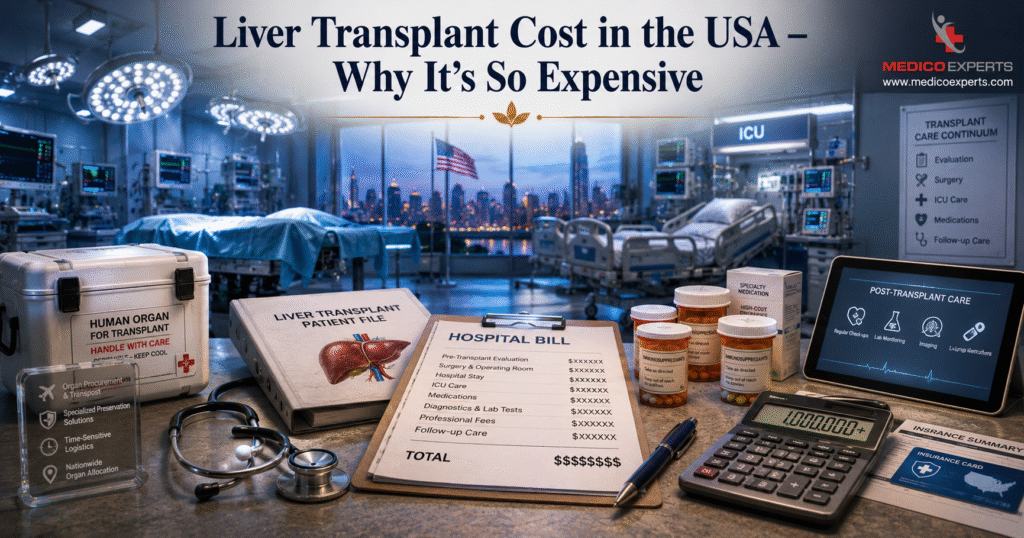
A liver transplant procedure in the United States can have costs of hundreds of thousands of dollars, as the costs do not just pertain to the procedure but extend far beyond it.
Costs of hospital admission, doctor services, organ acquisition, intensive care, diagnostics, and medication could all factor into the costs incurred.
One study from the United States investigating the costs associated with liver transplants showed that hospital and physician costs, donor variables, and disease severity can influence costs greatly.
Examples of typical cost elements include the following:
- Pre-Transplant Evaluations: This would normally involve extensive laboratory studies, radiologic exams, cardiac assessments, and consultations with specialists. Published estimates tend to estimate evaluation costs at tens of thousands of dollars but can vary greatly depending on the institution.
- Hospitals and Surgery Fees: Transplant admission is often the greatest cost. U.S. estimates have historically estimated hospital transplant-admission costs over $400,000, with physician charges adding significantly to that figure.
- ICU and Anesthesia: Patients in critical condition would need intensive care, thus increasing the cost. Charges for ICU and anesthesia are dependent on the individual hospital and patient, not national average figures.
- Organ Procurement: Cost is also involved in acquiring organs for deceased-donor transplantation. Organ procurement includes organ harvesting, preservation, and transport. The U.S. system for transplants is coordinated by the OPTN. Allocation for liver transplantation in the U.S. uses MELD as a criterion for urgency.
- Medicines for Immunosuppression: Anti-rejection drugs need to be taken by the patient after transplantation.
- Immunosuppressive Drugs: Post-transplantation anti-rejection therapy is necessary and constitutes a continuous expense. The exact monthly amount will be determined by the medication used, the insurance plan, and the pharmacy benefits.
What About the Waiting Time?
There is no standard waiting time period for obtaining a deceased donor liver in America. It differs according to MELD scores, blood type, location, availability of organs, and other criteria of distribution.
As per OPTN statistics, higher urgency cases usually get preference. So, some candidates may receive their organ much earlier than others.
Insurance may cover a considerable amount of the cost for the transplant process, but deductibles, co-insurance, out-of-network costs, drugs, and other factors can pose major financial risk.
It is recommended that patients ask for center-specific financial estimates instead of taking into account only one price for a transplant.
Liver Transplant Cost in the UK – NHS Free but Years of Waiting
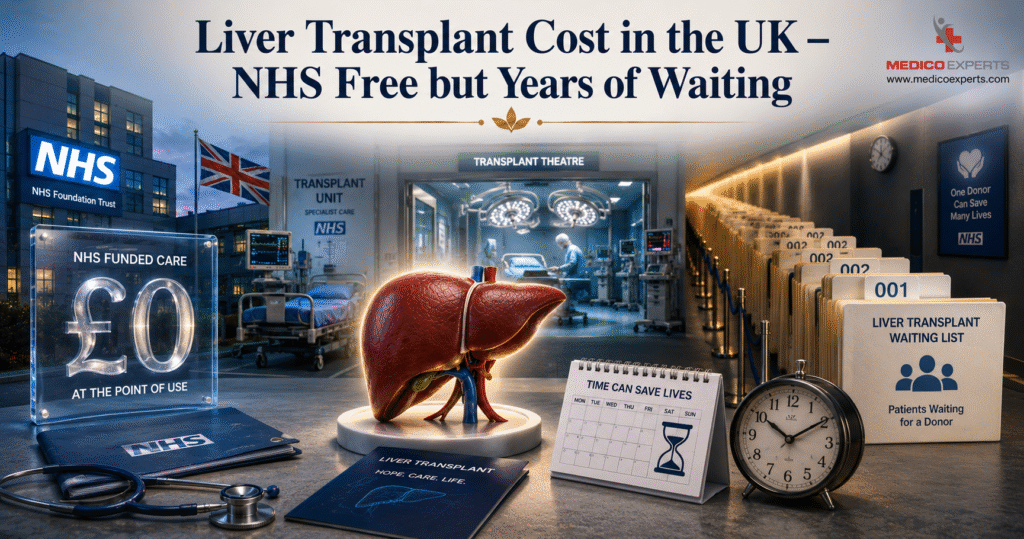
Liver transplantation for patients who normally reside in the UK and qualify for NHS services is performed by the NHS at no charge to the patient, covering the total cost of the procedure.
But again, availability is based on clinical eligibility and availability of the organ. One’s British nationality does not automatically qualify one for NHS treatment, since the NHS operates on a residency-based system.
According to NHS Blood and Transplant, the average waiting time for a deceased-donor liver transplant (DDLT) is about 5 to 7 months, but the waiting period may vary widely from that.
It is worth noting that the transplant waiting list is not a “first come, first served” process but rather depends on various medical criteria.
Although living liver transplantation is an option in the UK, the majority of transplantations involve deceased-donor transplantation, with the NHS Blood and Transplant stating that about 97% of all liver transplants in the UK are performed using deceased-donor organs.
Private and international patient liver transplantation is more expensive, and costs may rise up to £150,000-£250,000 or higher. These figures need to be considered as indicative, not as firm prices.
What This Means for UK-Based NRIs?
An NRI residing in the UK or a resident in the UK could have access to NHS-funded transplantation services but would have to go through the clinical evaluation process and organ allocation process.
In case one is working towards coordinating transplantation services for a parent in India, then traveling to the UK is not going to guarantee eligibility for NHS transplantation services.
In case the parent is eligible for a living donor transplantation service in India, then an option would be available for them to get an immediate evaluation in India without having to wait for organ allocation from the UK.
Liver Transplant Cost in the UAE – Expensive with Limited Programs
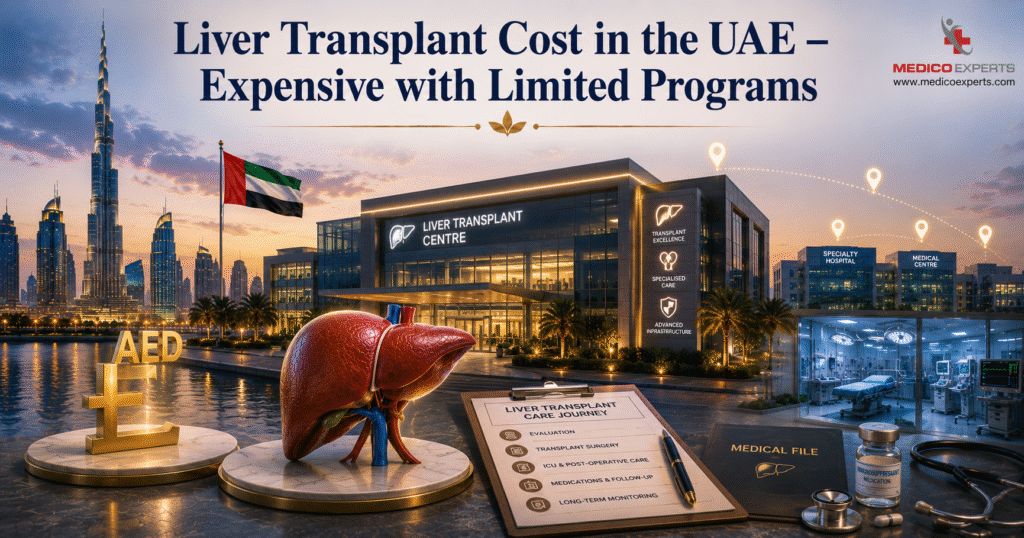
Fewer centers in the UAE offer liver transplants compared to the major transplantation centers abroad. The cost of this procedure for private patients in the UAE is estimated at $150,000-$250,000 depending on the clinic, complexity of the case, donor type, duration of hospitalization, and additional services.
Regarding the DDLT procedure, patients will have to go through the process of evaluation and organ allocation under the UAE transplant system, and therefore the organ will not be instantly available.
The duration of waiting for the transplantation procedure can depend on several factors, including medical necessity, blood type, availability of organs, and the rules of organ allocation. In addition, LDLT may be offered to appropriate candidates as an alternative transplantation procedure.
The UAE has developed transplant services, with initiatives linked to organizations like the Cleveland Clinic Abu Dhabi, while in Dubai there are centers offering transplant treatments. But sometimes patients and families opt to seek foreign treatment in case they need to be connected to a larger network of transplant facilities or where they can get a cheaper procedure.
India has been one of the destinations chosen by Middle Eastern patients seeking complicated medical treatment. Besides low costs, language similarity, cultural similarity, halal food availability, and experience dealing with foreign patients make India a comfortable choice for some Middle Eastern families.
Insurance coverage must be considered before going abroad, since a UAE insurance policy might not necessarily cover a voluntary transplant abroad. Prior permission is needed in some cases.
India vs Turkey vs Thailand – The Budget-Friendly Trio
If international patients are considering transplants in India vs. Thailand or Turkey, then all three are popular medical tourism destinations. But price is not the only factor. Transplant experience, availability of living donors, accreditation, waiting times, aftercare, and communication may be equally critical factors.
India: Largest Living Donor Ecosystem
Turkey: Convenient for Europe and the Middle East
Thailand: Great Medical Tourism Infrastructure
Why is Liver Transplant so Much Cheaper in India?
Rather than seeing these low-priced treatments in India as simply being cheap treatments in the country, it would be more accurate to see them as cost-effective delivery of such services. According to a 2025 npj Gut and Liver paper, the average cost of a liver transplant in India is estimated at approximately $25,000–$30,000. Also, 4,491 liver transplants were done in 2023, including 3,643 from living donors.
1. Lower Operating Costs
2. High Surgical Volume
3. An Effective Living Donor System
4. Government Funding Programs
5. Competing Private Hospitals
What’s the Difference?
Lower cost does not mean better. Patients should compare different transplant centers according to the number of transplants, results, certification, safety of donors, ICU conditions, complication management, and long-term monitoring.
The Hidden Costs Nobody Tells You About
Comparison of costs of liver transplantation based on the package of services offered for the surgical procedure may be inaccurate.
A more appropriate method would be based on the actual cost incurred for the first year of post-surgical follow-up, including all medication, evaluation, potential complications, and travel expenses. Based on an analysis done by npj Gut and Liver in 2025, the cost of a liver transplant in India ranges between $25,000 and $30,000.
| Hidden Cost Item | USA | UK | India |
|---|---|---|---|
| Pre-transplant evaluation | Often $10K+ | Usually NHS-funded for eligible patients | Often included or separately billed |
| Donor evaluation | Additional, varies by center/insurance. | NHS-funded when eligible | Varies by hospital/package |
| Immunosuppression — Year 1 | Significant recurring expense | NHS-funded for eligible patients | Usually an additional recurring expense |
| Readmission/complications | Can add tens of thousands of dollars | Usually NHS-funded for eligible patients | Additional hospital costs |
| Travel + accommodation | Minimal for domestic patients | Minimal for UK residents | Significant for international patients |
| Follow-up — Year 1 | Repeated specialist visits, tests and medicines | Generally NHS-funded for eligible patients | Often included for a defined period; confirm package |
3 Real Cost Scenarios – What Actual Patients Spend
The quoted cost of the transplant procedure is just one of many other considerations. The following are illustrative examples of the total cost that will apply to patients from different parts of the world. This is only an illustration of an ideal planning range and not necessarily patient billing reports.
Scenario 1: USA-Based NRI Traveling to India
Scenario 2: NRI Coordinating a Parent’s LDLT in Chennai
Scenario 3: Nigerian Patient Coming to India for Liver Transplant
The Main Finding from These Scenarios
The crucial number is the total cost, not the cost of the transplantation package alone. International patients will need to consider costs for donor tests, visas, transportation, lodging, medications, and unforeseen extra hospitalization costs.
When to See a Doctor?

Liver transplantation is performed for those suffering from end-stage or irreversible liver diseases. However, when one should seek specialist consultation varies according to the condition as well as the speed of progression of the underlying disease.
Consult a specialist for:
- Decompensated cirrhosis including ascites, jaundice, variceal bleeding, or hepatic encephalopathy.
- Deterioration of liver function in spite of proper management.
- Acute liver failure and/or rapidly declining liver function.
- A liver tumor, which is operable through transplantation.
- Your doctor has spoken to you about liver transplantation or referred you to a center for transplant services.
Don’t wait until your condition is in a critical state to consider liver transplantation. Early consultation will help the transplant team evaluate your eligibility, improve your general condition, and evaluate the possible living donor, as well as discuss both kinds of organ donation.
If symptoms become severe suddenly, especially confusion, vomiting blood, yellowing skin, or fluid in the abdomen, see a physician immediately.
Final Takeaways

Selecting the destination for one’s liver transplant surgery involves much more than merely comparing the cost of advertised liver transplant surgery. The important points that should be considered in such a comparison include the following:
- India provides considerable savings: Estimates of the costs of liver transplant surgery in India are known to be considerably lower than those of U.S. and some UK private institutions by up to 85-95%, depending on the specific case.
- Liver transplantation using LDLT can reduce uncertainties of waiting times: In 2023 alone, 3,643 cases of LDLT surgery were conducted in India and accounted for nearly 81% of total liver-transplant procedures conducted in India.
- India still remains economically feasible even when the additional costs are taken into account: In addition to flights, accommodation, visas, donor assessment, medication, and follow-up visits, India still provides considerable savings over the cost of private U.S. transplant centers.
- Cost does not necessarily imply poor quality of care: While internationally established liver transplant centers normally have 1-year survival rates higher than 90%, results differ depending on risk profile and the center’s experience. Patients must take into account the transplant experience, results, safety of the donor and the ICU, and not just the “90% success rate.”
A realistic transplant budget should account for both the recipient and donor, hospital stay, investigations, medicines, accommodation, travel, and potential complications.
Frequently Asked Questions (FAQs):
Q1. Is the quality of liver transplants in India the same as in the USA or the UK?
A. The established centers in India have the capability of performing advanced surgeries in liver transplantation, intensive care, and multidisciplinary care, comparable to international standards. Some hospitals in India even have accreditation from Joint Commission International.
But survival rates differ depending on the patient’s health, the donor’s profile, and the center’s level of expertise, so an indiscriminate comparison like “India is equivalent to the USA” would be misleading.
Q2. Does health insurance cover liver transplantation in India for NRIs?
A. The coverage is entirely dependent upon the terms of the insurance plan and the eligibility of the individual. Most foreign insurance companies do not cover elective procedures done outside their country of registration.
This must be confirmed in writing before traveling. The transplantation procedure might be covered by some Indian health insurance plans under certain conditions. Government schemes like Ayushman Bharat provide certain coverage to eligible beneficiaries but not necessarily to NRIs.
Q3. How long is the waiting period for liver transplantation in India as compared to other nations?
A. The duration of the waiting period primarily varies based on whether the transplant has been done using living donors or deceased donors. In the case of LDLT, a potential donor may be identified, and the transplant surgery can be arranged only after fulfilling all the prerequisites from a medical and regulatory point of view, instead of waiting for organs available from a deceased individual.
Q4. Which other expenses do international patients need to budget for when undergoing liver transplantation in India?
A. International patients need to make provisions for air travel, visas, accommodation, food, transport, further investigations, medicines, and follow-up apart from the liver transplant cost itself. The cost of air travel alone varies based on the patient’s home country and duration of stay.
If the patient has a companion with them, then accommodation needs to be arranged for weeks together. The immunosuppressants are taken after surgery as well and form part of a continuing cost.
Q5. Is it safe for an NRI to have a liver transplant done in India?
A. An NRI can go ahead with a transplant procedure in India, depending on whether he goes to a center that has the necessary accreditation and experience in performing transplants.
The big hospitals in India employ up-to-date transplantation procedures, state-of-the-art ICUs, and highly trained personnel. But safety issues will vary from one hospital to another, as well as depend upon the specific case of the patient.
Q6. What should be considered while selecting the correct liver transplant hospital in India for NRIs?
A. NRIs need to consider various factors before deciding on a liver transplant hospital in India. The factors include the number of transplants done by the center, success rate, multidisciplinary team, ICU facilities, safety measures for donors, and the accreditation of the hospital. It is essential to inquire about the hospital’s international patient department, which will help in managing everything related to visas and communication.
Q7. Can the procedure of a living donor liver transplant be arranged for an NRI in India?
A. The answer to this question is positive because an NRI can consider a living donor liver transplant in India, but only if he/she fulfils all necessary conditions from a medical and legal perspective along with the potential donor. The donor will have to go through various medical and psychological tests and get all documents prepared according to Indian transplantation laws.
Q8. Can an NRI arrange for a liver transplant in India from outside?
A. Yes. Several aspects of pre-transplant work can be coordinated remotely, including the gathering of the patient’s medical history, seeking expert advice, considering possible donor and assessing their suitability along with an estimate of costs involved in the treatment.
Travel to India by the patient and the donor is inevitable for the actual tests and physical examination.
Q9. How much does a liver transplant cost in India for foreigners?
A. The liver transplant cost in India for foreigners may vary depending on the hospital, donor type, patient condition, and services included. As a broad estimate, international patients may pay around $22,000–$35,000, although complex cases can cost more. Patients should request a detailed, hospital-specific estimate before treatment.
References
Relevant Articles For You
Everything You Need To Know About Liver Transplant in India
The liver, the largest internal organ in the human body has an interesting facet to it. It is the only organ that…..Read More
Liver Transplant in India for NRI
Think about a situation where you suddenly find out that one of your dear ones needs a liver transplant. Before you…..Read More
Recommendations To Understand Different Treatments
Advanced Liver Transplant in India
A liver transplant is a surgical procedure that removes a liver that does not work properly anymore (liver failure) and substitutes a healthy liver from a donor. Liver transplantation is…..Read More
Medically Reviewed by MedicoExperts Editorial & Clinical Review Board on 25 August 2026
Medical Disclaimer: This content is for informational purposes only and is not intended as medical advice, diagnosis, or treatment. Always seek the advice of your physician or other qualified healthcare provider regarding any medical condition or dietary needs.