
The cure for GERD is achievable by addressing the root causes of the problem, not just managing symptoms. If you’re wondering how to cure GERD permanently naturally, changes in your diet, lifestyle, and other measures can help reduce reflux and improve your digestive system. Here is a guide on how to cure GERD permanently and why natural methods work.
Not sure whether your symptoms are GERD? Take our 2-minute self-assessment quiz to understand your symptoms and identify your next step.
Is a Permanent Cure for Acid Reflux Really Possible?
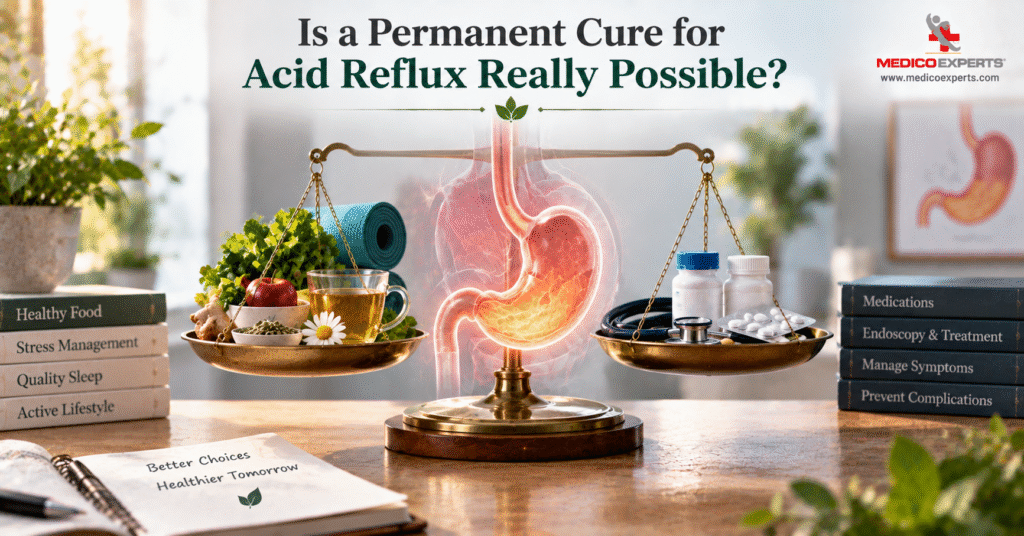
The term “cure” needs context here. Mostly because GERD cannot be compared to any other type of disease caused by some bacteria that may easily be cured using some medication in a brief period of time. GERD is a condition where the contents of the stomach move up into the esophagus.
What is Behind the Recurrence of GERD?
One of the reasons is a problem with the functioning of the lower esophageal sphincter (LES). There are other reasons also, which include being overweight, eating a big meal, eating specific foods, smoking, and going to bed immediately after having food.
It means that one should know more about it than just reducing acid production to feel better.
Do PPIs Treat GERD?
Proton pump inhibitors (PPIs) work well in reducing stomach acid levels, repairing acid damage to the esophagus, and treating symptoms of GERD. But PPIs focus more on reducing acid production than on other factors that may cause reflux.
According to the 2022 American College of Gastroenterology (ACG) guidelines, PPIs can be recommended to heal and maintain the healing of erosive esophagitis. Other recommendations include losing weight among those who are obese and refraining from eating 2–3 hours before bed.
What is Meant by “Permanent Cure”?
Symptoms of GERD can remain well-controlled in some people for a prolonged period of time if the triggering factors are found out and corrected. In others, especially those who have erosive complications of GERD or structural abnormalities, continuing treatment is important.
That’s why the idea of curing GERD permanently should not imply discontinuation of a prescribed medication or using any natural remedy. A more appropriate approach would be aiming for long-term remission and preventing it from recurring by using a personalized combination of all possible means.
Additionally, there are no grounds to say that correcting so-called “constitutional factors” will result in a reduction in the number of GERD recurrences. People who experience any signs of GERD should be properly evaluated by a doctor.
Why PPIs Don’t Cure GERD – And Why Symptoms Return?
If you were using PPIs and you still experienced heartburn coming back even after reducing the dose or stopping the medication, it would be disappointing for you.
But that does not automatically imply that the PPIs “have failed” or that you have developed dependency on them.
PPIs are meant to decrease the levels of stomach acid and help treat acid damage, but not affect all the processes responsible for the development of reflux. Reflux may occur as a result of causes like gastroesophageal reflux disease (GERD).
This is one of the reasons it becomes easier to understand how symptoms might get better while undergoing therapy, only to recur later. This is also the reason why it is not enough to simply discontinue medication. The reason behind the recurring symptoms needs to be determined to come up with a better treatment strategy and get a better outcome.
PPIs Prevent Acid, but Not All Causes
Can Symptoms Relapse After Stopping PPIs?
Natural Approaches That Actually Address the Root Cause
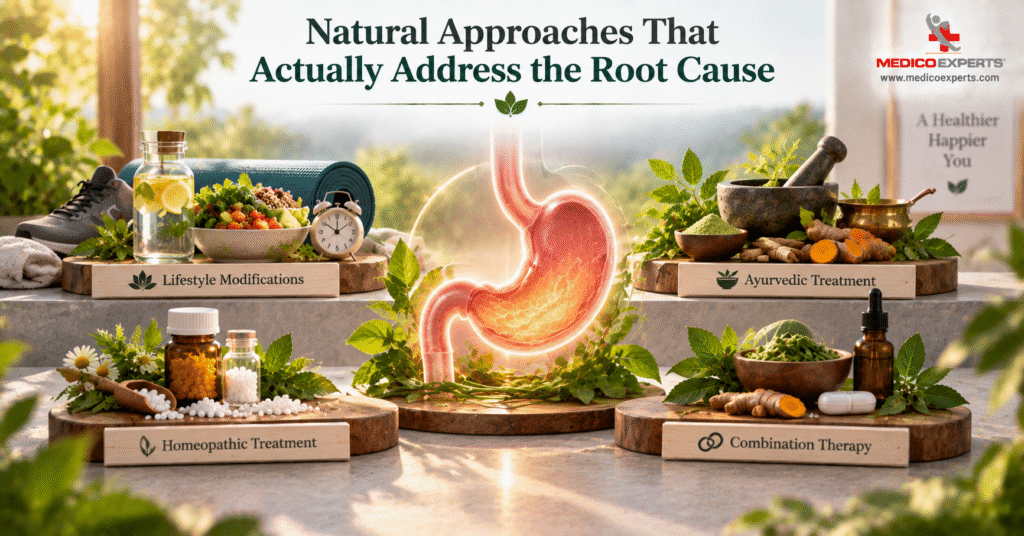
If you want to get rid of GERD permanently, you need to use interventions such as diet modification and lifestyle changes as a basis for your treatment. However, several factors may contribute to chronic GERD. So no single strategy will work for everyone. There is sufficient scientific evidence for the effectiveness of lifestyle intervention strategies, but data for Ayurveda and homeopathy are limited.
Lifestyle Modifications: The Foundation
Making changes to your lifestyle will lower the reflux triggers and are especially helpful if you are suffering from mild or triggered GERD.
Things that you need to maintain are body weight, eating measured portions, not eating before bedtime, knowing what foods trigger reflux, doing exercises, managing stress, and raising the head of the bed if you are experiencing nighttime reflux.
The research done by Mehta et al. shows that five anti-reflux behaviors consisting of maintaining body weight, engaging in physical activities, not smoking, being on a prudent diet, and not drinking coffee, tea, and soda were linked to a 37% decrease in GERD in the female patients observed.
Lifestyle modifications can be greatly beneficial, but GERD cases that are chronic will need more attention.
Ayurvedic Treatment: Healing the Gut
Ayurveda traditionally classifies reflux-like symptoms under Amlapitta and recommends following a balanced Pitta diet and improving digestion, among other measures. According to Ayurvedic medicine, Yashtimadhu (licorice), Amalaki, and Shatavari are effective herbs for managing GERD.
The strength of this strategy is that it prioritizes dietary modification, digestion, and routine while also considering individual symptoms and signs of the patient. Evidence for the efficacy of the Ayurvedic system of medicine in treating GERD is not much. Also, because these treatments are natural, they are frequently ignored, yet they may cause adverse effects when combined with other drugs.
Ayurvedic treatment should be considered as an additional therapy to established therapies for treating gastroesophageal reflux disease rather than a replacement for proper diagnosis and treatment.
Homeopathic Treatment: Constitutional Correction
Homeopathy treats diseases using a personalized and rule-based approach. This means that the practitioner identifies the most suitable diluted remedy according to the symptoms and characteristics displayed by the patient.
The rationale for its use in the present case is different from that of standard acid-suppressive drugs. But the clinical evidence is limited in supporting homeopathy as an effective GERD treatment and its capacity to manage a possible underlying cause.
As such, it should not be promoted as an evidence-based therapy or used to substitute for established interventions for complicated or severe forms of GERD.
Combination Therapy: The Root-Cause Approach
A combined approach brings together lifestyle changes, adequate medical treatment, and the use of complementary medicine under the supervision of doctors. It focuses on factors that may trigger symptoms and conditions unrelated to the action of proton pump inhibitors, rather than on their suppression alone.
That’s why, for a patient with GERD, a combination approach includes optimizing his diet and sleeping routine, reducing overweight if indicated, excluding problem foods, monitoring their symptoms to determine the need for endoscopic examination and related therapy, and introducing alternative medicine practices as needed and justified.
But it is essential to clarify that combined treatment does not claim to cure GERD completely. There is no clinical evidence that the combination of Ayurveda and homeopathy can cure GERD, and it depends largely on whether patients will systematically follow these therapies for 3-4 months, as promised.
In addition, the duration of therapy depends on the identified pathology and individual characteristics of the patient. So, a large hiatal hernia may require surgery.
TREATMENT COMPARISON TABLE
| Approach | What It Fixes | What It Doesn’t Fix | Lasting? |
|---|---|---|---|
| PPIs / Antacids | Reduce acid exposure and relieve symptoms | Do not correct every mechanism contributing to reflux. | Effective when appropriately indicated |
| Surgery | Corrects certain anatomical or mechanical causes of reflux | Invasive and carries surgical risks; not appropriate for everyone | Can provide durable control in carefully selected patients |
| Lifestyle Alone | Reduces triggers and reflux-promoting factors | May be insufficient for persistent or complicated GERD | Essential foundation for many patients |
| Ayurveda Alone | Focuses on diet, digestion, and traditional symptom management | High-quality evidence for curing GERD remains limited | May be complementary when appropriately supervised |
| Homeopathy Alone | Individualized symptom-based approach | No strong evidence that it cures GERD | Should not replace evidence-based treatment |
| Combination Therapy | Integrates lifestyle, medical evaluation, and appropriate complementary care | Evidence does not establish it as a guaranteed cure | Can be individualized according to patient needs |
Tired of managing recurring GERD symptoms? Discuss your symptoms and treatment history with our specialists to understand the most appropriate next step.
What Does a Natural GERD Recovery Timeline Look Like?
There is no exact or defined period of time when everyone who has GERD will heal after using a natural or integrative protocol. It all depends on the individual, the severity of their condition, whether they have erosive esophagitis, and if they have a hiatal hernia. Clinical trials of GERD are generally measured in an eight to twelve-week period. For some people, it can take longer.
Week 1-2: Initial Evaluation and Assessment
Week 3-6: Monitoring the Early Response
Week 6-12: Sustaining the Initial Response
Month 3-4: Reassessment of the Ongoing Healing Process
GERD Diet: Foods That Help and Harm
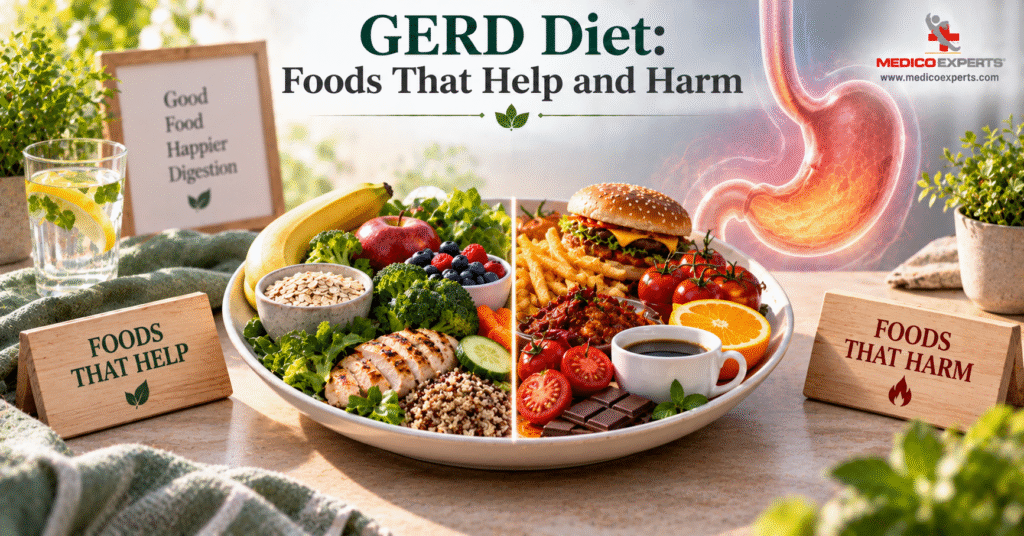
There is no standard GERD diet because factors triggering acid reflux are individual. The American College of Gastroenterology advises patients to keep a diary to identify problem foods that irritate their throats and avoid them.
A number of evidence-based dietary recommendations for people who suffer from GERD are to eat smaller meals, avoid eating 2-3 hours before going to bed and limit the intake of foods and drinks that provoke heartburn in each individual case.
Foods That Are Less Likely to Trigger Heartburn
A diet that can help manage GERD includes such hypoallergenic products as oats, bananas, green vegetables, lean meat, and other foods that are less likely to irritate the gastrointestinal tract.
In addition, herbal teas like fennel or cumin waters are also used in traditional medicine to soothe digestion, but their effectiveness has not been clinically proven.
Moreover, a small portion of food consumed several hours before bedtime is safer and helpful for the esophagus rather than a large dinner.
Foods and Habits That May Trigger Reflux
Some foods or habits are more likely than others to worsen reflux. These include eating fried or greasy foods, hot and spicy foods, citrus, coffee, and carbonated drinks, and eating late or eating too much.
But not everyone has the same triggers. For example, you may be able to drink a lot of coffee but just can’t have citrus. Just stop eating or drinking things that seem to bother you.
| Choose More Often | Limit or Avoid If They Trigger Symptoms |
|---|---|
| Oats | Deep-fried or fatty foods |
| Banana | Very spicy foods |
| Green vegetables | Citrus fruits/juices |
| Lean proteins | Coffee |
| Moderate, early meals | Carbonated drinks |
| Water and tolerated beverages | Late-night meals |
When to See a Doctor for GERD?

Most cases of intermittent heartburn do not require extensive testing, but persistent, severe, or abnormal heartburn should not be treated by self-diagnosis. GERD can mimic other diseases, both digestive and cardiac, and some symptoms of GERD require immediate professional evaluation.
The American College of Gastroenterology has recommended medical evaluation for alarm symptoms such as difficulty swallowing, unintended weight loss, or gastrointestinal bleeding.
Medical evaluation is necessary in cases when:
- Difficulty swallowing becomes severe, or food seems to be going down the wrong pipe.
- Unintentional weight loss occurs, especially as a result of the inability to eat.
- Blood is present in vomit, or it resembles coffee grounds.
- The stools are black and tarry, which may indicate gastrointestinal bleeding.
- There is chest pain that is severe or unexplained, as chest pain is not a typical symptom of GERD and should not be assumed to be heartburn.
- Heartburn persists despite two months of appropriate over-the-counter treatment or requires frequent use of over-the-counter medications to control symptoms.
These symptoms do not necessarily indicate that a serious GERD complication is occurring, but they do require medical attention. Do not try to treat abnormal symptoms on your own by discontinuing or adjusting medications or attempting a “natural” cure based on Internet research.
A physician or gastroenterologist can determine whether testing, medication, or other treatment is needed to address the problem.
How to Cure GERD Permanently Naturally – Final Takeaways

Despite all possible treatment options, there is currently no guaranteed remedy for GERD. In most cases, the disease cannot be permanently cured, but it can be successfully managed to maintain remission and reduce the severity of its signs.
- PPIs may be very effective in terms of reducing acid and healing the gastroesophageal reflux disease (GERD) injury, but they do not address all the mechanisms that lead to GERD.
- Lifestyle changes such as losing extra weight, eating less close to bedtime, avoiding trigger foods, and getting enough sleep are also essential for dealing with GERD.
- Natural treatments and alternative medicine such as Ayurveda and homeopathy may have their benefits, but there is a lack of clinical evidence that they can provide a permanent solution for GERD.
- It is important to develop an individual approach to battling GERD, consulting a physician regarding diagnostic tests, procedures, and prescriptions.
- And most importantly, it is not recommended to stop GERD medications on your own accord; the physician will advise you on the proper timing and conditions for minimizing the dose or completely stopping them.
Ultimately, learning how to cure GERD permanently is not a search for some magic remedy, but it is a process of understanding your condition and treating it accordingly while making the lifestyle changes that help to prevent future occurrences.
Want to understand what may be driving your recurring GERD symptoms? Speak with our specialists about a personalized treatment approach.
Frequently Asked Questions (FAQs):
Q1. Can GERD be cured permanently without surgery?
A. Most people with GERD can be treated successfully without surgery. Surgery should be considered only in severe cases and in patients who continue to have complications despite receiving appropriate medication and nonsurgical treatment.
For example, surgery may be needed if you have a large hiatal hernia or if your reflux persists despite medication and nonsurgical treatment.
Q2. Is there a permanent solution for acid reflux?
A. While GERD can sometimes be controlled for long periods of time, it is impossible to say that there is a permanent solution for this condition.
I assume that the problem should be approached individually, taking into account the factors that aggravate the patient’s condition.
Thus, if a patient has a malfunction of the lower esophageal sphincter, a hiatal hernia, obesity, or specific diet and lifestyle habits, the appropriate individual treatment should be selected.
The most common approach in most cases is root-cause treatment, or reducing the amount of acid in the stomach, which is done through PPIs, but they are far from being a universal solution for all types of GERD.
Q3. Why does my acid come back when I stop my PPI?
A. Some people suffer from increased acid-related symptoms when they reduce the dose of their PPI or stop using them due to a condition known as rebound acid hypersecretion. This is a normal body response to the suppression of acid production by PPIs, so it should not be a cause for concern.
It is irrelevant that proton pump inhibitors may seem addictive since you should not take them for too long anyway. If you are currently on PPIs, consult your doctor to see if you can start reducing the dosage.
Q4. How long does it take to cure GERD naturally?
A. There is no definite period to treat GERD naturally. Some patients’ symptoms may respond to some lifestyle changes within weeks. Others may need treatment for a longer period of time.
Prognosis varies depending on the severity and duration of GERD, underlying causes, and response to treatment. Symptoms that persist should be evaluated medically rather than depending on a natural treatment, thinking that it is going to “fix” GERD within weeks or months.
Q5. Can ayurveda and homeopathy together treat GERD?
A. Ayurveda and homeopathy use different traditional methodologies to treat symptoms. Ayurveda may focus mainly on diet, digestion, and classical herbal preparations. Homeopathy relies on personalized remedy selection.
Although the two approaches can be effective alone or in combination, there is not enough evidence to confirm that either helps in a lasting cure of GERD. Given that evidence-based medical treatments should not be replaced by complementary treatments in the presence of chronic or alarming symptoms.
Q6. Is it safe to stop PPIs on my own?
A. No, you should not stop the regular use of a PPI without consulting your doctor. In some patients, the regular use of PPIs results in temporary rebound increases in acid-related symptoms after you discontinue them.
Also, patients with complicated GERD, such as erosive esophagitis and other associated conditions, may require continued acid suppression. That’s why a physician should be able to counsel you about the need for continued therapy and assist you in the process of discontinuing treatment.
References
Relevant Articles For You
Is Your Acidity Actually GERD?
Most people who live with recurring acidity assume it is normal. You pop an antacid after meals, keep a strip of…..Read More
Combination Therapy For GERD
Struggling with heartburn even after taking your GERD or gastroesophageal reflux disease medicine? Combination therapy for…..Read More
Recommendations To Understand Different Treatments
GERD (Gastroesophageal Reflux Disease): Symptoms, Causes & Treatment
Gastroesophageal reflux disease (GERD) is a chronic digestive condition where stomach acid repeatedly flows back into your esophagus, causing…..Read More
Medically Reviewed by MedicoExperts Editorial & Clinical Review Board on 7 September 2026
Medical Disclaimer: This content is for informational purposes only and is not intended as medical advice, diagnosis, or treatment. Always seek the advice of your physician or other qualified healthcare provider regarding any medical condition or dietary needs.