
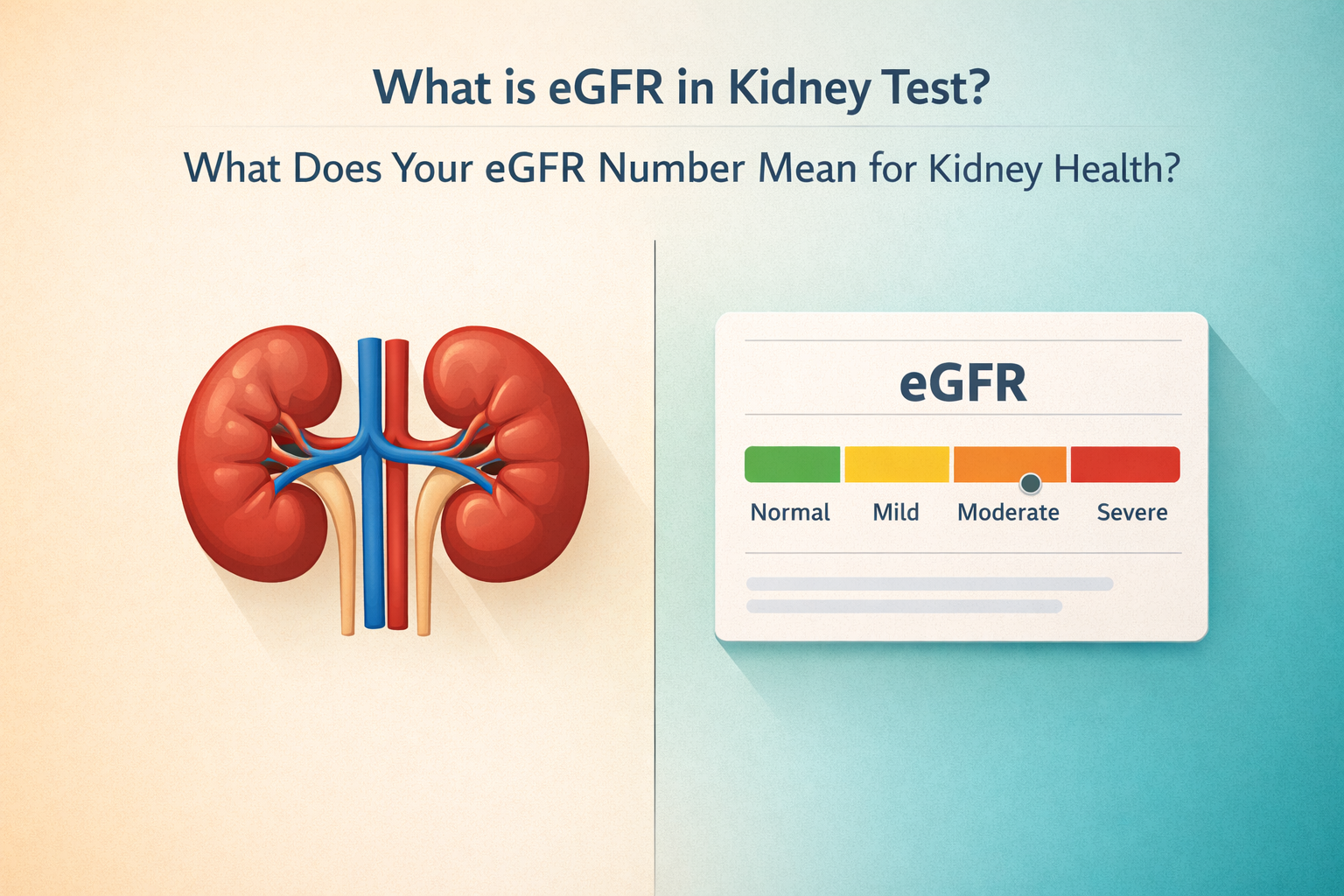
You’re Googling “what is eGFR in a kidney test,” and after checking your lab results, you probably spotted something unusual.
If that makes you nervous, you need to know this.
It’s easy to panic when you see a low number or a highlight you don’t understand, suddenly wondering if your kidneys are in trouble.
Is there something problematic?
Most lab reports don’t bother explaining eGFR. So there you are, staring at a value with zero context, unsure if it’s serious or what you’re supposed to do about it. Then you hunt around online, only to find confusing or highly technical info that just ramps up the stress.
Let’s clear things up. We will help you break down what eGFR actually means, how to make sense of your results, what stage you might be at, and what steps to take next. By the end, you’ll feel like you’ve got a handle on things and not just anxious and in the dark.
What is eGFR in Kidney Test?
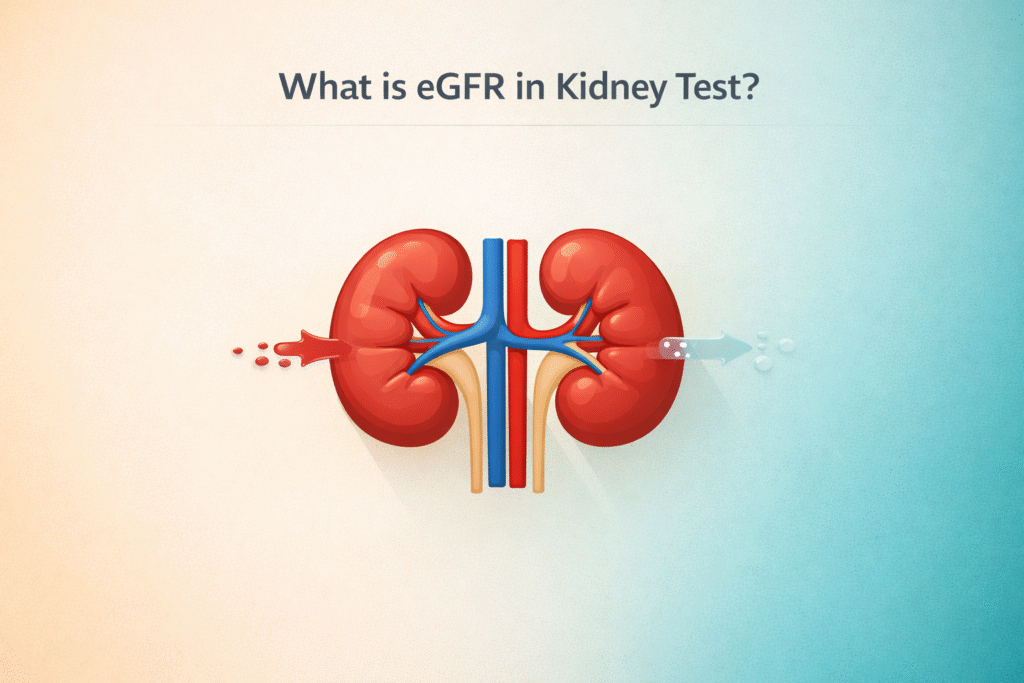
eGFR, which stands for estimated glomerular filtration rate, is your kidney’s performance score.
You’ve got thousands of these little filters in your kidneys called glomeruli. They work around the clock, filtering waste from your blood, keeping what’s useful and flushing out the stuff you don’t need.
So when you look at your lab report and spot your eGFR, that number tells you how much blood your kidneys filter each minute, measured in millilitres. Your report says 90 ml/min. That means every single minute, your kidneys clean 90 millilitres of blood.
High numbers are good. That means your kidneys are doing their job well. If the number starts dropping, it means they aren’t working as efficiently. These results can alert your doctor to issues before you even notice anything feels off.
Keep in mind, it’s called “estimated” for a reason. Doctors don’t measure it directly. They use a formula based on your blood creatinine test (that’s a waste product in your blood), your age, and your gender. As your kidneys slow down, creatinine goes up, so it’s a helpful clue.
If you’re in India, you’ll see your eGFR listed on your KFT (Kidney Function Test) or RFT (Renal Function Test) report. That little number actually sums up a lot about your kidney health.
Doctors use it to monitor changes, determine if you need treatment, and discuss your kidneys’ needs. In the end, eGFR turns a complicated kidney process into one clear number, a simple tool to help keep track of your health.
What is a Normal eGFR Level?
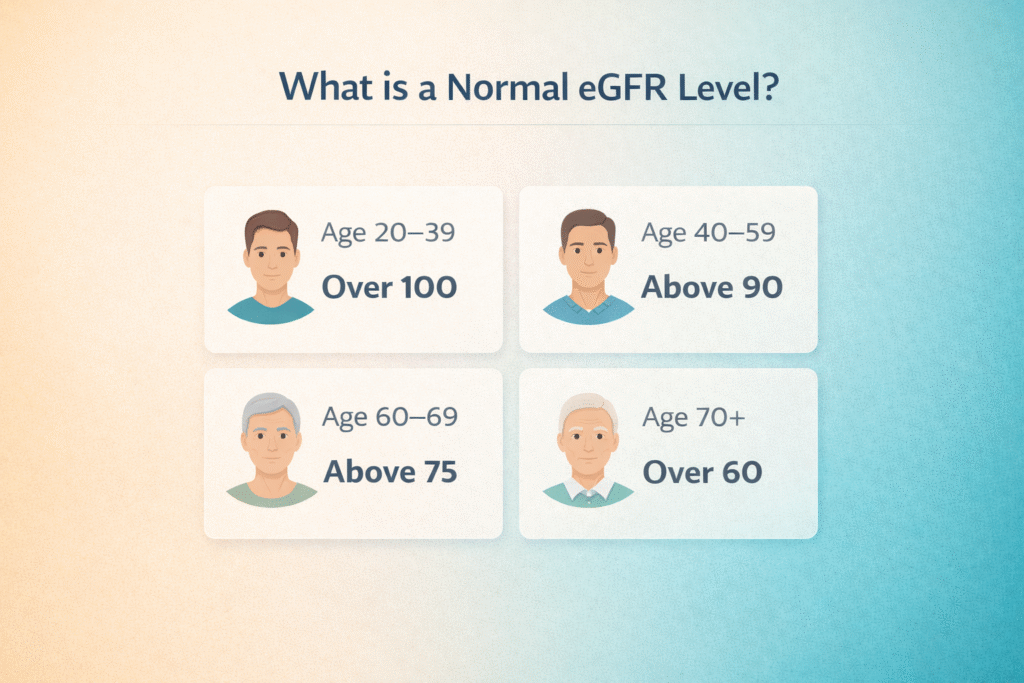
Most healthy adults have an eGFR above 90 ml/min/1.73 m², which means their kidneys are doing their job and filtering blood well. But this number doesn’t always stay the same. It changes as you get older.
As the years go by, it’s normal for kidney function to dip a bit, even if you feel great. For example, if you are 70 years old and your eGFR is 70, then you are in the normal range. That’s still okay for your age and doesn’t mean you have kidney disease.
If you want a quick guide for what’s expected by age:
- Age 20–39: over 100
- Age 40–59: above 90
- Age 60–69: above 75
- Age 70 and up: over 60
One more thing, eGFR can bounce around a little, thanks to regular life. Being dehydrated, eating a high-protein meal before your test, or working out hard can bring your number down. So, don’t panic over a single low result. It doesn’t always signal a problem with your health.
eGFR Levels and CKD Stages: What Each Number Means
Most people skip straight to this part after seeing their lab results, so what does your number actually mean? eGFR levels get sorted into stages, which makes it easier to see how your kidneys are doing and what steps come next. If your number isn’t in the normal range, don’t freak out; the stage matters more, along with what you do moving forward.
Here’s a quick rundown:
eGFR 60–89: Stage 2 – Mild Reduction
eGFR 45–59: Stage 3A – Mild to Moderate
eGFR 30–44: Stage 3B – Moderate to Severe
eGFR 15–29: Stage 4 – Severe
eGFR Below 15: Stage 5 – Kidney Failure
| CKD Stage | eGFR Range | Kidney Function | Action Needed |
| Stage 1 | 90 or above | Normal or near-normal (with signs of damage) | Lifestyle changes, monitor every 12 months |
| Stage 2 | 60–89 | Mild reduction | Control BP and blood sugar, see GP |
| Stage 3A | 45–59 | Mild to moderate reduction | Refer to nephrologist, begin CKD diet |
| Stage 3B | 30–44 | Moderate to severe reduction | Manage complications, monitor closely |
| Stage 4 | 15–29 | Severe reduction | Prepare for dialysis/transplant discussion |
| Stage 5 | Below 15 | Kidney failure | Urgent kidney replacement therapy |
What Causes Low eGFR?
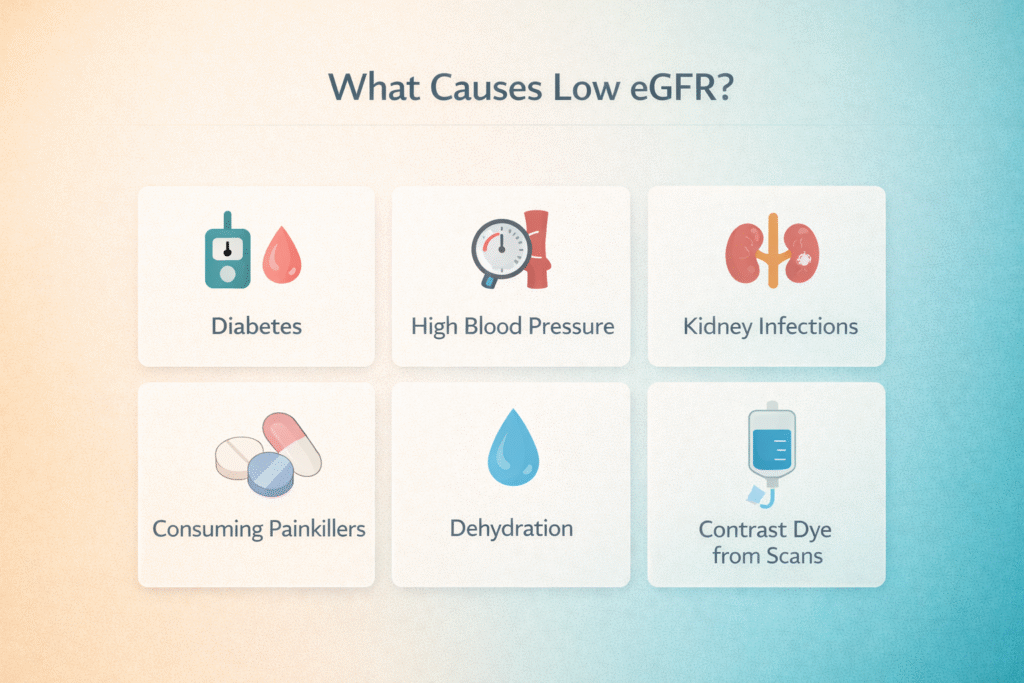
So, what actually makes your eGFR drop?
That’s a question you may have after spotting a low number in your report. Usually, it comes down to a few common health problems or just everyday habits, factors that people deal with all the time in India.
One of the main causes is diabetes. If your blood sugar levels are consistently high, it gradually impairs your kidneys’ ability to filter your blood. High blood pressure follows close behind. It’s another major problem that constantly stresses out your kidneys and makes their job harder.
Besides those two, there are other factors:
- Kidney infections that keep coming back. If they don’t get proper treatment, they chip away at your kidney health over time.
- Painkillers like ibuprofen or diclofenac: People use them a lot, but taking too many can sneakily damage your kidneys.
- Not drinking enough water, especially before the test, can lead to dehydration. That can temporarily make your eGFR look worse.
- The contrast dye from scans like CTs sometimes affects kidney function, though it’s usually temporary.
If you figure out why your eGFRs are falling early on, there’s a good chance you can slow it down, or even keep it steady. Taking care of the root problem makes a difference.
eGFR vs Creatinine: What’s the Difference?
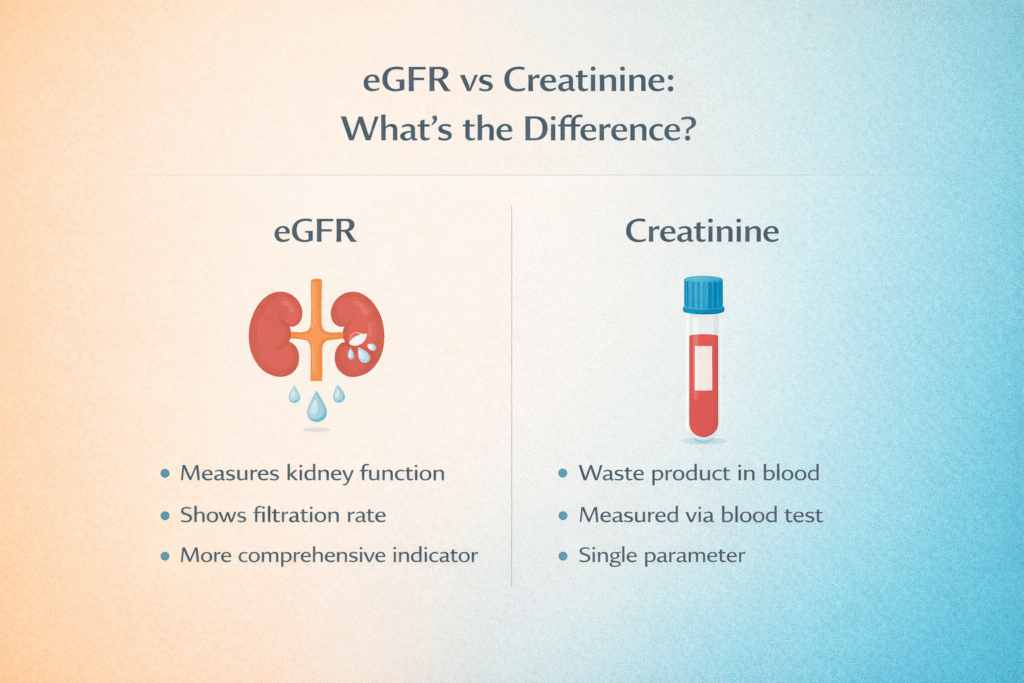
Creatinine is just a waste product your body makes as your muscles do their activities. Your kidneys filter the waste products from your body. So if your creatinine level goes up, that usually means your kidneys aren’t doing their best at filtering.
eGFR works a bit differently. It’s calculated using your creatinine level and other factors, like your age and sex. In other words, it takes a few pieces of information and turns them into a straightforward score that tells you how well your kidneys are functioning.
That’s why doctors tend to lean on eGFR. It’s one clear number, helps set which stage your kidney function is in, and shapes what happens next in your care.
Curious about the details: what counts as a normal creatinine level, why it rises, and how it connects to your kidneys? Read our creatine blogs for some solid answers: Creatinine Levels and What They Mean
How to Improve Your eGFR? What Actually Helps
The answer isn’t as simple as a yes or no. It depends on what’s causing the drop and how far things have gone. In the early stages, you have a shot at steadying things, and sometimes you might even see a small bump up if you stick with the right habits.
If kidney disease has already moved into a more advanced stage, the goal shifts. Here, it’s all about slowing things down and avoiding new problems.
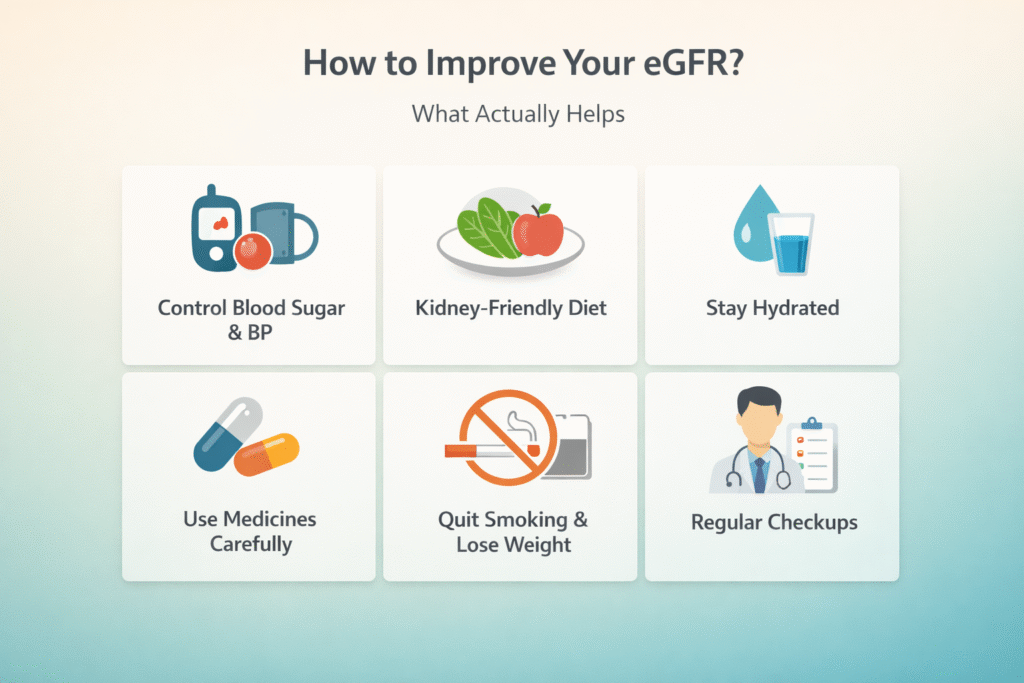
So, what helps your kidneys? Start with the basics:
- Keep Your Blood Sugar and Blood Pressure in Check: If you have diabetes or high blood pressure, managing these tightly is probably the best thing you can do for your kidneys. Nothing else comes close.
- Eat a Balanced, Kidney-Friendly Diet: Sometimes doctors suggest dialling back on protein to lighten the load on your kidneys. Don’t try such a diet on your own. Instead, a dietitian or nephrologist should guide you.
- Drink Enough Water: Staying hydrated lets your kidneys work better, unless your doctor has told you otherwise.
- Watch Your Medicines: Avoid painkillers like NSAIDs and anything else that might stress your kidneys, unless your doctor gives the green light.
- Quit Smoking and Lose Extra Weight: Both of these make kidney problems worse over time. Tiny changes add up, so don’t get discouraged if progress feels slow.
- Keep Up With Your Checkups: Regular blood and urine tests give you an early warning if things change, so you and your doctor can tweak your plan before bigger problems show up.
How Often Should You Get Your eGFR Checked?
How often you should check your eGFR completely depends on your health and risk factors. The most important part is to watch for changes over time, not just focus on what one test says.
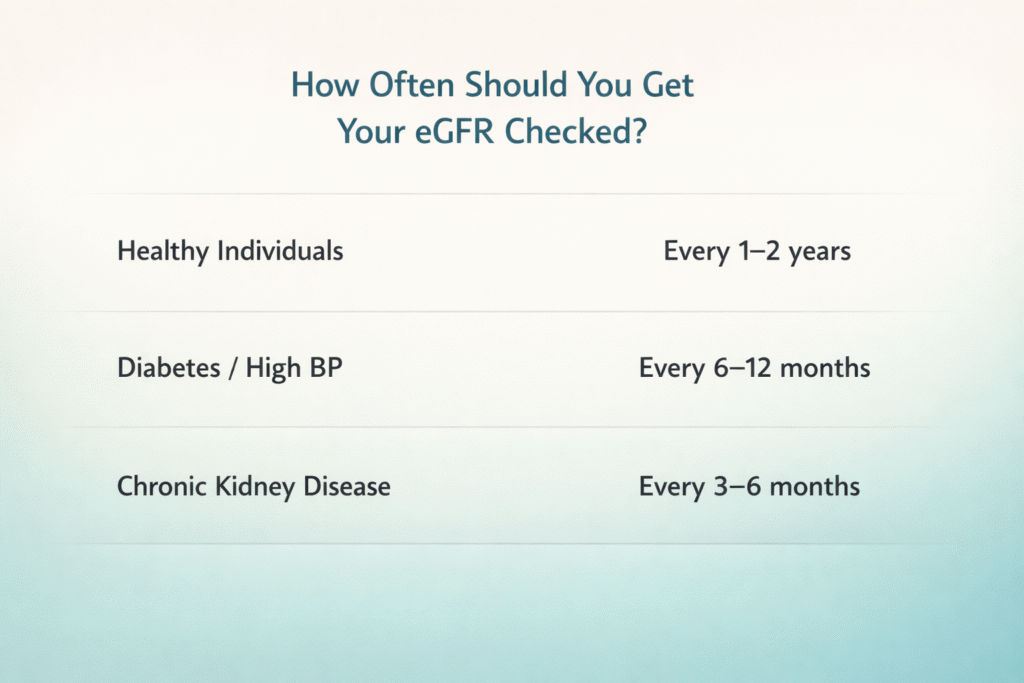
If you’re generally healthy and don’t have risk factors like diabetes, high blood pressure, or any kidney-related symptoms, doing an eGFR test as part of your routine checkup every one to two years is usually good enough.
But if you have diabetes or high blood pressure, you need to be more cautious. These conditions are the main reasons people develop kidney problems, so it’s a good idea to get your eGFR checked every six to twelve months just to stay on top of things.
For those who already have chronic kidney disease, your doctor will probably want to see your eGFR results every three to six months, depending on how things are going. If your CKD is in a later stage, you’ll likely need to get tested even more often.
In India, eGFR testing usually comes as part of a renal function test (RFT) or kidney function test (KFT), which you can find at most pathology labs without trouble. The cost isn’t too high either, usually between ₹300 and ₹800, depending on where you go.
Checking your eGFR regularly helps you know where you stand, catch problems early, and avoid surprises down the line.
Can Combination Therapy Help Improve eGFR?
Struggling to improve your eGFR, even with standard treatments? That’s common, since chronic kidney disease (CKD) affects more than just your kidneys. It touches almost every system in your body. That’s why combination therapy can really matter.
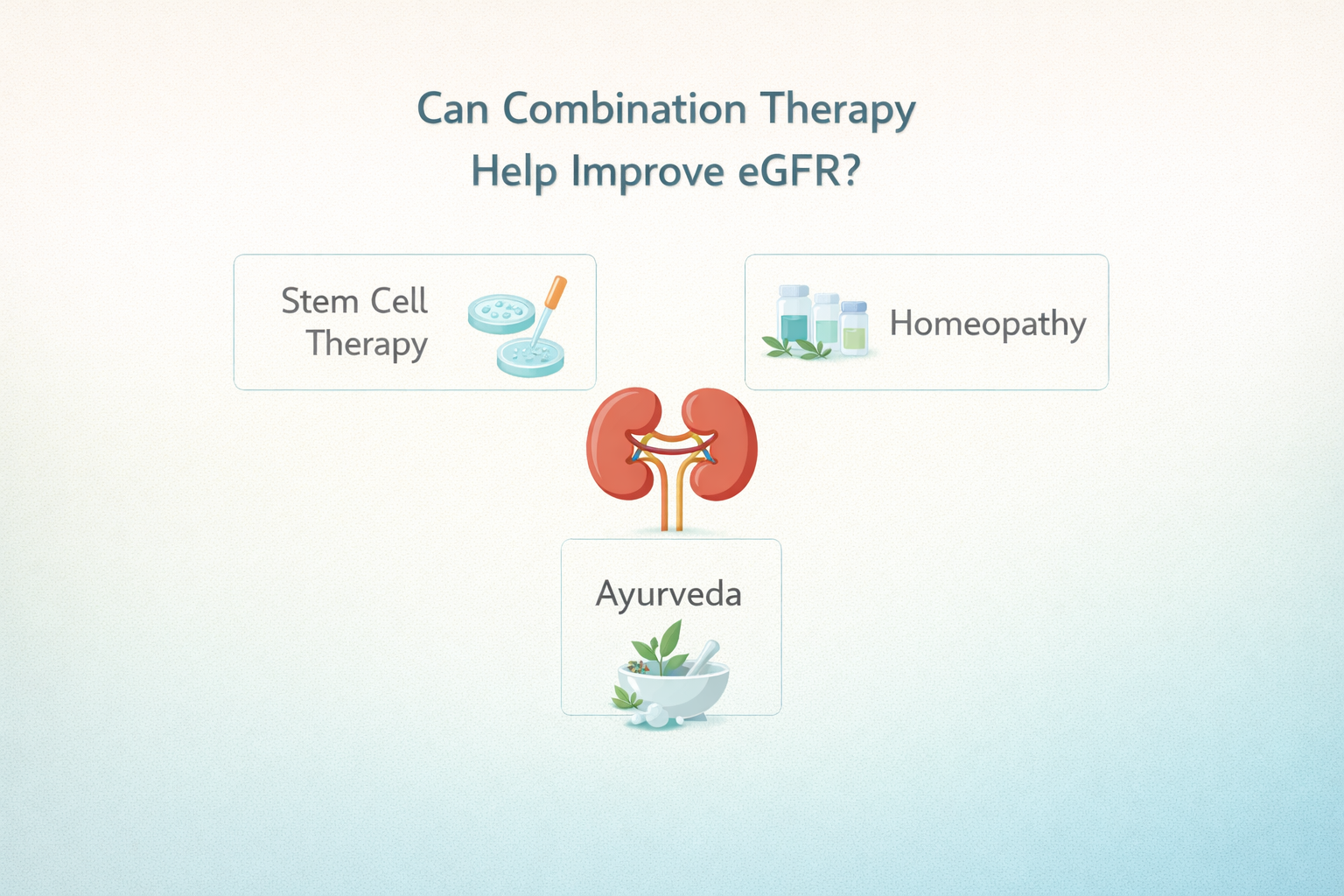
At MedicoExperts, we put together a plan made for you, starting with allopathy as the main base, then adding Ayurveda, homeopathy, and even regenerative therapies if they’re safe and the doctor thinks they fit your case.
Each treatment has its place: some slow down kidney damage, others give you more energy, and a few help manage symptoms like swelling.
Everything happens under the close medical supervision of a team of specialists. The team keeps a sharp eye on your eGFR and other numbers, always making adjustments so the plan matches your exact needs and stage of CKD.
This way, combination therapy can help stabilize your kidney function, slow down the disease, and make you feel better overall without jumping straight to more aggressive treatments.
Curious about how combination therapy works for CKD. Check our blog on the same: Combination Therapy to Slow CKD Progression
Takeaway
You don’t necessarily need to memorize your eGFR number. But it will definitely help you understand what’s going on with your kidneys. A single lab report may not provide a complete picture, but it does offer an early warning.
When you understand what your eGFR means, which stage you’re in, and why your number is changing, you stop feeling scared and start feeling prepared.
Don’t brush it off, but don’t panic, either. Most kidney problems progress slowly, so you usually have time to do something about them. With good advice, regular checkups, and some lifestyle tweaks, plenty of people manage to keep their kidney function steady for years.
Ready to take charge of your kidney health? Knowing your eGFR is a good start, but it’s not the end goal. If your eGFR has dropped below 60 or you’ve seen it slipping over the past year, don’t just sit back and wait. The earlier you act, the better.
At MedicoExperts, our specialists blend modern nephrology with Ayurvedic and holistic care. We focus on slowing down CKD and helping your kidneys work better without jumping to dialysis too soon.
Frequently Asked Questions (FAQs):
Q1. What is a dangerous eGFR level?
A. When eGFR drops below 15, that’s kidney failure (Stage 5), and it needs urgent medical attention. Levels between 15 and 29 (Stage 4) are also serious and call for close monitoring and a solid treatment plan. If your eGFR stays under 60 for over three months, that usually points to chronic kidney disease (CKD).
Q2. Can eGFR improve with treatment?
A. Early on (Stages 1 to 3), you can keep eGFR steady and sometimes even increase it slightly with the right approach, such as controlling blood pressure and blood sugar, following a good diet, and avoiding medications that could harm your kidneys. In later stages, the focus shifts to slowing things down rather than turning them around.
Q3. What is a normal eGFR for a 60-year-old?
A. eGFR falls naturally as you get older. For most healthy 60-year-olds, anything over 75 mL/min is considered normal. Even values between 60 and 75 might still be fine if there’s no other evidence of kidney trouble. Your doctor will look at your overall health and lab reports to decide what’s best for you.
Q4. Is eGFR the same as GFR on my kidney test report in India?
A. Yes. In India, your KFT (Kidney Function Test) or RFT (Renal Function Test) will mention eGFR (estimated GFR). This number is calculated from your creatinine level, age, and sex. It gives a more accurate idea of how your kidneys are working.
Q5. What foods can raise eGFR?
A. No single food will directly boost your eGFR, but a kidney-friendly diet helps protect kidney function. This usually involves managing your protein, keeping an eye on salt, and controlling potassium and phosphorus. Always follow what your doctor suggests.
Q6. Can dehydration affect my eGFR results?
A. Absolutely. If you’re dehydrated, your creatinine can go up a bit, which makes your eGFR look lower than it truly is. Make sure you’re well-hydrated before your test, and if the number seems off, it’s worth repeating.
Q7. At what eGFR level does dialysis start?
A. Doctors usually start considering dialysis when eGFR falls below 10 to 15 ml/min (Stage 5). But it’s not all about the numbers. They’ll also look at your symptoms, whether you’re holding on to fluid, and your overall health before deciding.
Q8. What does an eGFR of 45 mean?
A. An eGFR of 45 ml/min/1.73m² falls under Stage 3A chronic kidney disease (CKD), which indicates a mild to moderate reduction in kidney function.
At this stage, many people still don’t notice clear symptoms, but it’s an important point to take action. Doctors usually recommend further evaluation, regular monitoring, and managing conditions like diabetes or high blood pressure.
With the right treatment and lifestyle changes, it is often possible to slow down progression and maintain stable kidney function for years.
Q9. What does an eGFR of 30 mean?
A. An eGFR of 30 ml/min/1.73m² indicates Stage 3B chronic kidney disease (CKD), which means a moderate to severe decline in kidney function.
At this level, your kidneys are not filtering waste as effectively, and the risk of complications like anemia, bone issues, and high blood pressure increases.
Even if you don’t feel many symptoms, this stage requires close medical supervision, regular testing, and a structured treatment plan. With timely care and the right approach, it is still possible to slow further decline and manage the condition effectively.
Q10. What is serum creatinine and why is it important?
A. Serum creatinine is a waste product found in your blood that comes from normal muscle activity. Your kidneys filter it out, so its level in your blood gives a quick idea of how well your kidneys are working.
If creatinine levels are higher than normal, it may indicate that your kidneys are not filtering properly. Doctors often use serum creatinine along with eGFR to get a clearer picture of your kidney function and track any changes over time.
References
Relevant Articles For You
Managing CKD Without Dialysis
Dialysis can tire you out. Each session takes around 3 to 4 hours, and most people need it three times a week. That’s a huge…..Read More
Best Food For Kidney Disease
Kidney disease is a common disease affecting 10% of the population worldwide. In chronic…..Read More
When To Worry About Creatinine Levels?
Your creatinine levels can fluctuate, and it is normal, but sometimes high creatinine levels can be harmful to your…..Read More
Why Combination Therapy For CKD is Safe and Effective?
Chronic kidney disease is a complex issue, and if you rely on a single approach. It will not be enough because CKD affects not…..Read More
Recommendations To Understand Different Treatments
Combination Therapy For Chronic Kidney Disease
Chronic Kidney Disease affects every patient differently. Our personalized care model blends advanced medical science with holistic practices to support…..Read More
Medically Reviewed by MedicoExperts Editorial & Clinical Review Board on 30 March 2026
Medical Disclaimer: This content is for informational purposes only and is not intended as medical advice, diagnosis, or treatment. Always seek the advice of your physician or other qualified healthcare provider regarding any medical condition or dietary needs.