
Last updated on March 31st, 2026 at 04:24 pm
If your child with autism is experiencing sleep problems, bedtime may seem like an unachievable task you never signed up for. Your child needs ages to drift off, wakes up over and over, and by morning, you’re both wiped out.
If you’ve been searching the internet for strategies to help your child sleep, you likely find yourself lost in a confusing array of unproductive advice.
It’s common for children with autism to struggle with sleep. Maybe they’re extra sensitive to noise or light, or routines throw them off, or anxiety keeps them up.
Still, it’s not hopeless. With a better grasp on what’s happening and a few practical tweaks, you can make things easier. In this blog, you’ll find down-to-earth tips for building a calmer bedtime routine that gives everyone in the house a shot at real rest.
Why Do Children with Autism Have Trouble Sleeping?
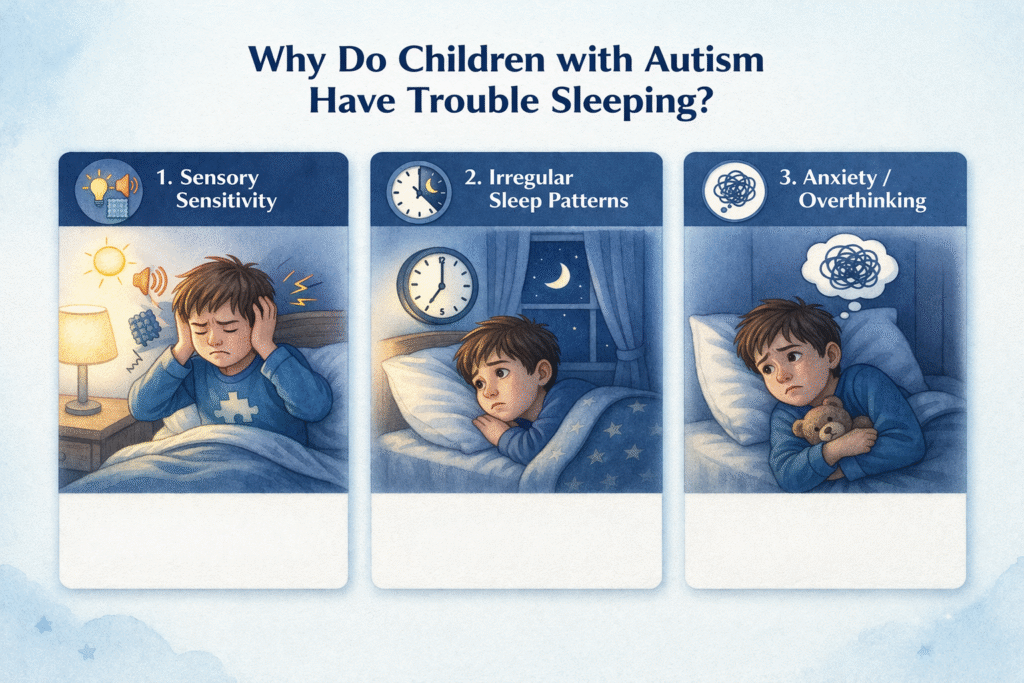
Many children with autism face sleep problems due to sensory, biological, and behavioural factors.
Here are some of these factors:
- Loud noises, bright lights, or even scratchy pajamas can make settling down feel impossible for the child.
- Sometimes, moving from playtime to bedtime is tough. It can be challenging for them to transition from playtime to bedtime and feel sufficiently calm to sleep. Anxiety usually gets worse at night, and regulating emotions becomes a bigger challenge for them.
- On top of that, their bodies don’t always make melatonin (a hormone that helps sleep better) like they’re supposed to, so their internal clocks can be all over the place. If their bedtime routine isn’t clear or consistent, that adds to the confusion.
Helping them sleep better usually means sticking to
- a predictable routine
- making the bedroom as relaxing as possible
- figuring out what sensory or emotional challenges need extra support.
Common Sleep Problems in Children with Autism
If you are raising a child with autism, sleep problems may be something that is taking a toll on you. You may be exhausted by sleepless nights and unpredictable routines. So, you need to take the first step towards figuring out the solution to this problem.
Here’s what you should do:
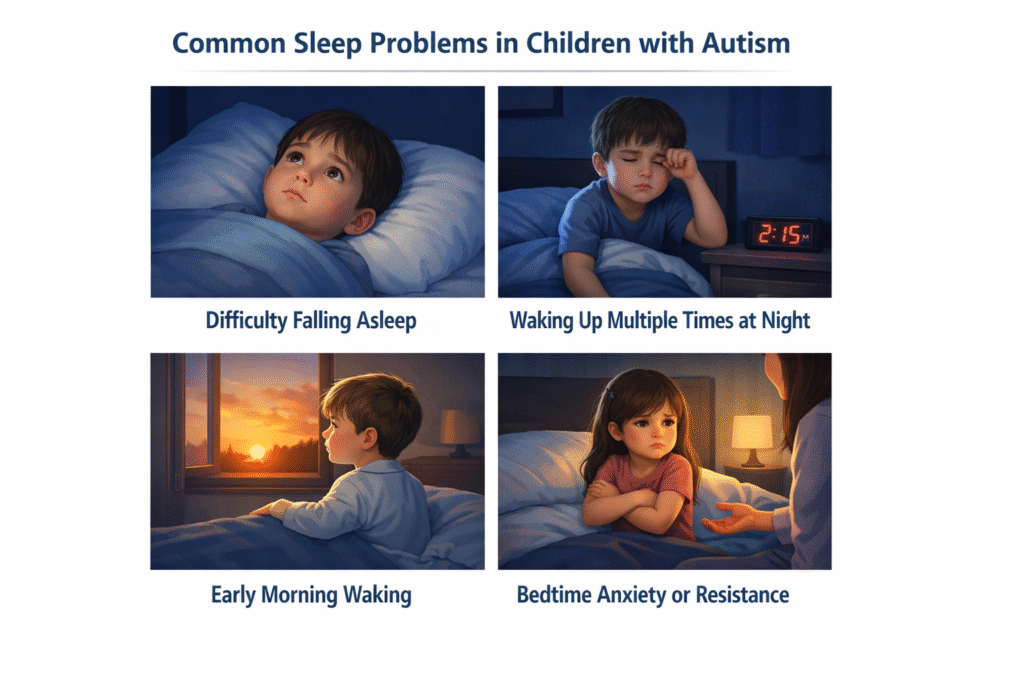
1. Difficulty Falling Asleep
The biggest struggle is getting a good night’s sleep. The child may spend an hour or two tossing and turning, especially after exciting activities or when their senses are on overload.
2. Waking Up Multiple Times at Night
Frequent night waking is common. They might happen several times in the night, and the child may be unable to settle on their own, so you’re up, too.
3. Early Morning Waking
Early mornings are another hurdle. Your child may wake up at the crack of dawn and just can’t get back to sleep, which means nobody’s getting enough rest.
4. Bedtime Anxiety or Resistance
And let’s not forget the bedtime anxiety. Anxiety and resistance occur for all kinds of reasons. Maybe your child doesn’t like being alone, maybe the dark feels scary, or the bed just isn’t comfortable.
Check our blog on anxiety in autism and how to manage it:
Easy Ways to Solve Autism Sleep Problems
You might find relief in some straightforward methods for handling autism-related sleep issues. A few adjustments can go a long way toward a calmer, more restful night for everyone.
Why Children with Autism Struggle with Sleep?
If you understand why sleeping is so hard for your child with autism, you can help in ways that actually make a difference.
Sensory Sensitivity
Anxiety and Emotional Regulation
Difficulty with Transitions
Irregular Sleep Hormones
How to Get a Child with Autism to Sleep: Practical Strategies
If you want your child with autism to get proper sleep, you need to have patience and also a mindset to opt for trial and error. Small, steady tweaks to your routine can make a big difference. Hence, here are some practical tips to help your child sleep:
Create a Consistent Bedtime Routine
Reduce Sensory Stimulation
Use Visual Schedules
Limit Screen Time Before Bed
Use Comfort Items
Bedtime Routine Ideas That Work for Many Children with Autism
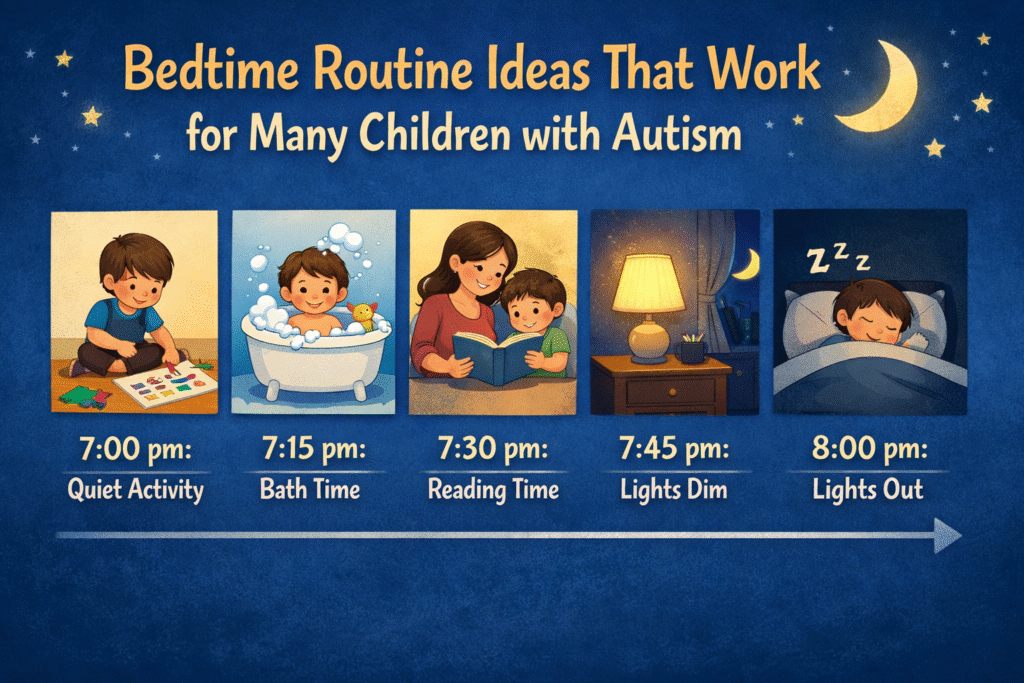
Building a steady bedtime routine can help the child relax and get ready for sleep. When they know exactly what’s going to happen next, they don’t have to worry or fight bedtime as much.
Here’s a bedtime routine that can help you settle your child for a good night’s sleep:
7:00 pm: Start with some quiet activities, like puzzles or drawing.
7:15 pm: Time for a bath.
7:30 pm: Read a favourite book together.
7:45 pm: Turn down the lights, setting a peaceful atmosphere.
8:00 pm: Lights out.
Sticking to this sequence night after night provides your child with a feeling of safety and reassurance. Over time, their body and mind will simply understand that it’s time to unwind and prepare for rest.
When Sleep Problems May Signal a Bigger Challenge?
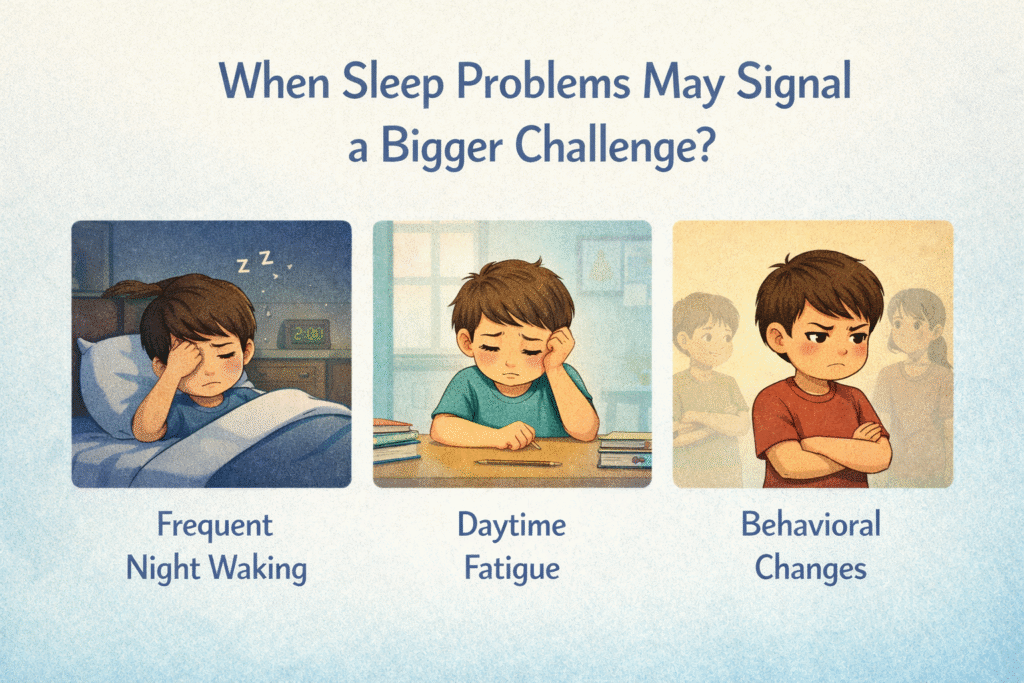
Many children struggle to fall asleep due to deeper underlying needs. For many children, these sleep issues are related to the following:
- Sometimes their brains are overloaded with sensory input from a busy day, so switching off isn’t simple.
- Other times, they’re frustrated because they can’t say what they need or what’s bothering them.
- Feeling all wound up emotionally can make bedtime tougher, too.
If you understand the issues that are disrupting your child’s sleep, you can actually support them better. Get some more insights by reading these blogs:
Child’s Autism-related Communication Problems
Aggressive Behaviour In Autism
When Parents Should Seek Professional Help?

It’s common for children with autism to experience sleep difficulties in autism. But if you’ve been sticking to routines for months and nothing’s changing, or your child just isn’t getting enough sleep for their age, it’s probably time to search for some help.
Here’s when your child needs evaluation:
- Sleep problems persist for months
- The child sleeps fewer than the recommended hours
- Night waking is severe
- Daytime behavior worsens
When things get this tough, bringing in a team of professionals for a multidisciplinary evaluation can make a difference by identifying underlying causes.
They’ll dig into what’s going on, whether it’s something sensory, behavioural, medical, or emotional, and help you chart a plan that fits your child’s needs.
Struggling with Your Child’s Sleep Every Night?
Get the right guidance and understand what’s really affecting your child’s sleep and how to fix it effectively.
How Therapy Can Help Improve Sleep?
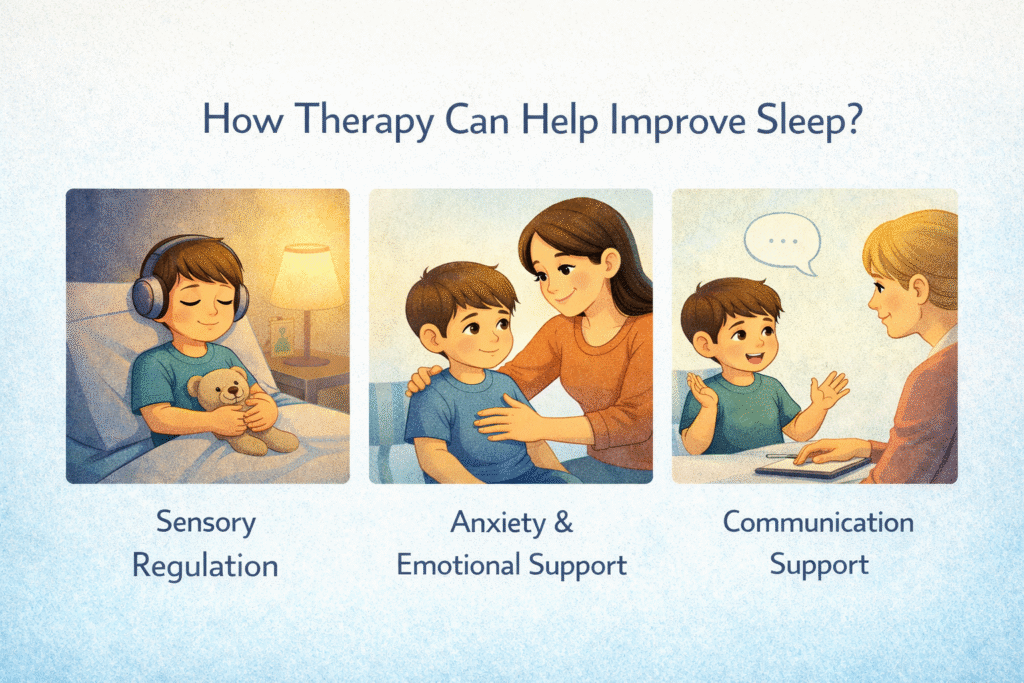
Sometimes, children have trouble sleeping because of deeper developmental challenges. When you tackle these issues, sleep habits and bedtime routines usually start to improve.
Children need different strategies, as not all children are the same.
- Therapy that deals with sensory processing can make things like light, sound, or touch feel less overwhelming.
- Others need help calming anxiety, managing stress, or finding ways to cope with nighttime fears.
- Some children benefit from support in expressing what they need or how they feel, especially if communication is tough for them.
You don’t need to stick to a particular treatment or therapy. You can opt for a combination therapy that works on the sensory, emotional, and communication challenges of your child, all at once.
At MedicoExperts, a team of specialists from different fields of medicine comes together to combine different approaches to make sure your child gets the kind of support that fits all their needs.
Takeaway
Children with autism have a hard time sleeping, and it affects everyone in the house. Sensory sensitivities and anxiety keep them awake or wake them up in the night.
But creating a steady bedtime routine and making the bedroom feel safe and predictable really helps. Your child needs to feel secure, and bedtime should be as relaxing as possible.
If you’ve already tried all the tricks and nothing seems to work, go ahead and ask for expert help. Professionals know how to dig into sleep issues and develop practical solutions that stick.
Still Finding It Hard to Improve Your Child’s Sleep?
If you’ve tried routines and small changes but nothing seems to work, it might be time for a more personalized approach.
At MedicoExperts, experts work together to understand your child’s unique needs and guide you toward solutions that actually improve sleep and overall well-being.
Frequently Asked Questions (FAQs):
Q1. Why do children with autism have trouble sleeping?
A. Children with Autism Spectrum Disorder experience sleep disorders due to differences in how their brains process sensory input, regulate hormones like melatonin, and manage anxiety. Sensory sensitivities, irregular sleep-wake cycles, and difficulty winding down can all make falling and staying asleep harder.
Q2. How much sleep does a child with autism need?
A. Sleep needs are generally similar to those of other children, though individual differences are common:
1. Toddlers (1–3 years): 11–14 hours (including naps)
2. Preschoolers (3–5 years): 10–13 hours
3. School-age (6–12 years): 9–12 hours
4. Teenagers (13–18 years): 8–10 hours
Some children with autism may need slightly more time to settle, even if total sleep duration falls within these ranges.
Q3. Do children with autism wake up more at night?
Yes, night waking is more common. Many children experience frequent awakenings due to sensory discomfort, anxiety, or difficulty transitioning between sleep cycles. They may also have trouble going back to sleep without support, leading to fragmented rest.
Q4. Can melatonin help children with autism sleep?
A. In some cases, doctors may recommend melatonin supplements to help regulate sleep patterns, especially if there is a delay in sleep onset.
But it should always be used under medical guidance, as the dosage and timing need to be tailored to the child.
Q5. What bedtime routine works best for children with autism?
A. A consistent, predictable routine tends to work best. This may include calming activities like a warm bath, quiet reading, dim lighting, and avoiding screens before bed.
Keeping the same sleep and wake times daily and creating a sensory-friendly sleep environment can also make a significant difference.
Q6. What is sleep regression in a child with autism?
A. Sleep regression is when a child who was sleeping well suddenly starts having sleep problems again. In children with Autism Spectrum Disorder, this may happen due to routine changes, anxiety, or sensory sensitivities. It’s usually temporary and improves with a consistent routine.
Q7. What is the best bedtime routine for an autistic child?
A. For children with Autism Spectrum Disorder, the best bedtime routine is consistent, predictable, and calming. This may include the same steps each night—like a warm bath, quiet reading, dim lights, and no screens before bed. A sensory-friendly environment and fixed sleep/wake times can help the child feel secure and fall asleep more easily.
References
Relevant Articles For You
Autism Sleep Challenges
If your child has autism, you may find that they have very different sleep challenges. Physiological and psychological…..Read More
Autism Meltdown vs Tantrum
At first glance, an autism meltdown and a tantrum might seem similar, but they’re actually driven by…..Read More
Autism Repetitive Behaviours Not Improving
If you are a parent of a child with autism, you may have noticed repetitive behaviors in your child, like hand flapping, rocking, or…..Read More
Autism Child Communication Problems
Most autistic kids have communication issues. Children experience delayed speech, trouble finding the right words, or…..Read More
Recommendations To Understand Different Treatments
Combination Therapy for Autism
Autism affects each child differently. So our personalized care model blends modern therapies like…..Read More
Stem Cell Therapy for Autism
Stem cell therapy uses your body’s regenerative power. These cells can transform into specialized cells and…..Read More
Homeopathy for Autism
Homeopathy believes that when your body and mind are in harmony, you live a healthy life. But an imbalance in…..Read More
Ayurveda for Autism
Autism can be detected in Ayurveda by understanding the behavior of your child. The doctor will…..Read More
Medically Reviewed by MedicoExperts Editorial & Clinical Review Board on 25 March 2026
Medical Disclaimer: This content is for informational purposes only and is not intended as medical advice, diagnosis, or treatment. Always seek the advice of your physician or other qualified healthcare provider regarding any medical condition or dietary needs.