
Ever feel wiped out for no obvious reason, or spot swelling in your feet, or find your bathroom habits changing? You may ignore these signs, thinking they are due to stress, not drinking enough water, or missing a few hours of sleep. But sometimes they point to some bigger issues, like how your kidneys are doing.
That’s why understanding normal creatinine levels by age becomes important. Creatinine is a waste your muscles make, and your kidneys’ job is to flush it out. Doctors use creatinine tests to see how well your kidneys are pulling their weight and to diagnose any problems before they get serious.
Most importantly, what counts as “normal” isn’t the same for everyone. It changes with your age, gender, how much muscle you have, even how hydrated you are or if you have certain health issues.
Once you know what’s up with your creatinine levels, you’re a step ahead. You can spot kidney issues early and take action before they turn into bigger problems.
What Is Creatinine and Why Is It Important?
Creatinine is a waste product your muscles make while you go about your day, walking, working out, or even breathing. Once your muscles produce it, creatinine travels through your blood to your kidneys. If your kidneys are working as they should, they filter it out, and you get rid of it in your urine.
What Does Creatinine Mean in a Blood Test?
That’s why doctors pay attention to creatinine levels. Healthy kidneys clear it out, so a quick blood test tells your doctor about how well your kidneys are doing their job. You’ll see creatinine on your routine health checkups or when there’s a question about your kidney function.
When your blood is tested for creatinine, the result shows how much of this waste is in your system. If your kidneys keep working properly, those numbers stay steady and within a normal range. If creatinine climbs, your kidneys might be struggling. But factors like your age, muscle mass, hydration, diet, and even the meds you take can increase your creatinine up or down, so these tests always need context.
How Do Kidneys Remove Creatinine From the Body?
Doctors also use creatinine levels to calculate your eGFR, or estimated glomerular filtration rate. That just gives a more detailed view of how well your kidneys filter waste.
Inside your kidneys are millions of little filters called nephrons. Their job? Clean out waste like creatinine, excess water, and toxins while holding on to what your body needs.
If you develop kidney problems from diabetes, high blood pressure, infections, or long-term kidney disease, these nephrons can’t keep up. Waste products like creatinine start building up in your blood.
Why Doctors Check Creatinine Levels
Why do doctors check creatinine? It’s a quick window into your kidney health. If you have symptoms that point to kidney trouble (think swelling in your feet, changes in urination, or unexplained fatigue), or if you already have diabetes or high blood pressure, your doctor probably orders this test. They also use it to keep tabs on ongoing kidney problems, catch early signs of damage, track the effects of medications, and check for dehydration.
Kidney disease sneaks up without clear symptoms, so early testing makes a real difference.
What Happens if Creatinine Levels Become Too High?
If your creatinine level gets too high, it can mean your kidneys are taking a hit. Some people feel tired, lose their appetite, swell up in their legs or feet, feel sick to their stomach, notice changes in their pee, or even get short of breath. If the situation gets worse, seriously high creatinine levels might signal more advanced kidney trouble, like kidney failure.
But don’t jump to conclusions. Various factors can temporarily raise creatinine levels. Dehydration, a tough workout, certain meds, or a minor illness can all spike your levels. If your numbers stay high, your doctor will want to dig deeper with more tests to find the cause and help you start treatment before your condition gets serious.
To get an in-depth idea about the relation between creatinine and kidneys, check our blogs on it:
Concerned about high creatinine or kidney health? Get expert guidance to understand your symptoms, test results, and treatment options early.
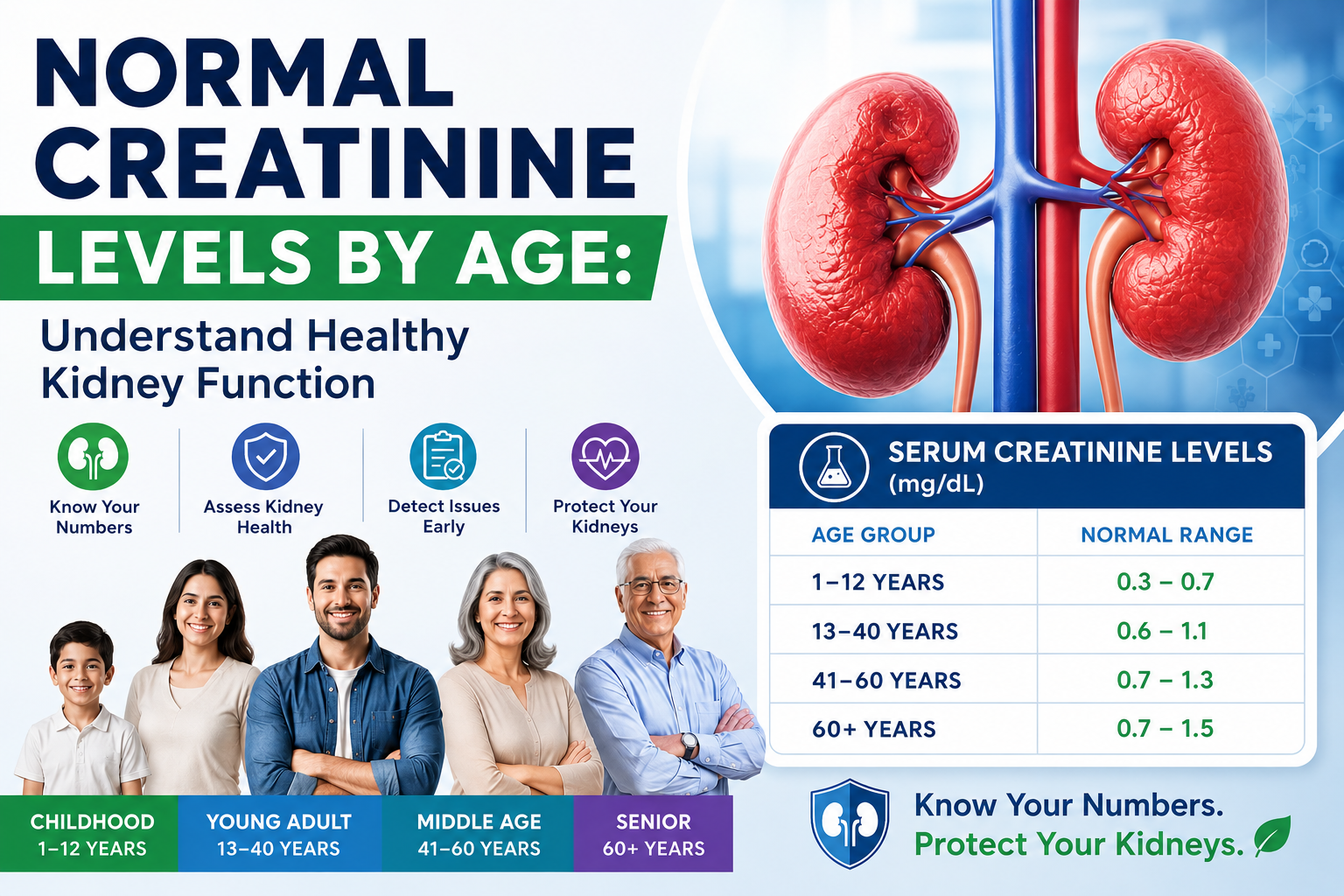
What is the Normal Creatinine Levels by Age?
Creatinine levels aren’t the same for everyone. They depend on some factors like age, gender, muscle mass, hydration, and general health. You’ll usually find that men have higher creatinine levels than women, since men tend to have more muscle.
Lab ranges also differ. Different labs might have slightly different reference points, so it’s important to consult with your doctor. They’ll look at your results along with your symptoms and other tests to figure out what’s going on.
Normal Creatinine Levels in Adults
For most adults, normal creatinine levels look like this:
- Men: around 0.7 to 1.3 mg/dL
- Women: about 0.6 to 1.1 mg/dL
Those numbers can shift a bit, depending on which lab runs the test and your overall health.
Normal Creatinine Levels by Age Male
Creatinine for men changes gradually as they get older. Younger men usually have higher creatinine levels because of more muscle, while older adults might see those numbers drop a little. If your creatinine stays high or you notice swelling, tiredness, or weird changes in your pee, that’s something you shouldn’t ignore.
| Age Group (Male) | Normal Creatinine Range (mg/dL) |
| 0–11 months | 0.17 – 0.42 |
| 1–5 years | 0.19 – 0.49 |
| 6–10 years | 0.26 – 0.61 |
| 11–14 years | 0.35 – 0.86 |
| 15 years and older | 0.67 – 1.17 |
Normal Creatinine Levels by Age Female
Women usually have lower creatinine levels, mostly because muscle mass is lower on average. Factors like pregnancy, getting older, dehydration, or certain health conditions can cause their numbers to shift. Even a small bump in creatinine should get checked out if there are signs your kidneys aren’t working right.
| Age Group (Female) | Expected Creatinine Range (mg/dL) |
| 0–11 months | 0.17 – 0.42 |
| 1–5 years | 0.19 – 0.49 |
| 6–10 years | 0.26 – 0.61 |
| 11–15 years | 0.35 – 0.86 |
| 16 years and older | 0.51 – 0.95 |
Normal Creatinine Levels in Children
Children have much lower creatinine levels than adults. That’s thanks to their smaller muscle mass, and the normal range goes up as they grow. Newborns sometimes show creatinine based on their mom until signs settle down.
| Age Group (Children) | Normal Creatinine Range (mg/dL) | Why It Changes |
| Newborns (0–28 days) | 0.30 – 1.00 | May temporarily reflect maternal creatinine levels |
| Infants (1–12 months) | 0.17 – 0.42 | Very low muscle mass keeps levels lower |
| Children (1–5 years) | 0.19 – 0.49 | Gradual rise with normal growth |
| Children (6–10 years) | 0.26 – 0.61 | Muscle development slowly increases creatinine |
| Adolescents (11–15 years) | 0.35 – 0.86 | Puberty and increased muscle mass raise levels |
Average Creatinine Level by Age and Gender
Doctors don’t just go by the numbers. They look at age, gender, body size, how much muscle you’ve got, hydration level, and your medical history. That’s why two people with the same number might have completely different kidney health.
What Factors Affect Creatinine Levels?
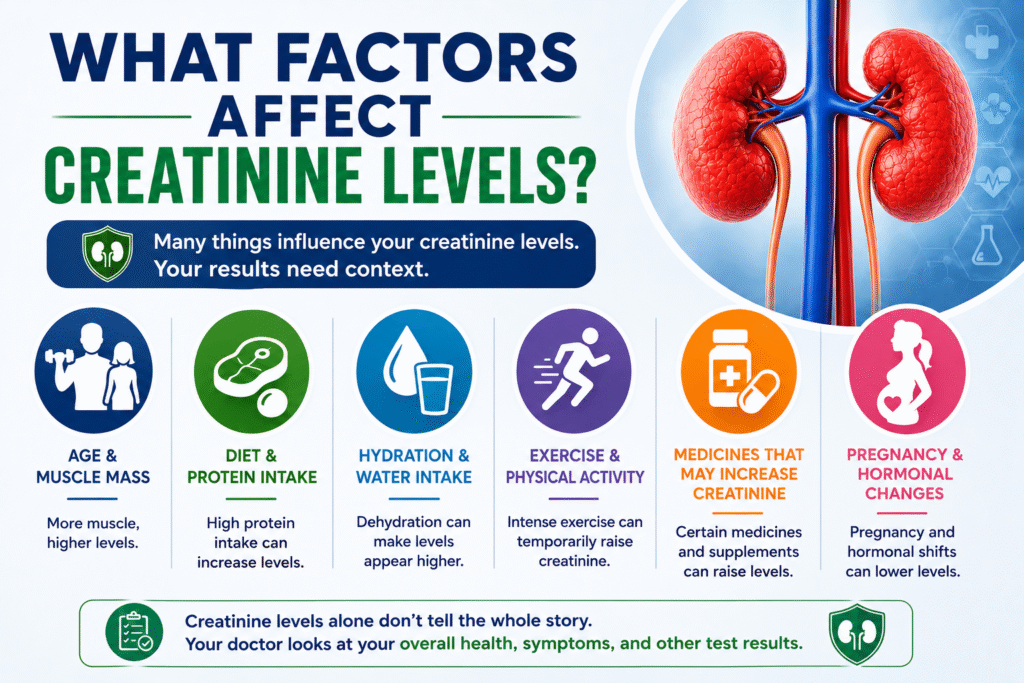
Creatinine levels are shaped by a mix of everyday factors. That’s why doctors examine more thoroughly than just the number on your lab report.
Age and Muscle Mass
Let’s start with age and muscle mass. Creatinine comes from normal muscle activity, so if you’ve got more muscle, you’ll naturally have higher levels. Young adults and athletes tend to show this effect. Older adults usually have less muscle, so their creatinine drops. Men typically have higher creatinine than women and kids because they usually carry more lean muscle.
Diet and Protein Intake
Diet matters, too. A high-protein meal, especially red meat, bumps up your creatinine, since cooked meat delivers creatinine straight into your system. Creatine supplements do the same. Still, minor changes in what you eat won’t drive dangerously high levels if your kidneys work well.
Hydration and Water Intake
Hydration plays a big role. When you’re dehydrated, there’s less fluid in your blood, making creatinine look artificially high. Staying hydrated keeps kidney filtration running smoothly and your test results more reliable. Even brief dehydration after vomiting, diarrhea, fever, or sweating excessively can spike your numbers.
Exercise and Physical Activity
Exercise can raise creatinine, but it’s temporary. Heavy workouts, weightlifting, or marathon training break down more creatine in your muscles. That bump usually fades with rest. For an accurate creatinine blood test, doctors advise taking it easy on exercise beforehand.
Medicines That May Increase Creatinine
Let’s not forget medicines. Some antibiotics, NSAIDs, blood pressure meds, chemotherapy agents, and creatine supplements can increase creatinine. Sometimes, the spike comes without kidney damage; other times, it signals a direct hit to kidney function.
Pregnancy and Hormonal Changes
Pregnancy changes your kidney health. Blood flows more to the kidneys, usually lowering creatinine. Over time, hormonal shifts and changes in muscle mass can also influence creatinine. After menopause or as women age, these effects bring the levels down.
Here are some of our blogs that can help you understand how to keep your kidney health intact.
What Are the First Signs of High Creatinine?
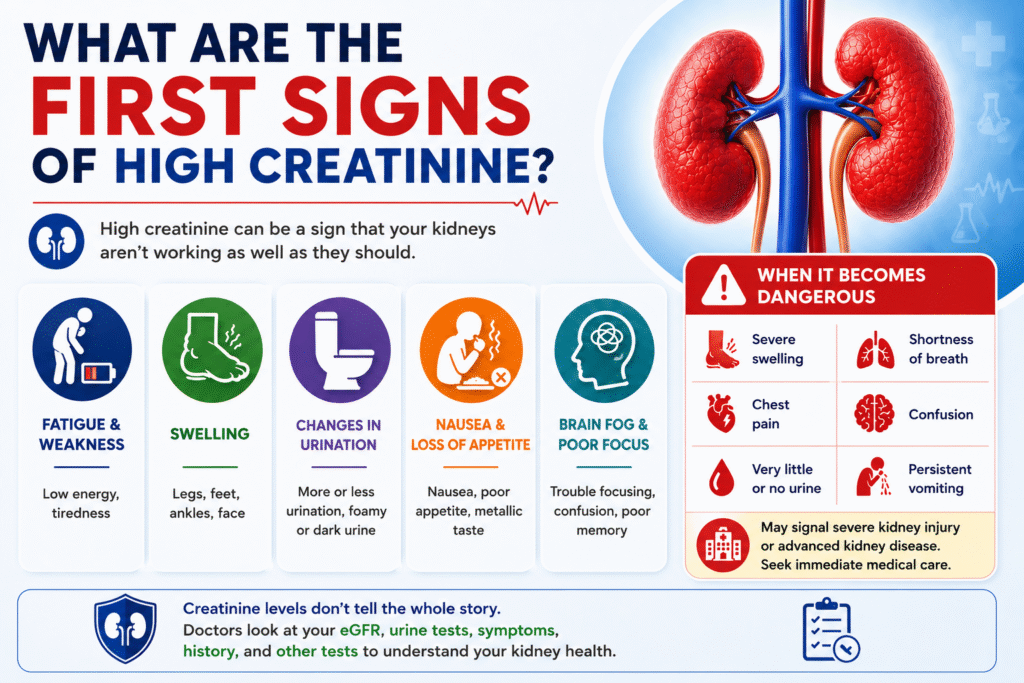
High creatinine doesn’t usually cause early symptoms by itself. Most of the time, you only notice signs when kidney function starts to slip. The kidneys’ job is to clear waste and control fluid balance, so when creatinine climbs, it’s a signal that the kidneys aren’t working as well as they should.
Fatigue and Weakness
Fatigue and weakness show up early. Feeling wiped out for no clear reason is common when your kidneys can’t filter waste properly, letting toxins build up in your blood. That drains your energy.
Anemia tied to kidney issues also makes you tired, since damaged kidneys produce less erythropoietin, a hormone that helps make red blood cells.
Swelling in the Legs, Feet, or Face
Swelling is another sign. When the kidneys fail at removing extra salt and water, swelling can develop in your feet, ankles, legs, hands, or even around your eyes. If swelling sticks around or gets worse, and you see changes in urination or higher blood pressure, pay attention.
Changes in Urination
Urination changes come with kidney problems tied to high creatinine. Maybe you’ll start urinating more or less, see foamy or dark urine, or notice blood in your urine. Some people wake up repeatedly at night to go, or find it hard to urinate at all.
Nausea and Loss of Appetite
Nausea can hit when waste builds up in the bloodstream. You might lose your appetite, feel sick, or notice a metallic taste in your mouth. These tend to show up as kidney function drops further. When you’re not eating, you might lose weight and feel even weaker.
Brain Fog and Difficulty Concentrating
Sometimes, you get “brain fog.” Trouble focusing, poor memory, confusion, or trouble thinking clearly can all happen when kidney function falls, and waste or electrolyte imbalances mess with your brain.
When High Creatinine Becomes Dangerous
High creatinine gets more serious when it signals rapid or severe kidney injury. Watch for severe swelling, shortness of breath, chest pain, confusion, almost no urine output, ongoing vomiting, or extremely high blood pressure. In bad cases, extremely high creatinine points to acute kidney injury or advanced chronic kidney disease, which needs urgent medical care or dialysis.
Still, creatinine levels don’t tell the whole story. Doctors look at creatinine alongside eGFR, urine tests, symptoms, your history, and sometimes imaging studies to get a full picture of how your kidneys are doing.
These blogs will help you understand the signs of deteriorating kidney health better:
Common Causes of High Creatinine Levels
High creatinine levels usually mean the kidneys aren’t filtering out waste the way they should. But not all elevated results point to lasting kidney damage. Some causes are short-lived and reversible, while others signal chronic kidney disease or serious health problems.
Chronic Kidney Disease (CKD)
CKD stands out as one of the main reasons creatinine levels stay high. Here, the kidneys slowly lose their filtering ability. Damage happens over time, so creatinine can inch upward without any obvious warning signs at first. If nobody intervenes, CKD can eventually lead to kidney failure.
Diabetes and High Blood Pressure
Diabetes and high blood pressure are the causes of most kidney disease worldwide. High blood sugar hurts the kidney’s tiny blood vessels and chips away at their filtering power. Unchecked high blood pressure does its own kind of damage, putting a steady strain on kidney vessels. That’s why people with these conditions track creatinine and eGFR to catch any decline early.
Kidney Stones or Infections
Kidney stones sometimes block urine from passing normally, ramping up pressure and affecting kidney function. On top of that, tough or untreated urinary tract infections that move up to the kidneys can trigger inflammation and either temporary or lasting harm. In both cases, creatinine climbs because the kidneys just can’t clear waste as they should.
Severe Dehydration
When dehydration kicks in, the kidneys don’t get enough blood flow, and waste removal suffers. This can happen after a bout of vomiting, diarrhea, fever, sweating, or just not drinking enough water. Creatinine can spike but returns to baseline when hydration is restored, as long as the kidneys haven’t taken a hit.
Certain Medications and Supplements
Many medications and supplements can raise creatinine levels or directly stress the kidneys. Some of the bigger culprits are NSAID painkillers, certain antibiotics, blood pressure drugs, chemotherapy, and creatine supplements.
Some medications only bump up creatinine a little and don’t actually harm the kidneys, but a few can cause real trouble if overused or taken long-term.
Heart Problems Affecting Kidney Function
The heart and kidneys constantly work together, keeping blood and fluids balanced. When the heart falters, you experience symptoms like heart failure or severe heart disease.
The kidneys get less blood and can’t filter properly. That’s known as cardiorenal syndrome, where the heart struggles to drag down kidney function, and creatinine creeps up.
There are so many factors that affect creatinine. That’s why doctors don’t rely on creatinine alone. They look at symptoms, eGFR, urine tests, blood pressure, blood sugar, and imaging to pinpoint what’s going on.
Here are some blogs that will help you understand better the causes of high creatinine levels.
Can Kidneys Recover From High Creatinine?
Kidney function can get better if you catch and treat the problem of rising creatinine early on. Factors like dehydration, certain medications, a blockage in your urinary tract, or acute kidney injury (AKI) reverse once you fix what’s causing the trouble.
Doctors don’t watch creatinine alone. They check your eGFR and run urine tests too. This helps them see if your kidneys are holding steady or actually getting stronger.
When Creatinine Levels May Improve
That usually happens when:
- You treat dehydration
- You stop taking medicines that stress the kidneys
- You clear a blockage in the urinary tract
- You treat AKI early
- You get blood sugar and blood pressure under control
Can Kidney Damage Be Repaired?
Some kidney injuries actually heal, at least partly, especially with AKI since it’s sudden and temporary. The kidneys can recover if treatment starts early and the problem is reversible.
Chronic kidney disease (CKD), on the other hand, usually stays around. Scarred kidney tissue doesn’t grow back, so CKD is considered permanent. Still, good treatment matters.
It slows down further damage, protects whatever kidney function is left, cuts down complications, and pushes back dialysis for as long as possible. Keeping blood pressure, diabetes, hydration, and medications in check helps preserve kidney health.
Can Kidneys Go Back to Normal?
Sometimes kidneys bounce back, but that usually happens after a mild or brief injury, especially if doctors catch it early. Quick treatment really helps prevent lasting scarring. Plenty of people fully recover from acute kidney injury.
Still, kidney function sometimes doesn’t return to its previous level, even if creatinine levels improve. Age, overall health, diabetes, high blood pressure, and the severity of the injury matter for recovery.
Conditions Where Recovery May Be Limited
Recovery can stall if the damage is serious. Recovery also becomes hard if the kidney damage is long-term or keeps getting worse. Factors like advanced CKD, chronic diabetes, uncontrolled high blood pressure, genetic kidney problems, repeated infections, severe scarring, or continual urinary blockage can all leave permanent marks.
Once the kidneys reach failure, they can’t remove waste or extra fluid anymore, so dialysis becomes necessary.
To get a clear read on kidney health and chances for recovery, doctors consider eGFR, urine protein results, imaging, and a person’s medical history.
The following blogs will give you a clear picture of how to manage CKD and how to support kidney health.
How to Lower Creatinine Levels?
High creatinine isn’t a disease on its own. It’s more like a warning light that your kidneys might not be sorting waste as well as they should.
The best way to deal with high creatinine depends on what’s causing it, how bad the conditions are with your kidneys, how hydrated you are, any medicines you’re taking, and whether you have other health issues like diabetes or high blood pressure.
You cannot lower your creatinine levels overnight, but making some changes in your habits and working with your doctor can help protect your kidneys and keep the condition from getting worse.
Drink Enough Water
If you’re dehydrated, your creatinine levels can go up. The kidneys can’t do their job properly when they don’t get enough fluid, so staying hydrated matters, especially if your water intake is low.
Drinking enough water can help your kidneys keep up with filtering waste. But if you have serious kidney disease or heart problems or issues with retaining fluid, don’t start taking more water without consulting your doctor. Always check with your doctor first, because extra fluid could make your condition worse.
Follow a Kidney-Friendly Diet
Eating with your kidneys in mind can make a difference. What that looks like depends on how healthy your kidneys are, but a doctor or dietitian might suggest you:
- Eat less protein
- Cut back on salt
- Avoid processed foods
- Manage potassium and phosphorus
- Add more fruits and veggies that are safe for your kidneys
Don’t try to guess what your diet should be. Instead, get an expert to help you tailor it to your needs.
Reduce Excess Salt and Processed Foods
Too much salt raises blood pressure and increases the workload for your kidneys. Packaged snacks, fast food, instant noodles, and those easy-to-grab frozen meals hide a ton of sodium and preservatives.
Cutting back on these can help your kidneys function better and keep your blood pressure in check.
Manage Diabetes and Blood Pressure Properly
Diabetes and high blood pressure are two of the biggest reasons people end up with chronic kidney disease. If you don’t keep your blood sugar and blood pressure under control, your kidneys take the hit over time.
Keep an eye on your numbers, take medications as prescribed, stick to a balanced diet, stay active, and check in with your doctor regularly. These steps help slow down kidney damage and can keep your creatinine levels steady.
Avoid Overuse of Painkillers and Supplements
Taking painkillers, especially NSAIDs, can damage your kidneys over time. Some herbal supplements, gym supplements, and too much protein can also tax your kidneys, especially if you’re already at risk. Always let your doctor know about everything you’re taking if your creatinine is up.
Is Walking Good for Kidney Disease?
For many people, getting out for a walk is a great way to help your kidneys. Regular, moderate exercise like walking can improve blood flow, control blood sugar, lower blood pressure, and help manage your weight. Plus, it can boost your energy and mood, especially in early kidney problems. Just make sure your exercise routine matches your health and kidney function.
Can Garlic Reduce Creatinine Levels?
Garlic does have antioxidants and anti-inflammatory properties, and some research hints it might be good for blood pressure and overall kidney health. But it’s not a cure or a direct way to drop your creatinine. Unless your doctor says otherwise, garlic can be part of a balanced diet, not a remedy on its own.
Can Cucumber Reduce Creatinine?
Cucumbers are packed with water and can help with hydration, which is generally good for your kidneys. But there’s no real science to say cucumbers alone will drop creatinine levels. Improving your kidney health usually means treating the main problem, not just adding in one “superfood.”
MedicoExperts Combination Therapy
At MedicoExperts, specialists take a combination approach to kidney care. They blend medical management, tailored diet plans, lifestyle tweaks, supportive therapies, and, when needed, advanced treatments, all guided by the patient’s specific needs. The main goal is to slow down kidney damage, boost kidney health, and help patients live better.
When Should You Consult a Doctor?
Sometimes, your creatinine levels jump temporarily. You may be dehydrated, recovering from a hard workout, or you’ve just started a new medication. That’s not always something to panic over.
Still, if your creatinine stays high or your kidney tests keep coming back abnormal, don’t brush it off, especially if you live with diabetes or high blood pressure or have symptoms tied to kidney issues.
Don’t wait. Seeing a doctor early can pinpoint what’s going on before anything escalates. Catching problems early makes a difference.
When Creatinine Levels Need Medical Attention
Definitely call your doctor if you notice any of these:
- Your creatinine levels stay above normal, test after test.
- The number rises sharply over a short time.
- You see swelling in your feet, hands, or face.
- Your urination changes more, less, or just differently.
- There’s unexplained tiredness or nausea, or you’re not hungry.
- You have diabetes or high blood pressure, and your kidney test looks abnormal.
- Your lab work shows your kidneys getting worse over time.
Doctors don’t look for one creatinine value. They always look at your symptoms, history, age, medicines, whether you’re hydrated, and every test result before saying what’s wrong.
Managing kidney disease early may help slow further damage. Speak with specialists to learn about the right diet, lifestyle changes, and treatment plan for your condition.
Extra Tests Your Doctor Might Order
If your creatinine looks off, your doctor won’t just guess. They’ll order more tests to see how your kidneys are doing and why conditions have changed.
eGFR (Estimated Glomerular Filtration Rate)
eGFR tells you how well your kidneys clear waste from your blood. This is a key test for spotting and tracking chronic kidney disease. If your eGFR drops, it means your kidneys aren’t working as efficiently.
Urine Analysis
A simple urine test can check for:
- protein in your urine
- blood you can’t even see
- signs of infection
- high sugar levels
- early warnings of kidney trouble
Even when your creatinine is just a little bit up, a strange urine test can still be a major clue.
Kidney Ultrasound
With imaging, doctors check:
- kidney size and shape
- stones
- blockages or swelling
- cysts or anything else strange
This helps them spot physical reasons why your kidneys might be struggling.
Kidney Function Tests
Your doctor might order a full panel, including the following:
- blood urea nitrogen (BUN)
- creatinine
- electrolytes
- eGFR
- urine protein
A broader set of tests gives a better view of what’s happening.
Why Early Diagnosis Is So Important
Kidney disease develops slowly. You can feel fine for months or years and only find out because of a routine blood test.
Catching it early isn’t just about knowing. Timely treatment and tweaks to your habits can
- Slow down the kidney damage
- Keep other problems in check
- Cut down complications
- Help you live better
- Sometimes, lowering your risk of kidney failure
Regular checkups matter, especially if you have diabetes, high blood pressure, or kidney problems running in your family or you’ve been on long-term medication or are overweight.
Conclusion
Spotting an abnormal creatinine level on your lab report can be worrisome for you, but one number doesn’t define your kidney health. The issue is figuring out why that change happened and knowing what to do next.
If you have diabetes, high blood pressure, or a family history of kidney disease, it’s important to keep an eye on your kidneys. The most important step is to monitor your kidney health regularly. This will help you catch any issues early, before they turn into bigger problems.
At MedicoExperts, you get advice from skilled kidney specialists and a team of experts. They offer diagnostic help and guide you down the right treatment path.
Concerned about high creatinine levels or kidney health reports? Speak with experienced specialists and understand the right next steps for your condition.
Frequently Asked Questions (FAQs)
Q1. What’s the normal creatinine level for each age group?
Creatinine levels depend on age, gender, and muscle mass. Kids usually have lower numbers. Adult men show slightly higher levels than women.
Q2. Can drinking water lower creatinine?
If dehydration’s behind high creatinine, drinking water helps bring it down. When it’s about the kidneys themselves, medical care matters more.
Q3. Can the kidneys recover from high creatinine?
Some cases are reversible if caught early and treated correctly. Chronic kidney disease doesn’t always go away, but you can usually manage it.
Q4. What are the first signs of high creatinine?
People notice fatigue, swelling, odd changes in urination, nausea, and weakness early on.
Q5. What Is the Best Medicine to Reduce Creatinine?
You won’t find a medicine that brings down high creatinine on its own immediately. The treatment depends on why creatinine’s up in the first place. If blood pressure is an issue, you need the right medication for that. If diabetes is behind it, blood sugar medications help. Sometimes antibiotics are needed for infections, or you may need fluids if you’re dehydrated or to stop a medicine that’s hurting your kidneys.
Each case is different, so don’t try to handle this with home remedies or over-the-counter fixes. Always get checked by a doctor to figure out the right path for you.
Q6. Is walking good for kidney disease?
Yes. Moderate walking boosts blood pressure, circulation, and energy and supports kidney health.
Q7. What foods help lower creatinine naturally?
A kidney-friendly diet, low in sodium, mindful of protein intake, with plenty of vegetables and enough water, helps keep kidneys healthy.
Q8. Does high creatinine always mean kidney failure?
No. Factors like dehydration, certain medications, and even temporary illnesses can push creatinine levels up without causing kidney failure.
Q9. Is walking good for kidney disease?
Walking regularly boosts blood pressure, energy, heart health, and overall well-being for people living with kidney disease.
Q10. Can the kidneys go back to normal?
If the trouble was temporary, the kidneys could sometimes return to normal function. Chronic kidney disease usually doesn’t fully reverse.
References
Relevant Articles
Recommendations to understand different treatments
Medically Reviewed by MedicoExperts Editorial & Clinical Review Board on 12 May 2026
Medical Disclaimer: This content is for informational purposes only and is not intended as medical advice, diagnosis, or treatment. Always seek the advice of your physician or other qualified healthcare provider regarding any medical condition or dietary needs.