

“Why does my baby move like this?” That question may worry you a lot, and you may have many questions when you notice stiff limbs, odd twisting, or sudden jerks that don’t look like normal behaviour.
The first signs of dyskinetic cerebral palsy in babies don’t always show up in obvious ways. They develop slowly and sometimes just look like delayed development or something simple, like a momentary muscle problem.
Spotting these signs early matters. The sooner you notice, the sooner your child can start therapies that help with movement, posture, speech, and everyday skills. This guide breaks down what to look for, how dyskinetic cerebral palsy actually affects babies, and when you should think about seeing a doctor. When you know the symptoms, you can make choices for your child much sooner, and with a lot more confidence.
Worried About Your Baby’s Unusual Movements?
Early guidance can help parents better understand movement changes, delayed milestones, and therapy options for dyskinetic cerebral palsy.
What is Dyskinetic Cerebral Palsy?
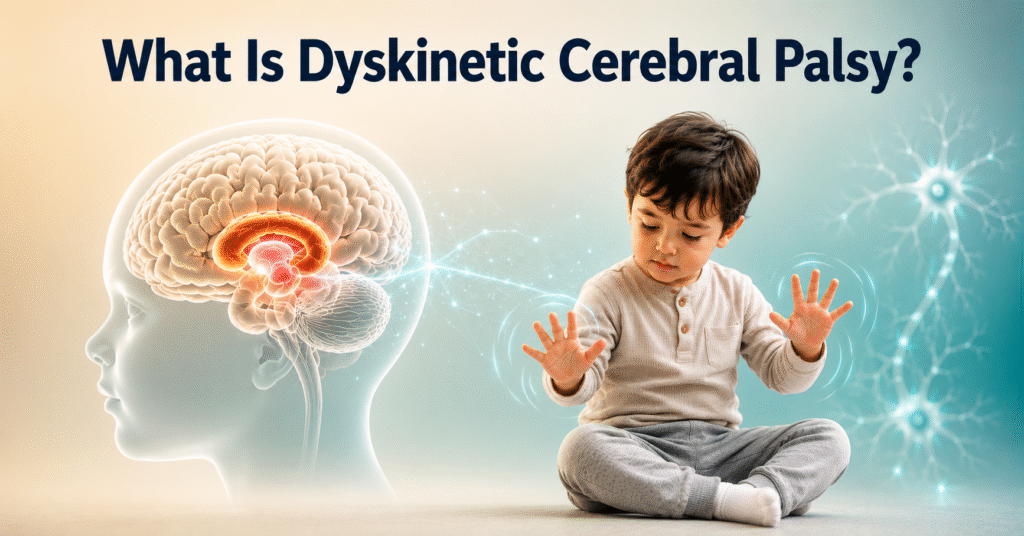
Dyskinetic cerebral palsy is a type of cerebral palsy that disrupts how a child controls their body movements. The brain can’t send smooth movement signals to the muscles, so actions become jerky or unpredictable. Movements happen without warning and often feel outside the child’s control.
Children with dyskinetic cerebral palsy might twist their arms or legs, jerk suddenly, or move with a slow, squirming pattern. These motions can show up in the face and tongue, too. Say a child goes to grab a toy, the hand might dart off in a different direction, surprising everyone. Sometimes, it’s tough just to keep their head steady or sit comfortably without tipping or slumping.
Their muscle tone doesn’t stay the same. It fluctuates. The body can go from feeling really stiff one minute to almost floppy the next. Because of all this, basic activities like feeding themselves, sitting up, talking, or walking can require much more effort as they grow older.
What are the Signs of Dyskinetic Cerebral Palsy in Babies?
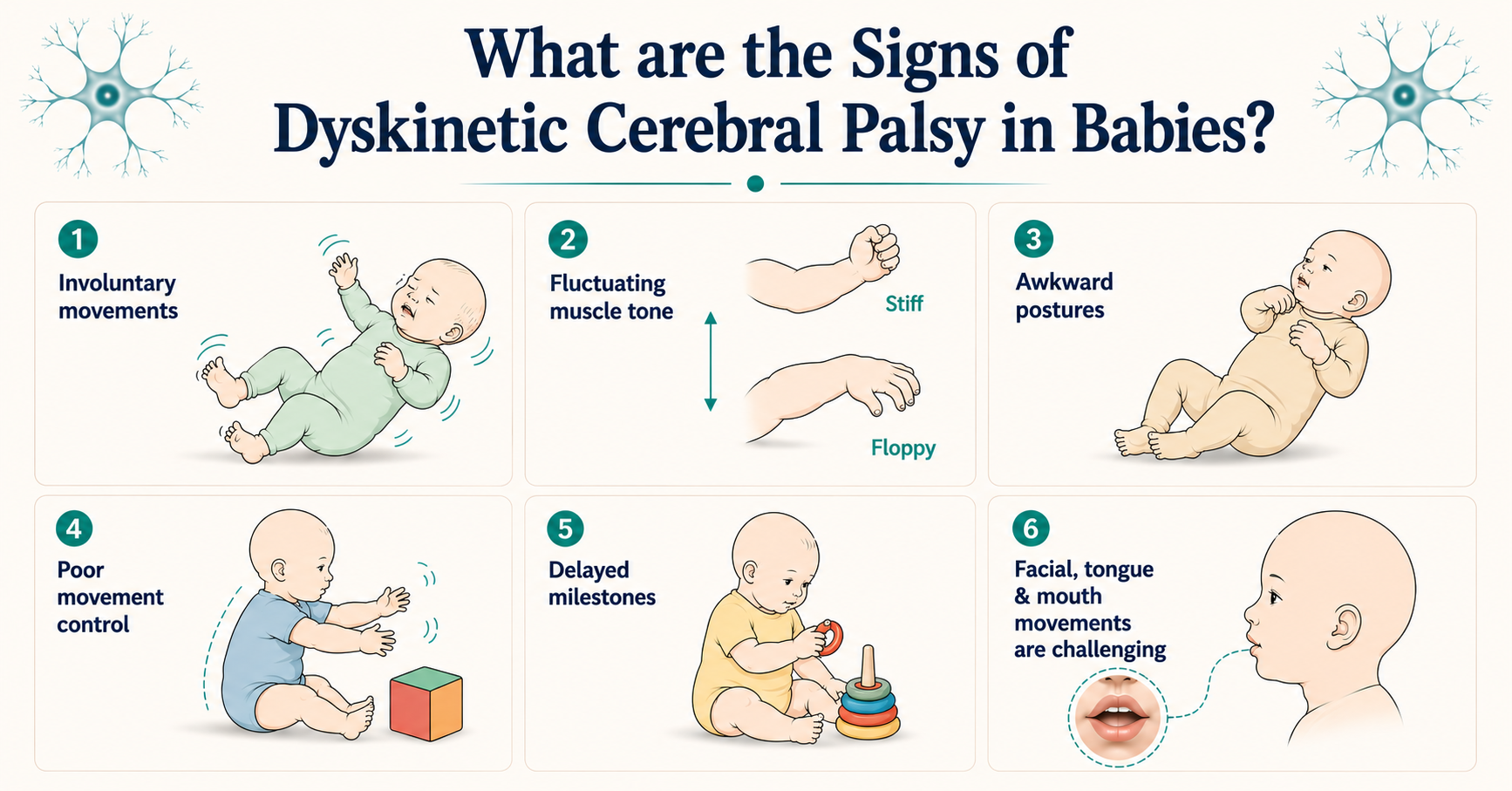
The signs of dyskinetic cerebral palsy in babies usually include unusual muscle movements and a struggle to move their bodies smoothly. Some symptoms show up early, but others stand out more when the child hits milestones like sitting, crawling, or reaching out for things.
You’ll notice:
- involuntary twisting or writhing movements
- Their muscle tone fluctuates. Sometimes it’s stiff, sometimes it’s loose and floppy.
- They adopt awkward postures or odd positions.
- Controlling their arms, legs, or head can be tough.
- Motor milestones come late; rolling over, sitting, and crawling don’t happen when you’d expect.
- Facial, tongue, and mouth movements are challenging, which makes feeding difficult and later affects speech.
As these babies get older, these movement issues become much easier to see. When kids start moving around more and learning new skills, the differences really stand out.
Early Signs of Dyskinetic Cerebral Palsy in Babies
Babies with dyskinetic cerebral palsy or athetoid cerebral palsy usually show unusual movement patterns and shifts in muscle control. These signs can seem subtle at first, especially when they’re young, but as they grow and get more active, the differences become clearer.
Twisting or Writhing Movements
Sudden Uncontrolled Body Movements
Floppy One Moment, Stiff The Next
Difficulty Holding Head or Sitting
Delayed Motor Milestones
Here’s a blog that will help you learn about Gross Motor Function in Cerebral Palsy.
Why Dyskinetic Movements Happen?
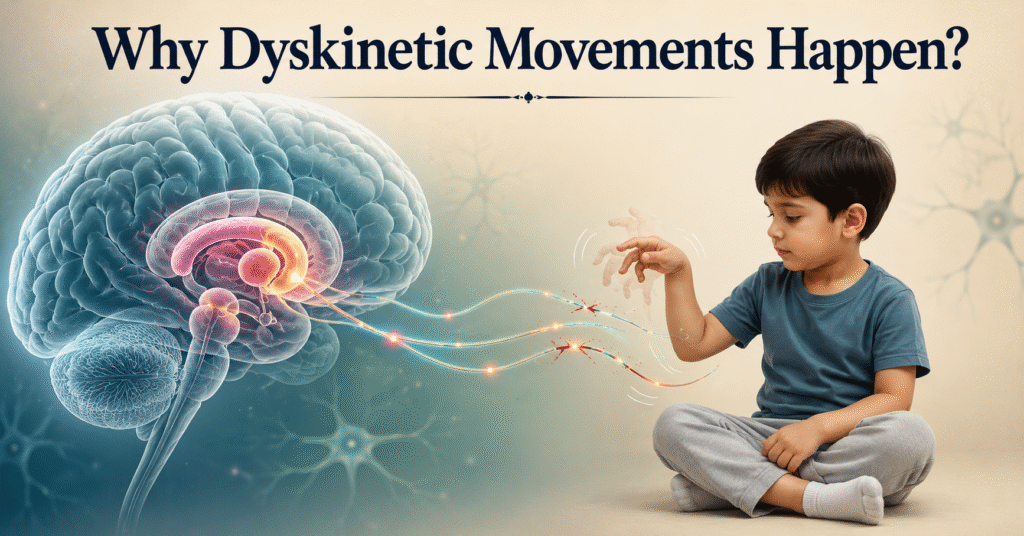
Dyskinetic movements happen when the brain regions that manage smooth, coordinated movement have issues. Normally, these areas handle posture, muscle tone, and voluntary motion, making sure everything works together seamlessly.
But when they start sending the wrong signals, muscle control falls apart. That’s when babies make involuntary movements, like twisting, writhing, or sudden jerks, or they might swing quickly from floppy to stiff. There’s no warning because their bodies don’t cooperate.
It’s like the brain scrambles its messages. Muscles don’t get clear instructions, and they get a confusing message. The result is unpredictable movement.
You’ll see a baby with dyskinetic cerebral palsy go from loose to tense in seconds or move in ways that don’t fit what they’re trying to do, even with simple actions like reaching or grasping.
Dyskinetic vs Spastic Cerebral Palsy
Dyskinetic cerebral palsy and spastic cerebral palsy both disrupt movement, but they’re not the same. With dyskinetic cerebral palsy, you see sudden, uncontrollable movements that come and go. Spastic cerebral palsy feels different. The muscles are tight and stiff and don’t relax easily.
| Dyskinetic Cerebral Palsy | Spastic Cerebral Palsy |
|---|---|
| Uncontrolled or involuntary movements | Stiff and tight muscle movements |
| Muscle tone changes frequently | Muscles stay constantly tight |
| Twisting or writhing body movements | Rigid and stiff muscle posture |
| Movement patterns may change often | Movements are more fixed and restricted |
| Body may seem floppy at times and stiff at others | Muscles usually remain stiff most of the time |
Some children experience a mix of both types, so you might see signs of dyskinetic and spastic cerebral palsy together. Careful medical evaluation helps pinpoint these patterns and guides the best approach to treatment.
When Parents Usually Start Noticing Symptoms
Dyskinetic cerebral palsy also impacts smaller body movements. It may impact the small muscles involved in eating, facial expressions, speaking, and everyday tasks. These challenges may first become apparent in infancy and can persist as the child develops.
Infancy
Sitting Stage
Crawling Attempts
Feeding Difficulties
Feeding, Speech, and Daily Challenges in Dyskinetic CP
Dyskinetic cerebral palsy affects more than how children move their arms and legs. For many, the condition also impacts the muscles needed for feeding, swallowing, facial control, and communication. These problems shape daily life from the very beginning, and parents notice them early on.
Feeding Difficulty
Tongue Movement Problems
Drooling
Communication Struggles
How Doctors Evaluate Dyskinetic Cerebral Palsy?
However, when a child suffers from dyskinetic cerebral palsy, healthcare providers never evaluate a single sign of this condition. In fact, observing the patient’s motor and cognitive development becomes the primary priority of a doctor.
Firstly, this strategy will help doctors make conclusions on the type and scope of assistance and therapy that can be provided to the child.
Developmental Assessment
Movement Observation
MRI Scans
Motor Milestones Assessment
Early recognition of these symptoms makes it possible to provide adequate treatment and therapy, which helps a lot in improving a child’s condition.
Here’s a blog to understand how to improve mobility in CP
👉 Understanding Movement Patterns
Can Dyskinetic Cerebral Palsy Improve?
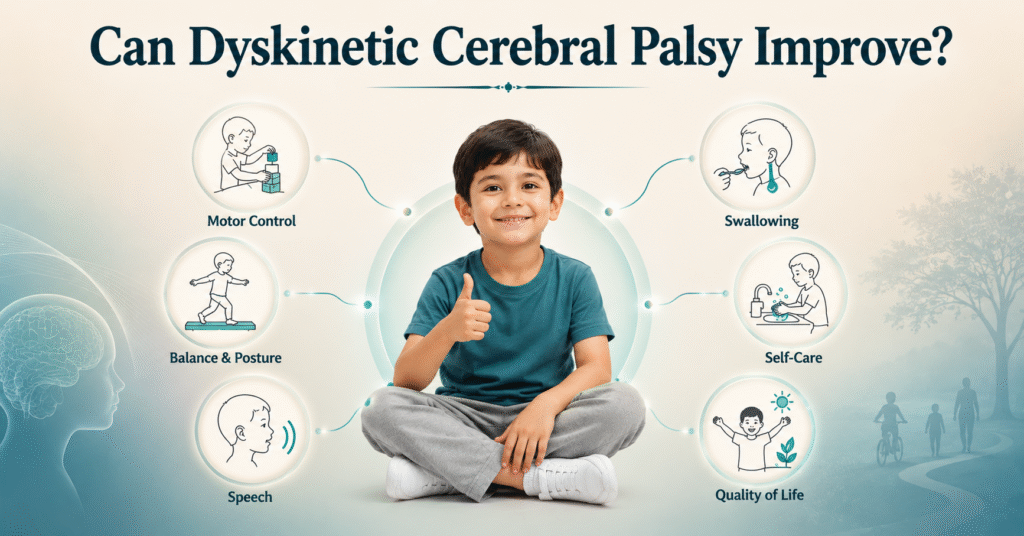
Despite extensive research, dyskinetic cerebral palsy is currently incurable. But it can be effectively managed by providing early treatment, constant support, and proper rehabilitation. Children with the condition can show significant improvement with this approach to the issue.
It should be noted that the main objective of any treatment is not to cure the problem but to improve motor control and ensure patients’ ability to lead an active life.
In this regard, therapy can help children improve:
- their motor control and coordination
- balance and posture
- speech
- ability to swallow
- self-care and personal hygiene
- overall quality of life
While physical therapy concentrates on the issues related to posture, mobility, and muscle control, occupational therapy works on such functions as sitting up, reaching for objects, dressing up, and feeding.
Speech and communication therapy will be required if a person experiences difficulties with talking and controlling his/her oral muscles.
It is important to note that each child requires a special approach. In some cases, individuals become more self-sufficient and learn to perform everyday tasks independently, while others require assistance. Early therapy can provide them with the ability to actively participate in various activities, both in the family and educational environment and among other children.
Want to know what treatment is best for your child? Check our blog on the same: CP Treatment Options
Therapies That May Help Children With Dyskinetic CP
Most children with dyskinetic cerebral palsy end up needing a combination of therapies to help with movement, posture, communication, feeding, and building independence in everyday life.
No two children are exactly alike, so therapy plans need to be tailored to what each child needs and the goals that matter to them and their families.
Physical Therapy
Occupational Therapy
Speech & Feeding Therapy
Combination Therapy Approaches
Want to know more about our combination therapy? Check it here: Combination Therapy for Cerebral Palsy
Why Early Support Matters So Much?

Getting early support changes the game for children with dyskinetic cerebral palsy. Their brains and bodies are still growing fast in those first few years, so stuff like therapy and interventions makes a much bigger impact. At this age, the brain’s pretty good at adjusting to learning new ways to move, picking up new habits, and responding to what therapists do.
If movement problems are caught early, you can jump into therapy right away. That helps children work on posture, coordination, talking, feeding, and handling everyday tasks. Starting sooner gives them a chance to build physical routines and develop skills before their movement challenges get tougher.
There’s another bright spot in early intervention. It helps you understand what your child’s needs are and how they’re progressing. You can also pick up advice and strategies for feeding, positioning, communicating, and daily care. That makes everyday life smoother and lets the child participate more comfortably.
Children grow and change at their own pace, but starting therapy and developmental support early usually leads to better long-term results and a higher quality of life.
Check this blog to understand the developmental milestones:
👉 Developmental Milestones Blog
What Parents Can Do at Home?
Daily life at home has a huge impact on how a child with dyskinetic cerebral palsy feels. They may feel safe, confident, and understood depending on their life at home.
Even small changes to the routine, a little practice with movement, or just paying attention to what sets off certain symptoms can help parents get a better sense of what their child really needs.
Observe Movement Triggers
Encourage Supported Movement
Track Milestone Progress
Build a Calm Routine
Celebrate Small Improvements
When Parents Should Seek Professional Guidance?

Movement abnormalities can occur in some babies transiently, but in cases where the symptoms persist or get aggravated, do not ignore them. Should you continue observing abnormal movements or developmental delays, then it is time for a professional evaluation. This helps you understand what’s going on with your child’s movement and development.
Watch for these signs. It’s smart to talk to a doctor if you see any of the following:
- Involuntary movements that seem to happen more or stand out more
- Delays in reaching milestones like head control, sitting, crawling, or walking
- Feeding difficulties, whether it’s trouble swallowing, choking, or struggling to control the mouth
- Consistently odd body posture, or unusual positioning of the arms, legs, neck, or trunk
Getting an early evaluation doesn’t lock your child into a serious diagnosis. Instead, it helps figure out if they need developmental support, therapy, or a more thorough assessment. Acting early usually means families get clearer answers and quicker access to supportive care when it’s needed.
Looking for Therapies That May Improve Your Child’s Daily Functioning?
A personalized combination therapy approach may help support movement control, posture, feeding, and communication development.
Final Takeaway

The symptoms of this type of dyskinetic cerebral palsy may be quite different between individual babies, and their onset should be detected gradually by parents. These symptoms may manifest themselves through peculiar movements, changes in muscle tone, difficulties with feeding, or developmental delays.
Detecting these symptoms at an earlier stage provides opportunities for providing appropriate treatment to your baby and getting timely assistance with developmental issues. Dyskinetic cerebral palsy is a long-term disease.
But with timely therapy and consistent treatment measures, it will have beneficial outcomes for children, allowing them to move effectively, communicate, be comfortable, and enjoy a high quality of life.
Looking for Better Support for Your Child’s Development?
If you consider that your child’s development needs some improvement and better support, then it is necessary to use a special approach. For children suffering from dyskinetic cerebral palsy, the most successful treatment is the multidisciplinary program aimed at the development of motor coordination abilities, communicative skills, posture, and functioning. With the professional consultation, you will receive the optimal treatment and rehabilitation program for your child.
At MedicoExperts, you will have an opportunity to benefit from personalized combination therapy that can include rehabilitation, therapy planning, and consultations.
Frequently Asked Questions (FAQs):
Q1. What are the first signs of dyskinetic cerebral palsy?
A. Early signs of dyskinetic cerebral palsy include involuntary twisting or jerky movements, muscle tone that changes from loose to stiff, trouble reaching motor milestones, weak head control, and unusual postures. Some babies look floppy one moment and stiff the next, especially when they’re moving or excited.
Q2. What causes involuntary movements in babies?
A. Babies can have involuntary movements for different reasons, but with dyskinetic cerebral palsy, the problem starts in the brain. The brain’s signals to the muscles don’t come through the way they should, and that causes twisting, writhing, or sudden movements that the child can’t control.
Q3. Can dyskinetic cerebral palsy improve with therapy?
A. Dyskinetic cerebral palsy doesn’t go away, but therapy makes a real difference. With early and regular rehabilitation, children often manage their movements better. Therapy supports posture, speech, and eating and can boost independence and comfort in daily life.
Q4. What is the difference between dyskinetic and spastic CP?
A. Dyskinetic cerebral palsy shows up as movements that twist, writhe, or change a lot—you’ll see patterns that can look unpredictable. Spastic cerebral palsy, on the other hand, mainly causes tight and stiff muscles, leading to stiff, limited movements.
Q5. At what age is dyskinetic cerebral palsy noticed?
A. You might see signs of dyskinetic cerebral palsy in infancy, but they usually become clearer as the child gets older and starts trying things like sitting, crawling, standing, or eating on their own. As the child tackles new challenges, movement difficulties stand out more.
Q6. Why does my baby suddenly move without control?
A. Babies sometimes make sudden, jerky, or twisting movements for all sorts of reasons. One cause is movement-control disorders like dyskinetic cerebral palsy. These motions may be writhing, jerking, or unexpected shifts.
They stand out more when the baby’s excited, upset, or trying to move on their own. If these movements keep happening or seem to increase, have a specialist take a closer look.
Q7. My child twists in strange ways, what’s going on?
A. When a child starts making twisting or writhing movements, it sometimes points to a neurological movement disorder, including dyskinetic cerebral palsy. These movements happen without the child meaning them to.
They occur in the arms, legs, face, or even the trunk. Since many factors and conditions can cause odd body movements, doctors watch how your child moves, check their muscle tone, and look at their developmental progress to help figure out what’s behind it.
Q8. What are the signs of involuntary movements with cerebral palsy?
A. Cerebral palsy signs can be odd movements the child can’t control, including twisting, jerking, writhing, changes in posture, or muscle tone that shifts unexpectedly. You might notice these signs more when your child is learning to sit, crawl, or walk, because new challenges can make the movements stand out. Sometimes, smooth control just isn’t there, and that’s often one of the first clues.
References
Relevant Articles For You
Gross Motor Function in CP
Gross motor function in the context of cerebral palsy is about movement, using your arms, legs, and core muscles to…..Read More
Improve Mobility in Children with CP
Mobility in cerebral palsy is the ability to move and control the body to do everyday tasks. It is just not walking. Mobility in…..Read More
Recommendations To Understand Different Treatments
CP Treatment Options
Every parent wants to give their children the best chance at a fulfilling life. That dream can be overshadowed by…..Read More
Combination Therapy for CP
Cerebral palsy affects movement, muscle tone, and coordination. Relying on a single therapy often falls short because…..Read More
Medically Reviewed by MedicoExperts Editorial & Clinical Review Board on 25 May 2026
Medical Disclaimer: This content is for informational purposes only and is not intended as medical advice, diagnosis, or treatment. Always seek the advice of your physician or other qualified healthcare provider regarding any medical condition or dietary needs.