
Last updated on August 7th, 2026 at 05:35 pm
Your child was saying a few words, and now… nothing. The eye contact you loved has faded. Social moments feel different. Maybe their name doesn’t get the same reaction anymore.
If you’re seeing these changes, you’re not imagining things. Many parents feel the same worry when they see their child lose skills, especially after everything seemed on track. It’s confusing. It’s scary. Sometimes it’s plain overwhelming.
Here’s what matters: autism regression does happen, and you’re definitely not alone. The sooner you notice the signs and reach out for help, the better. Early action does make a difference.
In this blog, we’ll go over what regression looks like, reasons it happens, when it usually shows up, if lost skills can come back, and what you can do next. Knowing what’s going on is the first step to helping your child find their way forward.
What is Autism Regression?
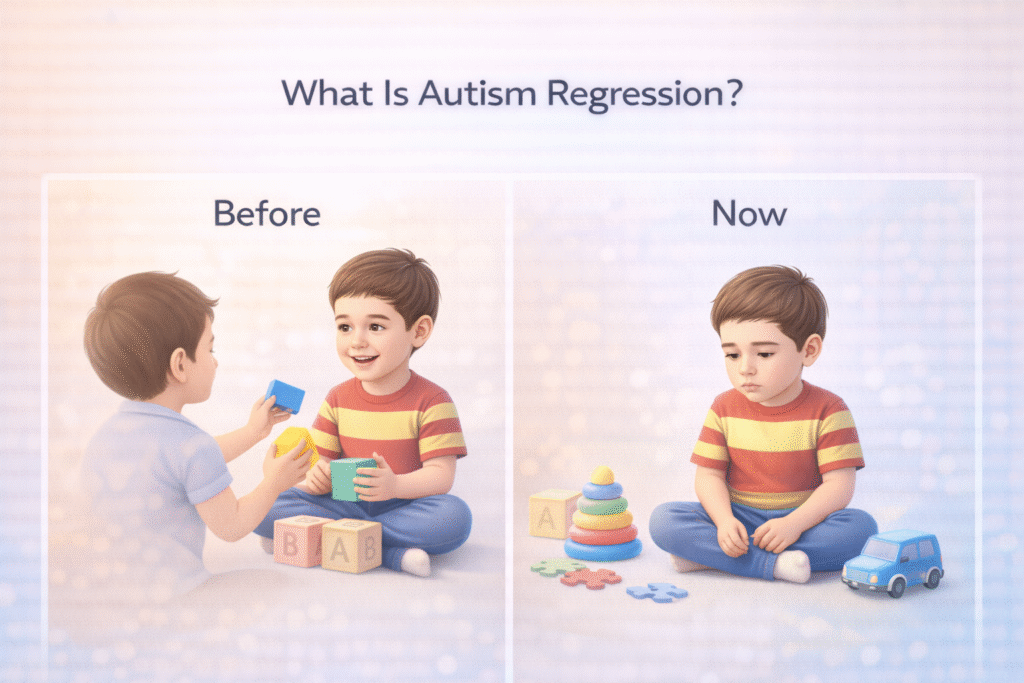
Autism regression means a child starts to lose skills they’d already picked up after a stretch where everything seemed on track.
Maybe your child was saying a few words, playing pretend, or making eye contact, and then, out of nowhere, those activities stopped. It may happen suddenly or slowly over several weeks or months.
These are the most obvious changes that usually show up in a few important areas:
- Speech and Language: A child might stop using words they used to say, babble less, or stop putting together simple phrases.
- Social Interaction: You might notice less eye contact, not responding when you call their name, losing interest in games, or pulling away from people in general.
- Play Skills: Pretend games or favourite playful routines might disappear.
When Does Autism Regression Usually Happen?
Research says it happens between 15 and 30 months old. Basically, during the second year of life. That’s when kids are supposed to be picking up language and social skills fast. If they suddenly stall out or start going backwards, it stands out to parents.
But regression can happen later, especially if there’s a big change, extra stress, sickness, or anything that throws off a child’s routine. For older kids, it can look like losing communication skills, acting differently, or slipping in school and daily life.
Why Evaluation is Important
It’s important not to brush off regression as “just a phase.” If you see a child losing skills, it’s time for a real evaluation. Doctors or specialists usually suggest
- developmental screenings
- speech and language tests
- hearing checks
- a neurological exam.
The purpose here is to figure out what’s behind the regression. Is it autism? Something else? A medical problem? The sooner you get answers, the sooner you can get help, and early support makes a real difference in how things turn out long-term.
Want to know more about autism regression? Contact MedicoExperts Today
Signs of Autism Regression
Spotting the signs of autism regression early matters. It gives you a chance to get help and support when it makes the most difference.
Regression usually shows up as a child losing skills they already had, such as talking, connecting with others, or playing. Sometimes the changes sneak up slowly over a few weeks. Other times, they hit all at once. Either way, they’re hard to miss when you’re watching closely.
Here are some of the most common signs of regressive autism:
Loss of Speech or Words
Reduced Eye Contact
Decreased Social Interaction
Loss of Play Skills
Increase in Repetitive Behaviours
Red Flags To Watch For
If you see a few of these changes happening together, it’s time to get a developmental evaluation.
Want to dig deeper? Check out this detailed guide: Signs and Symptoms of Autism.
Autism Regression at Different Ages
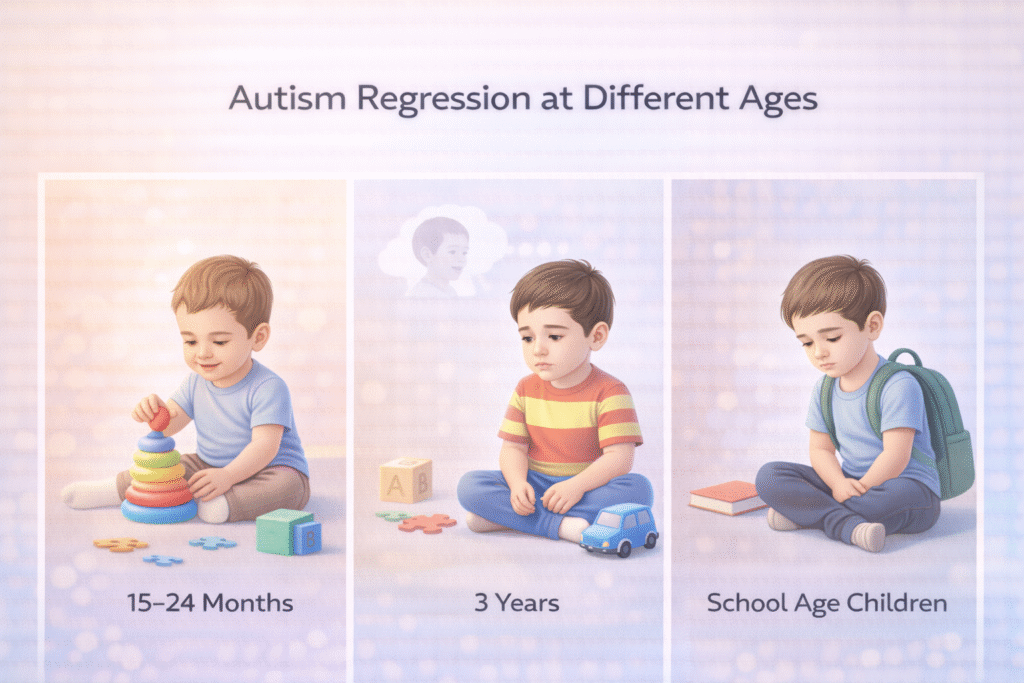
Autism regression doesn’t show up at the same age for every child. Some kids start to lose skills as toddlers, maybe around age 2.
Others don’t show signs until later on, sometimes well into grade school. The timing matters, as it helps parents spot patterns and decide when to reach out for help.
Regression at 15–24 Months
Regression usually pops up between 15 and 24 months old. That’s the age when most kids are starting to talk, play, and connect with people around them. Suddenly, a child who used to say a few words, respond when you call their name, or join in simple games starts slipping back.
They talk less, make less eye contact, and seem more distant. Because kids grow and change so fast at this age, parents see these shifts during everyday moments at home.
Regression After Age 3
Sometimes, regression happens after age 3. It’s not as common, but it still happens. These kids already have stronger language and social skills, so that the changes can be more obvious.
Parents might notice their child doesn’t talk as much, pulls back from friends or family, or acts out in new ways. These changes can sneak up slowly and sometimes show up when life gets more complicated, like starting preschool or dealing with a new routine.
Late Autism Regression in School-Age Children
Then there’s late regression in autism, which can show up in school-age kids. This isn’t usually a sudden loss of basic skills. Instead, you might see a child who can’t keep up like they used to.
They might seem more anxious, shut down, or have bigger emotional reactions. Maybe school feels overwhelming, or they’re worn out from constantly trying to handle social situations and sensory overload.
This kind of late regression can be tied to things like anxiety, burnout from always working to fit in, or getting overloaded at school or in busy places. Kids might pull away, have more meltdowns, or find it harder to do things that once came easily.
It’s important to remember that regression doesn’t always mean losing skills forever. With the right support and intervention, kids can make real progress. Catching these changes early means families and professionals can step in and help when it matters most.
What Causes Autism Regression?
You may worry when your child, who seemed to be picking up new skills, suddenly stops using them. You want to know why.
There isn’t one simple answer. Regression in autism is complicated. Researchers haven’t pinned down a single cause, but they do know it’s usually a mix of different factors like biology, development, and what’s going on around the child.
How the Brain Develops
Seizures and Neurological Conditions
Anxiety
Sensory Overload
Illness and Stress
Therapy That Doesn’t Fit
Since so many things can play a role, it’s important to get a professional assessment. That way, families can figure out what’s going on and get the right support.
Want to learn more? Check out our guide on diagnosing autism or read our blog about autism and anxiety to see how emotions can shape development.
👉 Diagnosis of Autism
👉 Autism and Anxiety
How Common is Autism Regression?
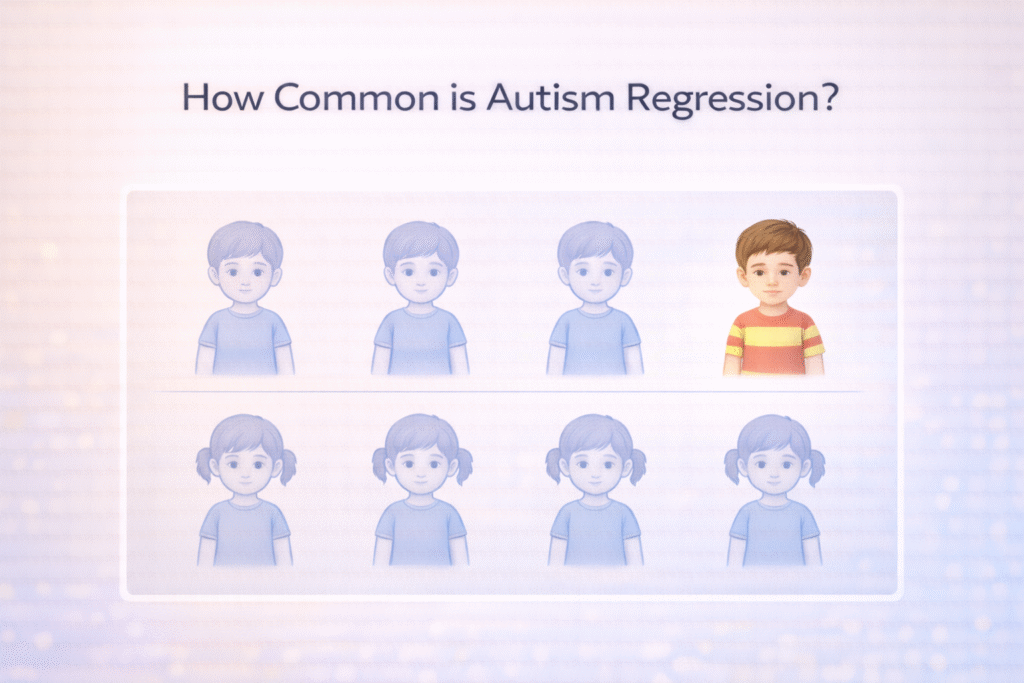
Not all children with autism go through regression. But it’s something doctors and parents see in a good number of cases. Studies say around 20 to 30% of children on the autism spectrum lose some skills they’d already developed. Researchers figured out these facts by following children as they grow and by listening to parents describe when their children suddenly stopped talking or connecting with others the way they used to.
Most of the time, regression shows up early, usually when children are toddlers, between 15 and 30 months old. That’s right in the middle of a huge burst of learning, when children are picking up words, starting to interact more, and figuring out how to communicate.
You may spot regression first, probably because you are watching those milestones so closely, and any step backwards stands out.
It’s worth knowing that regression doesn’t look the same for everyone. Some children might just stop saying a few words for a while or seem a bit more withdrawn and then bounce back. Others might lose bigger chunks of what they’d learned. The changes can be mild or much more dramatic. It depends on the child.
You and your family may find these setbacks scary. But spotting regression early helps. With the right support and therapies, many children regain lost skills and continue to develop.
Can Autism Regression Be Reversed?
You may want to know if autism regression can be reversed. First of all, it is not the same for all children, but when kids get help early, their chances for progress go up.
Catching autism regression early and jumping into therapy fast can make a difference in outcome. Some kids start to regain skills they lost, or they find new ways to connect and communicate.
Why Early Help Matters
Early intervention programs zero in on helping kids talk, play, learn, and handle everyday chores. The earlier you start, the more you help the brain build the connections it needs for learning and socializing.
Therapy can look different for each child. It might mean structured behavior support, speech therapy, occupational therapy, or play-based sessions.
Skills Can Come Back
Sometimes, with steady support, the child picks up skills they’d lost. Maybe a child who stopped talking starts using words again, or figures out other ways to share what they need.
But at the same time, expect gradual changes. Progress usually comes in small steps, and every child’s timeline is different.
Some Skills Take Work
Other times, skills don’t just “come back” on their own. The child might have to relearn them, slowly, with help. This can mean working on new ways to communicate, practicing social skills, or learning how to manage feelings.
Multidisciplinary Support Matters
Autism touches so many parts of the child’s life, so a multidisciplinary approach helps most. Think developmental pediatricians, speech therapists, occupational and behavioral therapists, homeopathic treatment for autism, Ayurvedic therapies, and special ed teachers, all working together. They build a plan that fits your child’s strengths and challenges, not just a checklist.
And honestly, every child’s journey looks a little different. Progress happens, but it depends on many factors: when you start, what kind of help you get, and what makes your child unique.
Want to learn more? Check out our blog on combination therapy success.
👉 Combination Therapy Success Rate
What To Do If Your Child Shows Signs of Regression?
Watching your child lose skills they once had isn’t just confusing. It can hit hard. When you start seeing these changes, especially in a child with autism, try to stay calm.
The best thing you can do is move forward step by step. Pay attention, reach out for professional help, and build the right support plan. That’s how you figure out what’s going on and what to do next.
Step 1: Document Changes
Step 2: Schedule Developmental Evaluation
Step 3: Rule Out Medical Causes
Step 4: Reassess Therapy Plan
Step 5: Increase Parent-Led Reinforcement
If things still feel stuck or your child keeps losing skills, don’t go it alone. Sometimes, you need a team: speech therapists, occupational therapists, behavioural specialists, and developmental doctors. Working together using a multidisciplinary approach, they can come up with a plan that covers all the bases.
Regression vs Normal Developmental Plateau
When you see your child changing, it’s tough to tell if something’s wrong or if the child’s just hit a normal pause in their development. At first glance, a plateau and true regression can look almost the same, but they’re not.
If a child’s on a developmental plateau, they’re not moving forward much, but they still hang onto the skills they’ve already learned. Regression is different. You actually see them lose abilities they used to have.
Figuring out what’s going on helps you understand how to react. It keeps the panic in check, but also makes it clear when it’s time to bring in a professional for a closer look.
Key Differences
| Feature | Regression | Developmental Plateau |
| Skill pattern | Loss of previously learned skills | Skills remain but progress slows |
| Communication | A child may stop using words or social gestures | Language development may pause but words are not lost |
| Behavior change | Noticeable change in interaction or behaviour | No major change in behaviour |
| Speed of change | Often appears suddenly or becomes noticeable over weeks | Usually gradual slowing of progress |
| Parental observation | Parents often clearly recall when the skill disappeared | Parents feel development has simply “stalled” |
Why This Distinction Matters
Children all grow and change in their own way, and sometimes they slow down. It’s a part of growing up. But when a child starts losing skills they already had, that’s different. That’s not just a normal hiccup, and you should pay attention to it.
If you see your child losing speech, pulling back from others, or not playing like they used to, write those changes down. Bring them to a developmental specialist. The sooner you check in, the easier it is to figure out if your child’s just hitting a slow patch or actually showing signs of regression. Early answers make a difference.
Takeaway: What Parents Should Remember
Here’s what you should remember: When you see signs of regression, you should reach out for a developmental evaluation as soon as you can.
With the right therapies and steady encouragement at home, children pick up lost skills again or find new ways to connect and communicate. And you’re not in this by yourself. There are specialists and therapists ready to walk you through what comes next, so you don’t have to figure it all out alone.
Concerned About Skill Loss in Your Child?
If you’ve noticed speech loss, reduced eye contact, or behaviour changes, early evaluation can help identify the cause and guide the right support plan.
Frequently Asked Questions (FAQs):
Q1. Why does my autistic child lose skills?
A. Some autistic children experience regression, where skills they had previously learned, such as speech, social interaction, or daily activities, seem to decrease or disappear. This can happen due to factors like developmental changes, sensory overload, stress, illness, or difficulty coping with new environments or expectations.
In many cases, the skills are not truly lost but become harder for the child to access during challenging periods. With the right support, therapy, and a stable routine, many children gradually regain or rebuild these skills.
Q2. How common is autism regression?
A. Studies suggest that autism regression occurs in about 20–30% of children on the autism spectrum. It most often appears during the toddler years when language and social skills are developing rapidly. The severity can vary. Some children lose only a few words or social responses, while others show broader developmental changes.
Q3. Can autism regression happen at age 5?
A. Yes, regression can sometimes occur later in childhood. Late autism regression in an older child, including around age 5, is less common but possible. In these cases, children may show reduced communication, increased anxiety, social withdrawal, or behavioural changes. A developmental evaluation can help identify the reasons and guide the next steps.
Q4. What should parents do if a child regresses in autism?
A. If you notice skill loss, the first step is to document the changes and when they began. Then schedule a developmental evaluation with a pediatrician or specialist.
Doctors may rule out medical factors and reassess the child’s therapy plan. Early assessment and consistent therapy help children regain progress.
Q5. Can lost speech come back?
A. In many cases, lost speech can return or improve with the right support. Speech therapy, behavioural interventions, and structured communication strategies can help children rebuild language skills over time.
Progress may be gradual, but early and consistent intervention improves outcomes.
Q6. Is regression always permanent?
A. Not necessarily. Regression does not always mean permanent loss of skills. Some children regain abilities they lost, while others learn alternative communication and social skills through therapy.
Early support, individualized intervention, and consistent reinforcement at home can help restart developmental progress.
References
Relevant Articles For You
Social Challenges in Autism
Social challenges in autism are more than what you see and experience with your child. Here, you need to understand that…..Read More
Is Autism Curable?
Autism is not a disease, so it cannot be “cured” in the traditional sense. It is a lifelong neurodevelopmental…..Read More
Combination Therapy Success Rate for Autism in India
MedicoExperts’ Combination Therapy combines traditional and holistic advanced treatment approaches, rather than…..Read More
Recommendations To Understand Different Treatments
Combination Therapy for Autism
Autism affects each child differently. So our personalized care model blends modern therapies like…..Read More
Stem Cell Therapy for Autism
Stem cell therapy uses your body’s regenerative power. These cells can transform into specialized cells and…..Read More
Homeopathy for Autism
Homeopathy is a 200-year-old science that focuses on holistic healing. Its goal is to balance the mind and…..Read More
Ayurveda for Autism
Natural Ayurvedic herbs are famous for their wide range of potency and effectiveness without any side…..Read More
Medically Reviewed by MedicoExperts Editorial & Clinical Review Board on 12 March 2026
Medical Disclaimer: This content is for informational purposes only and is not intended as medical advice, diagnosis, or treatment. Always seek the advice of your physician or other qualified healthcare provider regarding any medical condition or dietary needs.