Regulatory Note: Where Stem Cell Therapy Stands in India (2026)
Under India’s National Medical Commission and ICMR advisory (25 March 2026, ref. CDN-20011/105/2026), hematopoietic stem cell transplantation (HSCT) is approved as standard-of-care only for a defined list of blood, immune, and related conditions. Mesenchymal stem cell (MSC) therapy — the type most studied for cerebral palsy — is not currently approved as a standard treatment for any condition in India.
Cerebral Palsy is not on the approved list. Stem cell therapy for cerebral palsy is available in India only through registered clinical trials with ethics committee and CDSCO/DHR approval and patient informed consent. This follows the Supreme Court of India’s ruling dated 30 January 2026.
See the full list of approved conditions → Visit stem-cell
This page is for educational purposes only and does not promote or endorse stem cell therapy as a treatment for cerebral palsy. Any decision on suitability or course of treatment rests solely with your treating doctor.
Stem cell therapy for cerebral palsy is not currently an approved treatment in India. As of 2026, it is available only through registered clinical trials. There is no cure for cerebral palsy through any therapy.
What research does show – in clinical trial settings – is that some children experience improvements in muscle tone, motor coordination, and daily function. This page explains what the science and regulations actually say, and the care options available to your family right now.
What Is Stem Cell Therapy for Cerebral Palsy?
Cerebral palsy (CP) is a group of conditions affecting movement, muscle tone, and posture caused by damage to the developing brain – most commonly before or around the time of birth. The brain injury itself cannot be reversed, but research is exploring whether stem cells can help the brain compensate, repair some of the damage, or reduce the inflammation that compounds it over time.
Stem cell therapy for cerebral palsy involves using specialised cells – most commonly mesenchymal stem cells (MSCs) – to attempt to support the brain’s own repair processes. These cells have two properties that make them of scientific interest for CP:
- Neuroprotective potential – they may help protect existing neurons from further damage and support the survival of brain cells in affected areas
- Anti-inflammatory action – they may help reduce chronic inflammation in the brain, which is thought to worsen the effects of the original injury over time
It is important to be clear: these are proposed mechanisms still being studied in clinical trials. MSC therapy is not yet proven to repair brain tissue directly, and it does not reverse the underlying cause of cerebral palsy. What the research is investigating is whether these cellular mechanisms can lead to measurable improvements in function.
What Type of Stem Cells Are Used?
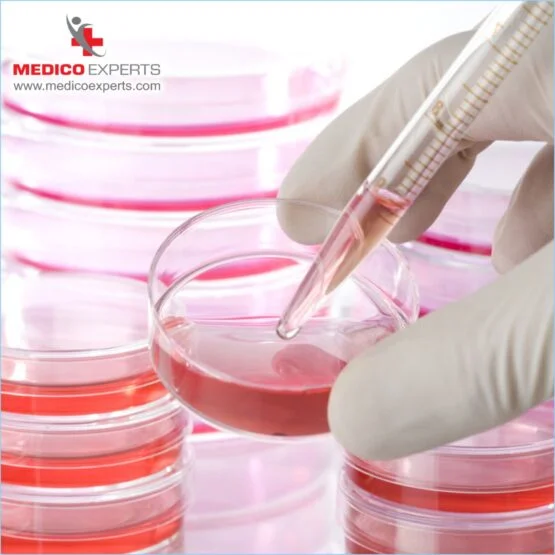
The most common type studied for cerebral palsy is autologous MSCs – cells collected from the child’s own body, most often from bone marrow or peripheral blood. Using the child’s own cells reduces the risk of immune rejection. Some trials have also studied umbilical cord blood cells and cord tissue-derived MSCs, particularly in younger children.
According to the NMC advisory (March 2026), MSC therapy – regardless of the cell source – is not approved as a standard treatment for any condition in India. Any use in a clinical context must be through a registered trial. [1]
Is Stem Cell Therapy Approved for Cerebral Palsy in India?
No – and it is important that families understand exactly what that means before making any decision.
According to the NMC advisory issued in March 2026 (ref. CDN-20011/105/2026), MSC therapy is not approved as a standard treatment for any condition in India — not just cerebral palsy. [1] Any facility offering stem cell therapy for cerebral palsy as a bookable, paid treatment outside a registered clinical trial is operating outside what Indian law currently permits.
This does not mean the research is without value. It means the evidence has not yet reached the bar required for regulatory approval. Families considering this option are engaging with clinical science in progress — not an established treatment.
What Does the Stem Cell Therapy Procedure Involve?
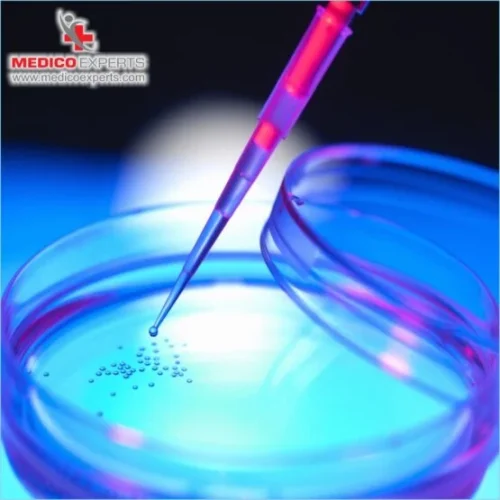
In registered clinical trial settings, the stem cell procedure for cerebral palsy typically follows a structured protocol. The exact steps vary between trials and research teams, but the general sequence is as follows.
| Step | What Happens |
| 1 | Medical history and eligibility review
You share your child’s medical records, diagnosis reports, and therapy history. The research team and medical specialists review these to assess whether your child meets the eligibility criteria for the specific trial protocol. |
| 2 | Pre-procedure assessments
Baseline function is assessed using standardised tools — typically GMFCS (motor classification) and GMFM (motor function measure) — plus neurological examination and imaging. This baseline is essential for measuring any change after the procedure. |
| 3 | Cell collection
Stem cells are collected from the child’s own body — most commonly from peripheral blood (a blood draw, similar to a standard blood test) or from bone marrow. The method depends on the trial protocol. The collection itself is typically done under sedation or local anaesthesia for comfort. |
| 4 | Laboratory processing
The collected cells are processed in a certified stem cell laboratory to isolate, concentrate, and quality-test the MSC fraction. This typically takes one to several days depending on the protocol. |
| 5 | Cell administration
The processed cells are administered — most commonly via intrathecal injection (into the spinal fluid) or intravenous infusion. The delivery method varies between trials. This step is performed in a clinical setting under medical supervision. |
| 6 | Monitoring and observation
Your child is monitored for a period after administration — typically a few days — to observe for any immediate side effects such as fever, fatigue, or discomfort. Most side effects reported in trials are mild and resolve within 2 to 3 days. |
| 7 | Follow-up and outcome assessment
Follow-up appointments are scheduled at intervals (typically 3, 6, and 12 months) to reassess function using the same standardised tools used at baseline. Video consultations can be arranged if travel is not possible. |
Important: The above describes the general protocol used in registered clinical trials. This is not a description of a commercially available procedure. The specific protocol, number of cells, delivery method, and number of cycles differ between trials. Always ask any provider to show you the registered trial number and ethics committee approval before agreeing to anything.
What Outcomes Can Families Realistically Expect?
A 2025 scoping review and meta-analysis in PubMed – covering the full body of published and registered clinical reports on MSC therapy for cerebral palsy – found that improvements in gross motor outcomes have been observed across multiple studies, but the field is limited by study variability, meaning what works in one trial does not always replicate in another. [2]
A 2021 randomised, double-blind, sham-controlled trial – the most rigorous study design available – found statistically significant improvements in motor function, balance, and spasticity in the treatment group at 12 months. Mild side effects including nausea, fatigue, and headache were reported in a small proportion of participants. [3]
The table below reflects what families have reported in research settings across these and other published studies. These are observed outcomes – not promises, and not guaranteed for any individual child.
| Domain | What Some Children Have Experienced | Honest Caveat |
| Motor function | Reduced muscle stiffness and spasticity. Improved ability to sit, stand, or walk with support. Better balance and coordination. Measured using GMFCS and GMFM. | Results vary significantly by type and severity of CP. Not all children show motor gains. |
| Speech and communication | Some children show improved vocalisation or clearer speech. More consistent in children with milder cognitive involvement. | Speech improvements are less consistently reported in trials than motor improvements. |
| Cognitive function | Some families report improved attention, responsiveness, and engagement. Not a primary endpoint in most published trials. | Cognitive outcomes are harder to measure objectively and less well-evidenced in current literature. |
| Daily activities | Easier self-feeding, dressing, or play. Reduced dependency on caregivers for basic tasks. | Highly individual — depends on baseline functional level and ongoing therapy support. |
| Spasticity | Reduction in involuntary muscle tightening, which can make physiotherapy and daily care easier. | Effect size varies; some children show marked reduction, others minimal change. |
| What does NOT change | The underlying brain injury that caused CP. Stem cell therapy does not reverse or cure cerebral palsy. | There is no cure for cerebral palsy through any therapy, including stem cell therapy. |
How outcomes are tracked: Reputable clinical research uses standardised assessment tools – GMFCS and GMFM – rather than before-and-after videos or testimonials.
A note on timing: Most improvements observed in clinical trials are reported at the 6- to 12-month follow-up, not immediately after the procedure. Families should plan for ongoing physiotherapy and therapy support alongside any clinical trial participation – stem cell therapy in research settings is not a replacement for established supportive care.
What Are the Risks? What Is Still Unknown?
Because stem cell therapy for cerebral palsy is still in the research stage, both its potential and its risks are not fully established. What is currently known from clinical trials includes:
Reported Side Effects
- Mild fever in the days after the procedure — typically resolving within 2 to 3 days
- Fatigue or low energy, especially in younger children
- Swelling or discomfort at the injection or collection site
- In some trial participants: headache or nausea, reported in a small proportion of cases [3]
What Is Still Unknown
- Long-term safety — most studies track outcomes over 12 to 24 months; data beyond 5 years is very limited
- Which children benefit most — age, type and severity of CP, and overall health all appear to matter, but predictive criteria are not yet definitive
- Optimal protocols — cell dose, delivery method, and number of cycles vary between trials; no single approach has been established as superior [2]
| Why clinical trial oversight matters
Regulated clinical trials with CDSCO/DHR and ethics committee approval mean independent oversight of how a procedure is conducted, who is eligible, and what data is collected. A registered trial setting is meaningfully safer for a research-stage therapy than an unregulated facility. |
How MedicoExperts Helps Families Navigate This
Since stem cell therapy for cerebral palsy is in the research stage, our role is honest guidance – not arranging a procedure that isn’t yet an approved treatment.
What That Looks Like in Practice
- We explain the protocols different research teams and doctors follow, and how they differ – so you can ask the right questions of any provider
- We share what we have seen honestly – including cases where results did not hold up, and what we learned from them
- We walk you through risks and realistic outcomes in plain terms, not a promotional brochure
- We help you assess whether a registered clinical trial is relevant for your child, and what the ethics, approval, and consent process involves
- We point you toward established alternatives if stem cell research is not the right path for your family right now
What a Counselling Session Involves
- Share your child’s medical history and reports – our team reviews them before the session
- Our specialists explain what is genuinely known and unknown for your child’s specific type and severity of CP
- If a registered clinical trial may be relevant, we walk you through the approvals and consent process in full
- Video consultation available if travel is not possible
Other Paths Forward for Cerebral Palsy
For many families, established and currently accessible approaches offer meaningful support – whether alongside clinical research or instead of it.
Combination Therapy for Cerebral Palsy
A doctor-guided protocol integrating multiple supportive therapies — physiotherapy, homeopathy, Ayurveda — tailored to your child’s specific type of CP, age, and functional goals. This is the most common care path families at MedicoExperts take, and it is available now without regulatory restrictions.
Explore Combination Therapy for Cerebral Palsy →
Ayurvedic Treatment for Cerebral Palsy
Traditional Ayurvedic approaches focus on supporting neurological function, reducing spasticity, and improving overall development. Some families use this alongside conventional management.
Explore Ayurvedic Treatment for Cerebral Palsy →
Homeopathy for Cerebral Palsy
Individualised homeopathic treatment is used by some families as a supportive option within a multi-therapy approach, under medical supervision.
Key Takeaways for Families
- Stem cell therapy for CP is not approved in India as of 2026 – available only through registered clinical trials with CDSCO/DHR and ethics committee approval.
- There is no cure for cerebral palsy through stem cell therapy or any other treatment.
- Research shows real improvements in some children – particularly in motor function, spasticity, and daily activities – but results vary significantly and are not guaranteed.
- The procedure involves multiple steps – from baseline assessment and cell collection to administration and follow-up – all within an ethics-approved trial framework.
- Side effects are generally mild and short-lived in reported trial data, but long-term safety data beyond two years remains limited.
- MedicoExperts provides honest guidance – not a procedure booking – helping you understand your options and ask the right questions.
Whether you are exploring clinical research, looking for an established therapy, or need honest guidance on where to start – we are here to help.
Frequently Asked Questions (FAQs):
Q1. Is stem cell therapy approved for cerebral palsy in India?
No. As of 2026, cerebral palsy is not among the conditions for which stem cell therapy is approved in India. Following the Supreme Court of India’s ruling in January 2026 and the NMC/ICMR advisory in March 2026, only hematopoietic stem cell transplantation (HSCT) for specific blood and immune conditions is approved as standard care. Stem cell therapy for cerebral palsy is available only through registered clinical trials with full ethics committee and CDSCO/DHR approval.
Q2. What does the stem cell therapy procedure involve for a child with cerebral palsy?
In registered clinical trial settings, the procedure involves several stages: baseline assessment using validated tools like GMFCS and GMFM, collection of the child’s own stem cells (most commonly from blood or bone marrow), laboratory processing, administration via injection or infusion under medical supervision, short-term monitoring for side effects, and scheduled follow-up at 3, 6, and 12 months. The specific protocol varies between trials and research teams.
Q3. What improvements can families realistically expect from stem cell research for cerebral palsy?
In clinical research settings, some children have shown improvements in muscle tone, reduced spasticity, better motor coordination, and easier daily activities. These are individual outcomes — not guaranteed results. Progress depends on the type and severity of cerebral palsy, the child’s age, and overall health. Improvements are measured using standardised tools like GMFCS and GMFM, not informal before-and-after impressions. There is no cure for cerebral palsy through stem cell therapy.
- [1] National Medical Commission. Advisory on Stem Cell Therapy (CDN-20011/105/2026). New Delhi: NMC; March 25, 2026. Available at: https://www.nmc.org.in/MCIRest/open/getDocument?path=/Documents/Public/Portal/LatestNews/Advisory_Merged_Secretary.pdf
- [2] Brown MCBP, et al. Clinical Evidence of Mesenchymal Stromal Cells for Cerebral Palsy: Scoping Review with Meta-Analysis of Efficacy in Gross Motor Outcomes. PMC12110704; May 2025. DOI: 10.3390/cells14110785. Available at: https://pmc.ncbi.nlm.nih.gov/articles/PMC12110704/
- [3] Amanat M, et al. Clinical and imaging outcomes after intrathecal injection of umbilical cord tissue mesenchymal stem cells in cerebral palsy: a randomised double-blind sham-controlled clinical trial. Stem Cell Research & Therapy. 2021;12(1). DOI: 10.1186/s13287-021-02513-4. Available at: https://www.ncbi.nlm.nih.gov/pmc/articles/PMC8343813/
This article is for informational and educational purposes only and is not a substitute for professional medical advice, diagnosis, or treatment. Always seek the advice of your physician or other qualified health provider with any questions about a medical condition. MedicoExperts does not promote or endorse stem cell therapy as a treatment for cerebral palsy. Stem cell therapy for cerebral palsy is not approved in India and is available only through registered clinical trials.

Author Bio:
Dr. Khushbu Jain is a dedicated professional with a passion for advancing healthcare through cutting-edge treatments. She has a special interest in researching regenerative medicine and advanced treatment for diseases that are difficult to treat with conventional treatment options. Her deep understanding of these progressive treatments allows her to offer patients personalized and effective solutions for a variety of health concerns.
Content Medically Reviewed By MedicoExperts Editorial & Clinically Review Board