
Is cerebral palsy curable?
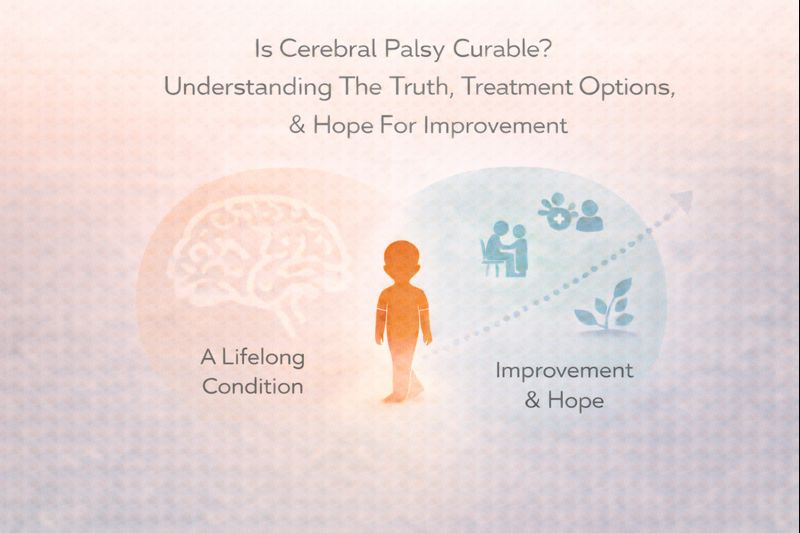
This is the first and most urgent question parents ask after a diagnosis. The honest answer is that cerebral palsy does not have a cure.
You may be worried about your child’s future after hearing this answer, more so if you are searching for a treatment option to cure it completely.
False promises won’t help you much in finding the right treatment and therapy for your child, but understanding the reality will definitely assist you in giving your child a better future.
Cerebral palsy is a lifelong condition, but it doesn’t mean your child’s mobility and independence cannot be improved.
You will need early intervention, therapies, a team of professionals, and consistent support to improve your child’s movement, communication, and daily skills.
Also, you should focus on the treatments that actually help your child grow and achieve their best life.
If you are searching for answers about cerebral palsy, getting the right guidance early can make a real difference. Speaking to a specialist can help you understand your child’s condition and the next steps clearly.
Is Cerebral Palsy Curable?
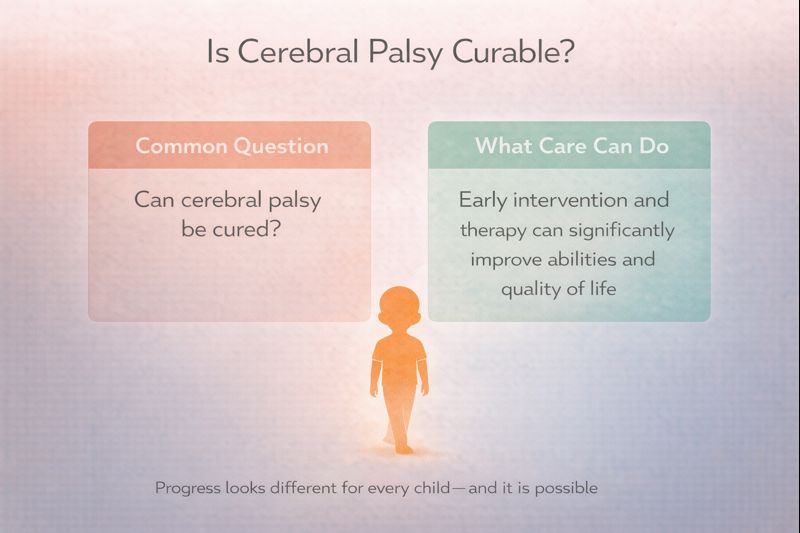
Decades of evidence-based research and clinical observations have shown that cerebral palsy is not curable. It happens because a part of the brain is injured while the baby’s brain is still developing. It may happen before, during, or shortly after the baby’s birth.
Because the brain injury cannot be reversed, cerebral palsy cannot be completely cured or reversed. But research shows that early intervention and long-term therapies can improve the child’s ability to move and boost their independence in daily life.
Is Cerebral Palsy Permanent?
As said above, the brain injury that the child has during birth doesn’t go away. Hence, cerebral palsy won’t go away completely.
But the word “permanent” may seem too intimidating, but it doesn’t mean unchangeable. Studies show that in early childhood, the brain has a degree of neuroplasticity, which helps children to learn new skills and adapt to their environment when they get therapy, training, and support.
Neuroplasticity is our brain’s ability to reorganize itself by forming new neural connections. It can also modify existing neural connections and adapt its structure and function in response to learning experiences, injury, or environmental changes.
Is Cerebral Palsy Reversible?
Cerebral palsy is not reversible. There is no scientific proof that says that CP can be reversed. Right now, treatments are focused on managing the symptoms and giving the child better mobility and independence in daily life.
Physiotherapy, speech therapy, occupational therapy, and combination therapy are some of the treatments that focus on improving mobility and decreasing dependence on others.
Does Cerebral Palsy Get Worse Over Time?
Cerebral palsy itself does not get worse. It is not a progressive condition, which means the brain injury your child has doesn’t worsen with time. It stays the same throughout their life. But problems like muscle stiffness, pain, or difficulty moving can increase if therapy is stopped or delayed.
With regular care and proper management, many people with cerebral palsy maintain or even improve their abilities as they grow.
What Causes Cerebral Palsy?
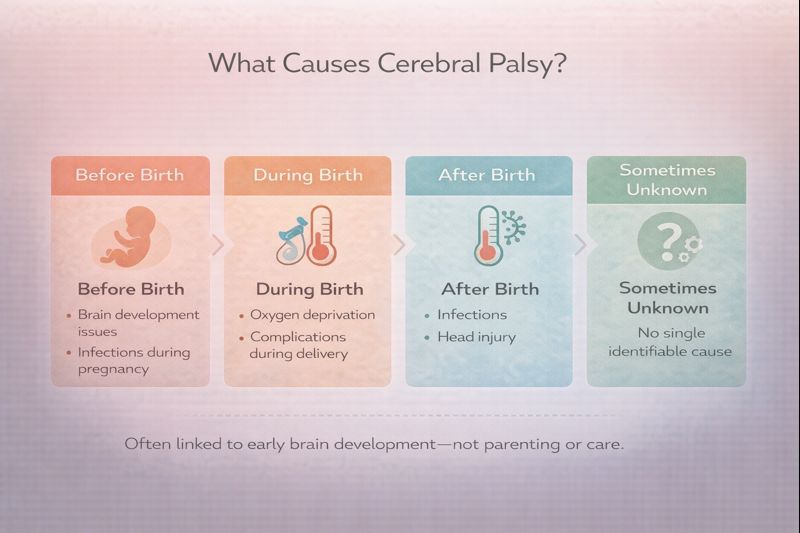
Cerebral palsy happens when a baby’s developing brain is injured or does not develop normally. This damage affects how the brain controls the movement, posture, and coordination of the body.
This injury can occur before birth, during birth, or shortly after birth. So here are some of the causes:
- Lack of oxygen to the baby’s brain before or during birth
- Premature birth (born too early)
- Low birth weight
- Brain bleeding in newborns
- Abnormal brain development during pregnancy
- Severe infections during pregnancy (such as high fever or untreated infections)
- Infections in the newborn period (like meningitis or encephalitis)
- Severe jaundice in newborns that is not treated on time
- Head injury in infancy
- Complications during labor and delivery
- Multiple births (twins or triplets)
- Stroke in the baby before or shortly after birth
What are the Symptoms of Cerebral Palsy?
Cerebral palsy affects the child’s movement, posture, muscle control, and independence. There can be differences in symptoms from person to person. These symptoms can range from mild to severe.
Signs may appear earlier in life in many cases. But some of these signs become noticeable as the child grows. Here are the symptoms:
Early Signs in Babies and Toddlers
Symptoms in Children and Adults
How is Cerebral Palsy Diagnosed?
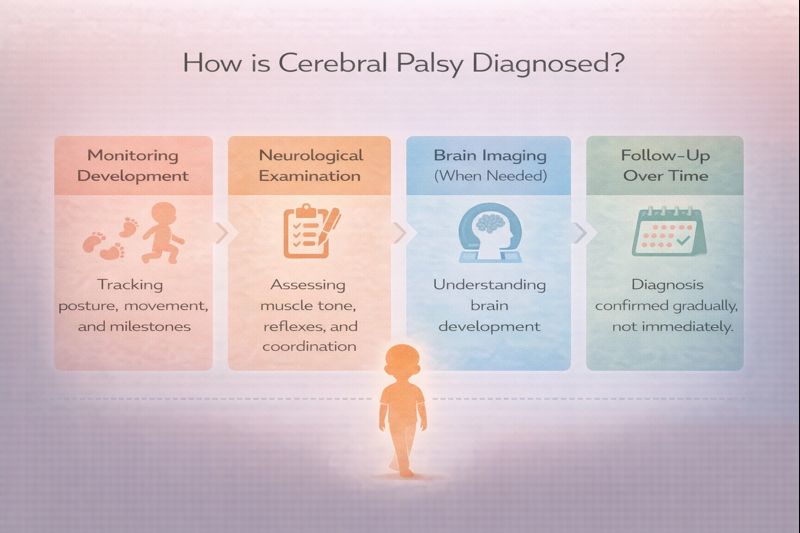
Doctors diagnose CP in your child after carefully observing their development for some time.
They don’t use a single test to diagnose cerebral palsy. Instead, they rely on a combination of medical history, physical exams, and developmental assessments.
At what age is Cerebral Palsy diagnosed?
Early signs of CP can be noticed within the first year of life. But a confirmed diagnosis is made between 12 months and 24 months of age, when delays in movement, posture, or muscle control become clearer.
Milder forms of cerebral palsy may be diagnosed later. It may happen sometimes after the child starts walking or shows difficulty with coordination.
Here, you need to keep in mind that early diagnosis is important because it allows therapy and support to begin as soon as possible.
Tests and Evaluations used for Diagnosis
Doctors use several tools to diagnose cerebral palsy and rule out other conditions. These are some of the most used ones:
- Developmental monitoring and screening to track motor skills and milestones
- Physical and neurological examinations to assess muscle tone, reflexes, posture, and coordination
- Brain imaging tests, such as MRI or CT scans, are used to check for brain injury or abnormal development
- Hearing and vision tests to check sensory challenges
- Blood and genetic tests (in some cases) to rule out other neurological or metabolic conditions
Cerebral Palsy Treatment Options That Support Improvement
Though cerebral palsy cannot be cured, its treatment aims to increase children’s ability to do everyday tasks with ease and live a life of independence.
The core focus will be on reducing movement difficulties, improving communication, and helping the child be as independent as possible. You will see the best results with a combination of therapies that are brought together, keeping in mind your child’s specific needs.
Your child’s care team will focus on early intervention and consistent care. They will design therapy sessions to suit your child’s age, abilities, and challenges.
Play-based exercises, guided movements, and daily practice at home are essential for treatment.
Medicoexperts’ combination therapy brings together physiotherapy, occupational therapy, speech therapy, Ayurveda, and homeopathy in a coordinated plan, helping children progress more effectively than with a single therapy.
Physiotherapy, Occupational Therapy, Speech Therapy & Supportive Therapies
Medications & Medical Procedures
Home-Based Support & Consistency
Want to know more about our combination therapy?
Life Expectancy in Cerebral Palsy
Life expectancy in cerebral palsy will be different for each patient. It completely depends on the severity of the condition and the CP-related conditions the patient has.
Studies say many people with mild to moderate cerebral palsy have a life expectancy close to that of the general population.
If the life expectancy reduces, it may happen due to severe movement limitations, feeding difficulties, epilepsy, and respiratory problems rather than the diagnosis itself.
Factors That Influence Life Expectancy
Here are the factors that affect life expectancy in CP:
- Severity of motor impairment: People who can sit, walk, or move independently generally have better long-term outcomes, but when moving becomes difficult. More so in the case of people with severe intellectual disabilities or who require tube feeding.
- Feeding and swallowing ability: Difficulty swallowing increases the risk of aspiration and lung infections, which can affect survival.
- Respiratory health: Repeated chest infections and poor lung function are huge risk factors.
- Epilepsy: Poorly controlled seizures are related to increased health risks.
- Access to ongoing medical care and therapy: Regular follow-up, rehabilitation, and preventive care improve long-term health.
Takeaway
As a parent, you want to see your child completely free from cerebral palsy, and learning that it has no cure may already pain you a lot.
But even if CP cannot be cured, meaningful improvements in your child’s daily life are possible. Cerebral palsy won’t go away, but your child’s abilities are not fixed. They can be improved to give them a better and more comfortable life.
You need early diagnosis, therapies, consistent support, and care to help your child improve their movements, communication, and ability to perform daily tasks.
MedicoExperts’ combination therapy improves movement, communication, and overall well-being together.
You will see better treatment outcomes by starting therapy early, staying consistent over months and years, getting help from a team of experienced professionals, and choosing treatments backed by evidence.
If your child has been diagnosed with cerebral palsy, getting clear, evidence-based guidance early can shape their long-term progress.
Speak with a cerebral palsy specialist to understand your child’s condition, realistic treatment options, and the best path forward.
Frequently Asked Questions (FAQs):
Q1. Is cerebral palsy genetic?
A. Generally, cerebral palsy is not genetic. In most cases, it happens due to injury or abnormal development of the brain before birth, during birth, or shortly after birth.
That said, genetic factors can play an indirect role. Some genetic changes may increase the risk of abnormal brain development or make the brain more vulnerable to injury.
But cerebral palsy itself is not typically inherited from parents in the way genetic disorders are.
Q2. Is cerebral palsy preventable?
A. Cerebral palsy cannot be fully prevented. But the risk can be reduced in some cases. Preventive measures focus on protecting the baby’s developing brain, such as:
1. Good prenatal care during pregnancy
2. Treating infections promptly during pregnancy
3. Preventing premature birth when possible
4. Managing birth complications carefully
5. Early treatment of newborn conditions like severe jaundice or infections1
Even with proper care, some cases of cerebral palsy still occur, and this is not due to parental fault.
Q3. Can a person with cerebral palsy live a normal life?
A. A person with cerebral palsy can live a meaningful and productive life, but life experiences may be different based on the severity of the condition and associated challenges.
Many people with mild to moderate cerebral palsy:
1. Attend school
2. Work
3. Build relationships
4. Live independently or with minimal support
Those with more severe forms may need lifelong assistance, but with proper medical care, therapy, and social support, they can still achieve a better life. The focus is not on comparison but on maximizing independence, comfort, and participation in daily life.
Q4. What to do if my baby has cerebral palsy?
A. If your baby has cerebral palsy, seek early evaluation from a pediatric neurologist and start therapies such as physiotherapy, occupational therapy, and speech therapy as soon as possible.
Early intervention, regular follow-ups, and a consistent home care routine can significantly improve your child’s movement, communication, and independence over time.
References
Relevant Articles For You
Speech Delay in Cerebral Palsy
Seeing your child struggle with speech brings pain and a feeling of helplessness. But one thing you need to keep in mind…..Read More
Epilepsy in Cerebral Palsy
You see your child suddenly stiffen, twitch, or lose awareness, and it’s the most frightening moment for you as a…..Read More
Seizures in Children with CP
Seizures in children with cerebral palsy are a common symptom. This happens because the areas of the brain that…..Read More
CP Child Daily Routines
It is extremely essential for you to maintain a routine for a child with cerebral palsy because it gives the child a…..Read More
Recommendations To Understand Different Treatments
Stem Cell Therapy for CP
Stem cell therapy lessens the symptoms, prevents complications in the future, and maximizes the independence of…..Read More
Combination Therapy for CP
Cerebral palsy affects movement, muscle tone, and coordination. Relying on a single therapy often falls short because…..Read More
Homeopathy for CP
Homeopathy is a system of medicine that stimulates the body’s innate healing mechanisms using diluted natural…..Read More
Ayurveda for CP
In Ayurveda, CP is linked to an imbalance in the Vata dosha, which governs movement and coordination. When Vata is out of…..Read More
Medically Reviewed by MedicoExperts Editorial & Clinical Review Board on 25 December 2025
Medical Disclaimer: This content is for informational purposes only and is not intended as medical advice, diagnosis, or treatment. Always seek the advice of your physician or other qualified healthcare provider regarding any medical condition or dietary needs.