
You see your child suddenly stiffen, twitch, or lose awareness, and it’s the most frightening moment for you as a parent. Even for a few seconds, it may give you nightmares.
The problem with seizures is that they come without warning. But once it happens, the fear of “Will it happen again?” stays with you every moment.
We can understand how painful it can be for you and your child.
Epilepsy in cerebral palsy is common in children, yet many parents remain unsure about its causes, how to recognize early signs, and which treatments truly work.
It becomes stressful to manage the condition for you without clear information. Also, making decisions and protecting your child during a seizure seems to be an enormous task.
We will give you simple, clear explanations of the causes, risk factors, symptoms, and the best treatment options available.
By the end, you will understand what to watch for, how to respond, and how early treatment can improve your child’s safety, comfort, and long-term well-being.
If your child has had seizures or unusual episodes, early expert guidance can make a big difference. Speak to a specialist and get clarity on the next steps.
Quick Facts
- Around 15%-60% of children with cerebral palsy also experience seizures.
- Epilepsy is more common in children with spastic quadriplegia and brain injuries affecting multiple areas.
- Seizures may appear as staring spells, jerking movements, stiffening, or loss of awareness, not always full convulsions.
- Early diagnosis with EEG, MRI, and clinical evaluation helps in controlling seizures better.
- Anti-seizure medications are the first line of treatment and help many children stay stable.
- When medicines don’t control seizures, a ketogenic diet, Vagus Nerve Stimulation (VNS) or surgery may be considered.
- Managing triggers like fever, stress, missed medication, and sleep issues can reduce seizure episodes.
- With the right care, many children achieve better seizure control and improved quality of life.
Cerebral Palsy and Epilepsy’s Connection: What Parents Should Know?
Children with cerebral palsy have epilepsy or repeated seizures due to abnormal electrical activity in their brains. The reason behind this is that CP is linked to early brain injury or improper brain development, and the same affected areas can also disrupt the brain’s signalling system.
This makes seizures more common in children with CP. These seizures can vary in appearance, duration, and frequency.
How Epilepsy Differs When It Occurs with CP?
Epilepsy associated with cerebral palsy can behave differently compared to typical childhood epilepsy.
- Seizures may start early in life, sometimes during infancy.
- Episodes might be more frequent or less predictable.
- Symptoms can be subtle, such as staring, sudden stiffness, or small jerking movements.
- Children with CP may need more careful monitoring to find the right medication and dosage.
- There are other challenges, such as mobility issues or developmental delays, can make seizure management more complex.
Understanding these differences helps you recognize patterns early and seek timely medical guidance.
Common Epilepsy Types Seen in Cerebral Palsy
Children with cerebral palsy experience different types of seizures; here are these types for your understanding:
Generalized Seizures: They affect both sides of the brain. The child may lose awareness, stiffen, or shake.
Focal Seizures: They begin in one part of the brain. The child may show brief confusion, twitching, or repeated movements.
Tonic-Clonic Seizures: They start with stiffening of the body, followed by rhythmic jerking. These are more noticeable and easier to identify.
Myoclonic Seizures: These seizures cause short, sudden muscle jerks, often in the arms or legs. These movements are quick and can appear like sudden jumps or twitches.
How Common is Epilepsy in Cerebral Palsy?
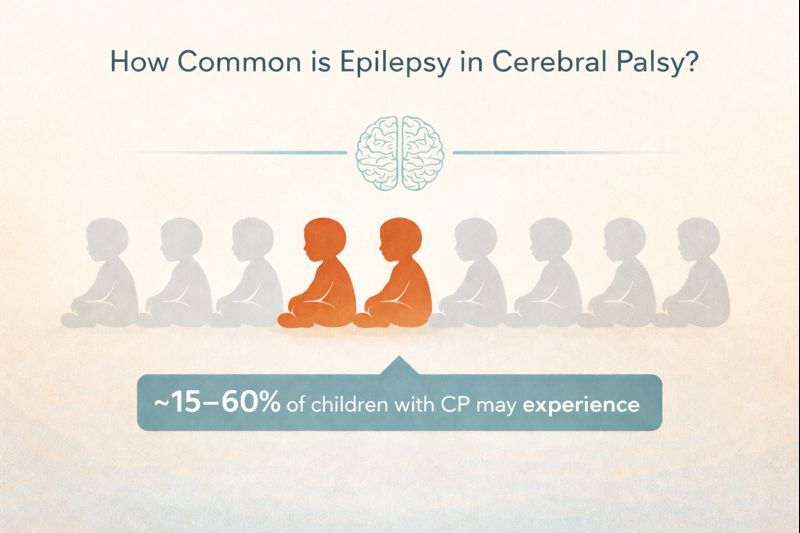
Epilepsy is common among children with CP. According to experts, around 15%-60% of children with cerebral palsy experience seizures at some point in their lives.
The chances of seizures are much higher in children who have more widespread brain involvement. More so in the cases of children with spastic quadriplegia, low birth weight, or a history of birth complications.
Research also indicates that seizures begin early in life, and sometimes they happen during the first few months of the baby’s life.
Also, children with CP who have developmental delays, abnormal brain scans, or feeding difficulties are more likely to develop epilepsy.
Causes & Risk Factors for Epilepsy in Children with CP
Knowing the causes of epilepsy in cerebral palsy helps you understand how both are connected. Here are the common causes:
Perinatal Events (Birth Asphyxia, Infection) & Their Role
Brain Malformations & Structural Lesions (MRI-Detectable)
Clinical Predictors: CP Subtype (e.g., Spastic Quadriplegia) & GMFCS Level
Other Risk Factors: Neonatal Seizures, Prematurity, Intracranial Hemorrhage
Signs & Symptoms of Epilepsy in Children with Cerebral Palsy
Seizures in children with cerebral palsy do not always look dramatic. Some are easy to notice, while others are subtle and easy to miss.
Knowing the signs helps parents recognize seizures early and seek medical care without delay.
Common Observable Signs
More Subtle Signs
Red flags to Act On
Not all seizures look the same. If you are unsure about what you are seeing, a medical review can help confirm whether your child needs further evaluation.
How is Epilepsy Diagnosed in Children with CP?
Diagnosis of epilepsy in children with cerebral palsy needs careful evaluation. Seizures can look different in each child, so doctors rely on factors like history, observation, and medical tests to make an accurate diagnosis.
Clinical History & Eyewitness Descriptions (What Clinicians Look For)
Role of EEG: What it Shows & Limitations
Role of MRI & Other Imaging (Structural Causes)
When to Refer to a Pediatric Neurologist/Epilepsy Specialist?
EEG and MRI results can be confusing. A pediatric epilepsy expert can help you understand reports and plan the right treatment for your child.
Managing Epilepsy in Cerebral Palsy Among Children
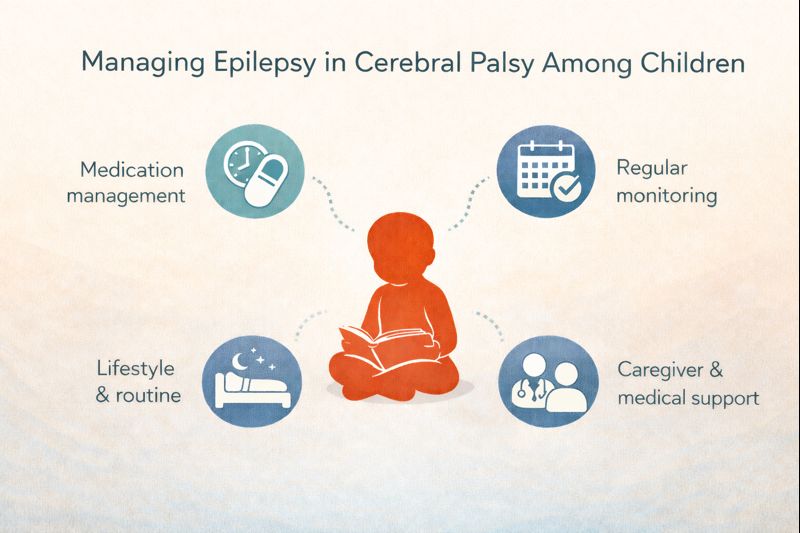
Managing epilepsy in children doesn’t mean only stopping seizures. Instead, it involves long-term planning that supports your child’s safety, comfort, development, and health.
By opting for a well-planned approach, you can help your child live a more stable and self-sufficient life.
Treatment Goals: Seizure Control, Quality of Life, & Development Support
The primary goal of treatment for epilepsy in cerebral palsy is to achieve good seizure control with minimal side effects.
By reducing seizure frequency, doctors can lower the risk of injury and hospitalization for your child. An equally important goal is improving your child’s life qualityand it can be done by supporting sleep, learning, behaviour, and daily activities.
Your child also needs treatment plans that focus on encouraging physical, cognitive, and emotional development alongside seizure management.
At MedicoExperts, our team of specialists takes care of all these important treatment aspects through a personalized, multidisciplinary approach that supports your child’s safety, development, and overall well-being.
Individualized Care Plans and Multidisciplinary Teams
Every child with CP and epilepsy is different, so care plans must be personalized to their treatment and support based on the specific signs, symptoms, and conditions of your child.
For treatment of epilepsy in children with CP, the care team may include a pediatric neurologist, rehabilitation specialist, physiotherapist, occupational therapist, speech therapist, and dietitian.
This team approach ensures seizures are managed while also addressing mobility, communication, nutrition, and overall development.
Your child also needs regular follow-ups to help them adjust to treatment as the child grows and their needs change.
MedicoExperts offers a team of specialists for your child who give them personalized attention.
Takeaway

Living with epilepsy alongside cerebral palsy is not easy for your child and you. You may always be anxious about the seizures and their aftereffects, more so when seizures are unpredictable, and the information online feels scattered.
But with the right understanding, early diagnosis, a team of specialists, and a structured treatment plan, epilepsy can be managed effectively.
The right support and care can help your child achieve better seizure control, improved comfort, and meaningful developmental progress.
What truly makes a difference is a personalized approach that looks beyond seizures alone. When treatment supports movement, learning, behaviour, and emotional well-being together, children get a better chance at a safer and more stable life.
With expert guidance and the right medical team, informed decisions become easier for you.
At MedicoExperts, we focus on understanding your child’s specific signs, symptoms, and issues. Our specialists work together to support your child’s present needs and future potential, and our multidisciplinary team offers personalized care for children with cerebral palsy and epilepsy.
Connect with us to create a treatment plan that supports seizure control, development, and long-term well-being.
Frequently Asked Questions (FAQs):
Q1. Does cerebral palsy cause epilepsy?
A. No, because cerebral palsy itself does not directly cause epilepsy, but both conditions often occur together because they share common underlying causes.
Cerebral palsy develops due to early brain injury or abnormal brain development, and the same brain changes can disrupt normal electrical activity, leading to seizures.
This is why epilepsy in cerebral palsy is more common in children, especially in those with more severe brain involvement.
Q2. Can epilepsy in cerebral palsy among children improve over time?
A. Yes, in some children, seizure frequency can reduce as the brain matures and the right treatment is offered to the child. With the right medication and follow-up, some children achieve good seizure control and may even remain seizure-free for long periods.
Progress depends on the child’s brain condition, seizure type, and response to treatment.
Q3. Is epilepsy in cerebral palsy always lifelong?
A. Not always. Some children outgrow certain seizure types or respond so well to treatment that seizures stop for years. Others may need long-term management.
Regular follow-ups help doctors reassess treatment needs as the child grows.
Q4. Can seizures affect my child’s learning and development?
A. If the seizures are frequent or uncontrolled, they can affect attention, memory, and learning. But early seizure control and developmental therapies can reduce this impact. Managing epilepsy alongside physiotherapy, speech therapy, and occupational therapy supports better overall development.
Q5. What should parents do during a seizure at home?
A. Parents should stay calm, place the child on their side, remove nearby objects to prevent injury, and avoid putting anything in the mouth. Timing the seizure and noting what happens helps doctors later. Emergency care is needed if a seizure lasts longer than five minutes or if breathing becomes difficult.
Q6. Can missed medication trigger seizures in children with CP?
A. Yes. Missing or delaying anti-seizure medication is a common trigger. Giving medicines at the same time every day and following the prescribed dose is crucial for seizure control.
References
Relevant Articles For You
Seizures in Children with CP
Seizures in children with cerebral palsy are a common symptom. This happens because the areas of the brain that…..Read More
Is Cerebral Palsy Genetic?
Cerebral palsy is a neurological condition that affects a person’s movement and muscle coordination. It’s not a…..Read More
CP Life Expectancy of Each Type
Cerebral Palsy (CP) is one of the most common neurodevelopmental disorders affecting children around the…..Read More
Cerebral Palsy for Adults
Adult CP has multiple symptoms like premature aging and mental illness. The problems can be related to…..Read More
Recommendations To Understand Different Treatments
Diagnosis of Cerebral Palsy
As a parent, you need to stay informed about the signs and symptoms of CP, so that you can approach a…..Read More
Causes & Risk Factors of CP
Cerebral palsy happens when your baby’s brain doesn’t develop properly. This can occur before birth, during delivery, or…..Read More
Cerebral Palsy Symptoms
Cerebral palsy (CP) can affect you in different ways. It might impact your whole body, one or two limbs, or one side of your…..Read More
Types of Cerebral Palsy
Cerebral palsy is classified into different types based on how it affects a person’s muscle tone and movement. These…..Read More
Cerebral Palsy
Cerebral palsy is a group of neurological disorders that affect your movements, posture, and ability to balance. The word…..Read More
Medically Reviewed by MedicoExperts Editorial & Clinical Review Board on 18 December 2025
Medical Disclaimer: This content is for informational purposes only and is not intended as medical advice, diagnosis, or treatment. Always seek the advice of your physician or other qualified healthcare provider regarding any medical condition or dietary needs.