
Last updated on August 14th, 2026 at 05:51 pm
Medically reviewed by Dr. Sanjay Sharma, MBBS, MS (Gen. Surgery)
Are you experiencing unusual bowel habits, blood in your stool, or unexplained weight loss? These could be early signs of colon cancer.
Early detection of colon cancer dramatically improves survival rates, but many people delay seeking medical advice due to a lack of awareness.
Discover how recognizing these signs early can lead to effective treatment and even a full recovery.
(The case below is based on a real MedicoExperts patient who consented to share his experience.)
Here’s a personal journey of Mark Porter’s recognizing the warning signs of colon cancer and how timely action led to successful treatment.
How Mark Porter’s (I) Discovered his Colon Cancer Symptoms
Hi, I’m Mark Porter. In 2020, while living in Lagos, Nigeria, I started noticing unusual changes in my body:
- Blood in my stool.
- Difficulty emptying my bowels.
- Thin, pencil-like stools.
- Persistent abdominal cramps.
At first, I thought it was something minor like hemorrhoids. But when these symptoms persisted despite medications, I knew something was seriously wrong. My gastroenterologist confirmed my worst fear: stage 2 colorectal cancer.
What Does Colon Cancer Pain Feel Like?
Colon cancer pain is distinct and often ignored in its early stages. Here’s what it may feel like:
- Cramping in the Abdomen: Persistent pain, often sharp, that worsens over time.
- Rectal Pain: A dull ache or sharp pain, especially during bowel movements.
- Bloating and Gas: Unusual bloating even without eating spicy or heavy meals.
- Pelvic Pain: Discomfort in the pelvic region, which can become constant as the disease progresses.
If you’re experiencing these symptoms, consult a doctor immediately.
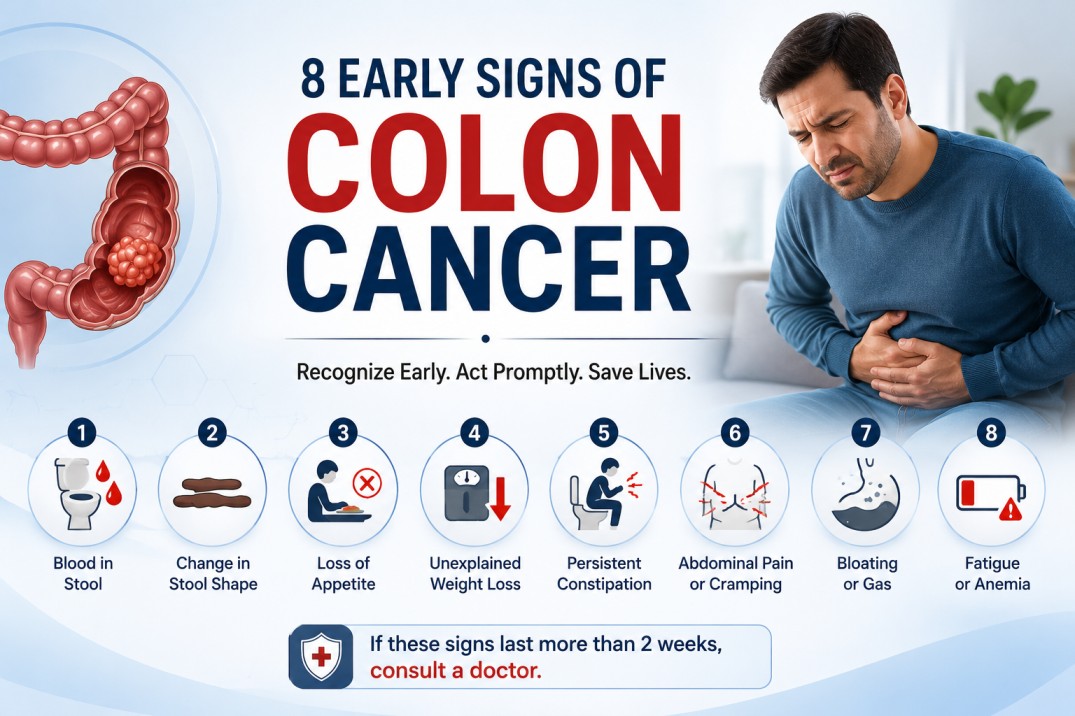
Eight early signs of colon cancer — what each one actually means
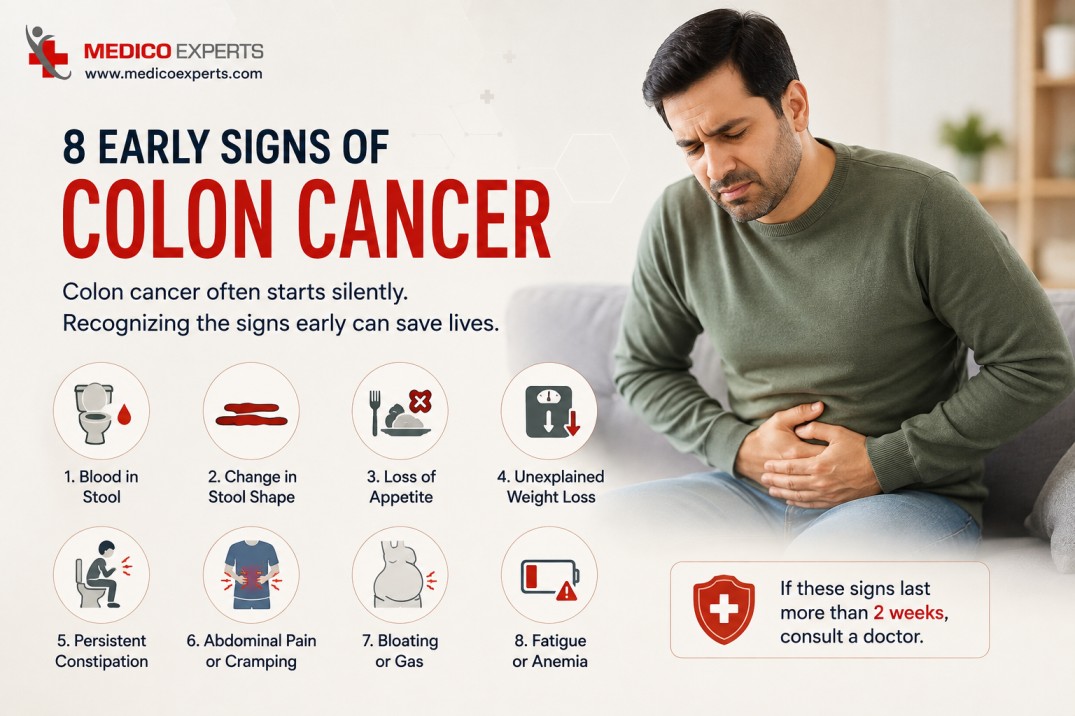
Colon cancer often starts silently but presents noticeable signs over time. Here’s what to watch for:
1. Blood in the stool
The presence of blood in the stool is not a good sign and may be the very first sign of colon cancer.
However, Mark was still not sure about cancer as the presence of hemorrhoids can also cause blood in the stool.
Note: Bright red or dark stool indicates bleeding in the colon.
2. Change in Stool Shape
The presence of blood in the stool is not a good sign and may be the very first sign of colon cancer.
However, Mark was still not sure about cancer as the presence of hemorrhoids can also cause blood in the stool.
Note: Thin or ribbon-like stools can signal a blockage in the colon.
3. Loss of Appetite
I was not feeling well and had a very poor appetite. My urge to eat tasty and delicious food was completely gone.
Note: A sudden aversion to food, especially heavy or rich meals.
4. Unexplained Weight Loss
I was not exercising or doing a lot of hard work, but my weight was drastically decreasing. I lost 15 kgs in 2 months.
Note: Losing weight without changes in diet or exercise.
5. Persistent Constipation
I was having constipation for a long period and it was not reduced even after taking laxatives
Note: Difficulty passing stool despite taking laxatives.
6. Abdominal Pain or Cramping
I was feeling pain in my pelvic region and a cramp in my rectum. The pain was disturbing and it made me awake even at night time.
Note: Sharp, localized pain in the lower abdomen or rectal area.
7. Bloating or Gas
Bloating and gas were two irritating symptoms. Although it was normal to feel bloated sometimes, I was feeling bloated even without taking spicy food or alcoholic drinks.
Note: Constant bloating even after consuming light meals.
8. Fatigue or Anemia
I was having mild anemia due to continuous bleeding in my intestine.
Note: Low iron levels due to internal bleeding may cause fatigue.
All these symptoms made me think that I might have colon cancer which needed immediate treatment.
Are the symptoms different for men and women?
The core early symptoms of colon cancer are largely the same regardless of sex – bleeding, change in bowel habits, weight loss, abdominal pain and anaemia apply equally.
There are a few practical differences worth knowing:
- Women are more likely to have their symptoms attributed to menstruation (for iron-deficiency anaemia), gynaecological causes (for pelvic pain), or IBS. This contributes to a documented diagnostic delay in younger women in particular.
- Men are statistically more likely to develop colon cancer at any given age and are more likely to have the tumour higher up in the colon (right-sided), which tends to present with anaemia and fatigue rather than obvious bleeding.
- Rectal bleeding in a woman should never be assumed to be menstrual or haemorrhoidal without investigation, particularly if the pattern is unusual for her.
The bottom line: the symptoms list above applies to everyone. What differs is how often those symptoms get correctly interpreted.
The two-week rule: when to see a doctor
Most primary care and cancer guidelines converge on a single practical threshold: any of the symptoms above, if they persist for more than two weeks, warrant a medical assessment.
Symptoms that need attention sooner – within days rather than weeks – include:
- Heavy or repeated rectal bleeding
- Pain severe enough to wake you from sleep
- Vomiting with abdominal pain (possible obstruction)
- A palpable lump in the abdomen
- Sudden, severe weakness or shortness of breath (possible anaemia)
You do not need to have several symptoms before acting. One persistent symptom is enough of a reason to see a doctor.
Why early detection changes everything
Colon cancer survival depends heavily on the stage at which it is caught. The US SEER cancer statistics programme reports the following 5-year relative survival rates:
| Stage at diagnosis | What it means | 5-year relative survival |
|---|---|---|
| Localised | Cancer confined to the wall of the colon | ~91% |
| Regional | Spread to nearby lymph nodes or tissues | ~73% |
| Distant | Metastatic — spread to liver, lungs or elsewhere | ~13% |
| All stages combined | ~65% |
The gap between localised (91%) and distant (13%) survival is one of the widest of any common cancer. Nothing else a patient can influence – hospital choice, surgeon experience, chemotherapy regimen – will move the survival curve as much as the stage at which the cancer is caught.
This is also why the US Preventive Services Task Force lowered the routine colorectal cancer screening age from 50 to 45 in 2021 – early-onset colorectal cancer (in patients under 50) has been rising sharply for two decades and now accounts for approximately 1 in 10 new cases.
What happens after a suspected diagnosis
If your doctor is concerned, the diagnostic pathway is usually:
- A physical exam and a digital rectal exam — checks for palpable rectal tumours and gross bleeding
- Blood tests — including a full blood count (looking for anaemia) and the CEA tumour marker as a baseline
- Colonoscopy — the definitive test; allows direct visualisation of the entire colon and biopsy of any suspicious area
- CT or MRI imaging — used for staging once cancer is confirmed, to check for spread to lymph nodes, the liver or lungs
A colonoscopy typically takes 20–45 minutes under sedation. The biopsy result usually takes 3–7 working days. Most patients are told the outcome at a follow-up appointment within a fortnight.
My Treatment Journey and Recovery
After my diagnosis, I decided to travel to India for advanced treatment. Through MedicoExperts’ guidance, I underwent:
- Robotic Partial Colectomy: A minimally invasive surgery to remove the cancerous section of my colon.
- Radiation Therapy: Targeted therapy to destroy remaining cancer cells.
- Chemotherapy: To prevent recurrence.
Within five months, I was cancer-free. Thanks to early diagnosis and expert care, I regained my health and confidence.
Why Choose MedicoExperts for Colon Cancer Care?
MedicoExperts is a Global Virtual Hospital that coordinates cancer care in India for international patients. For colon cancer specifically:
- Tumour board model — every treatment plan is agreed by a joint panel of surgical, medical and radiation oncologists, so patients don’t get siloed into whichever specialist they see first
- Robotic and minimally invasive surgical options — available at partner hospitals in Mumbai, Delhi and Bangalore
- Transparent cost estimates — provided in writing before travel, covering surgery, adjuvant therapy and follow-up
- End-to-end coordination — visa assistance, hospital admission, treatment scheduling and post-treatment follow-up from a single team
Conclusion :
Various symptoms made me think I might be suffering from colon cancer. A colonoscopy confirmed it.
I came to India and took the help of MedicoExperts’ tumour board. The tumour board had the right combination of all three specialist doctors surgical oncologists, medical oncologists, and radiologists.
MedicoExperts also introduced me to the doctors who performed robotic surgery. The organization helped me to select the right hospital at the right cost.
MedicoExperts is recommended at every step of the patient’s treatment and recovery journey.
Key takeaways
- The most reliable early signs of colon cancer are rectal bleeding, a change in stool shape or bowel habit, unexplained weight loss and iron-deficiency anaemia — often in combination rather than singly.
- Early-stage colon cancer usually causes little or no pain. Waiting for pain before seeking help is the most common reason for late diagnosis.
- Any of the symptoms above lasting more than two weeks warrants a doctor’s visit, regardless of age.
- 5-year survival is around 91% when caught early (localised) and drops to around 13% once the cancer has spread – the largest survival swing of any common cancer.
- If you have persistent symptoms and want a second opinion or a treatment plan from an Indian tumour board,
FAQ
Q1. What is a high CEA level for colon cancer?
Ans: CEA level above 8 ng/ml is an indicator of high grade of colon cancer. However, the level of this antigen cannot predict the survival of colon cancer patients.
Q2. At what age colon cancer is curable?
Ans: It is difficult to cure colon cancer when it has metastasized to the liver or lungs. However, stage I to III colon cancer is curable with surgery, chemotherapy, and radiotherapy.
Q3. Can colon cancer be cured permanently?
Ans: Early-stage colon cancer has a success rate of 90% whereas advanced stages have much less success rate of cure.
Q4. How long is chemotherapy for colon cancer?
Ans: Chemotherapy before or after surgery can last for 3 or 6 months depending on the type of drug used.
Q5. What does colon cancer pain feel like?
Early colon cancer pain, when present at all, is usually a dull, cramping ache in the lower abdomen that comes and goes over weeks. It often does not respond to antacids or antispasmodics and is not clearly linked to meals. As a tumour narrows the bowel, patients typically develop cramping waves of pain, bloating and a feeling of incomplete emptying. Severe pain, or pain with vomiting, can signal a bowel obstruction and needs urgent assessment.
Q6. How can I detect colon cancer early?
Routine screenings like colonoscopies and paying attention to symptoms like blood in stool, unexplained weight loss, and persistent constipation can help.
Q7. What are the very first signs of colon cancer?
The earliest and most common signs are small amounts of blood in the stool, a persistent change in bowel habits (new constipation, diarrhoea, or both alternating), and a change in stool shape (often thin or ribbon-like). Many patients also have subtle fatigue from slow blood loss showing up as anaemia on a blood test. Early colon cancer usually does not cause pain, which is one reason it is often caught late.
Q8. Can colon cancer be cured?
Early-stage colon cancer is often curable. According to SEER data, the 5-year relative survival is approximately 91% when the cancer is still localised to the colon wall, 73% when it has spread to nearby lymph nodes, and 13% when it has spread to distant organs like the liver or lungs. Treatment usually combines surgery with chemotherapy and, for some rectal tumours, radiotherapy. “Cure” is generally reserved for patients who remain disease-free for five years.
Q9. Should I go straight to a colonoscopy, or start with my GP?
Start with your GP. They will take a history, do a physical exam including a digital rectal exam, and often order blood tests before referring you for a colonoscopy. This staged approach rules out simpler causes and ensures the colonoscopy is done under the right conditions, with the right specialist. If you have heavy bleeding, severe pain, or vomiting, however, go to an emergency department directly.
- American Cancer Society. Colorectal Cancer Signs and Symptoms. Last revised January 2024. https://www.cancer.org/cancer/types/colon-rectal-cancer/detection-diagnosis-staging/signs-and-symptoms.html
- Mayo Clinic. Colon Cancer — Symptoms and Causes. Reviewed 2024. https://www.mayoclinic.org/diseases-conditions/colon-cancer/symptoms-causes/syc-20353669
- SEER Cancer Statistics — National Cancer Institute. Cancer Stat Facts: Colorectal Cancer. Based on 2014–2020 SEER data. https://seer.cancer.gov/statfacts/html/colorect.html
- Siegel RL, et al. Colorectal cancer statistics, 2023. CA: A Cancer Journal for Clinicians. 2023;73(3):233–254. DOI: 10.3322/caac.21772
- NICE Guideline NG12. Suspected cancer: recognition and referral. National Institute for Health and Care Excellence, UK. Updated 2023. https://www.nice.org.uk/guidance/ng12
- US Preventive Services Task Force. Screening for Colorectal Cancer: US Preventive Services Task Force Recommendation Statement. JAMA. 2021;325(19):1965–1977. DOI: 10.1001/jama.2021.6238
- American Cancer Society. Colorectal Cancer Facts & Figures 2023–2025. https://www.cancer.org/research/cancer-facts-statistics/colorectal-cancer-facts-figures.html
This article is for informational and educational purposes only and is not a substitute for professional medical advice, diagnosis, or treatment. Always seek the advice of your physician or other qualified health provider with any questions about a medical condition.