
With yet another night spent scrolling, stressing, and ruminating, you may have now switched from sleeping pills or coffee-induced crashes to ashwagandha for sleep aid.
It’s no secret that life in today’s fast-paced cities doesn’t allow the brain to turn off when it should, hence making restful sleep increasingly difficult.
Ashwagandha, known as the “Indian ginseng,” is currently being researched for its ability to alleviate stress, lower cortisol levels, and relax the body before sleep.
With its benefits for people suffering from workplace stress or insomnia, it’s becoming increasingly popular for those seeking a natural sleep aid that helps them start their day fresh and rejuvenated.
Does Ashwagandha Help With Sleep?

According to researchers, ashwagandha may promote the ability to sleep more soundly and easily, particularly for those who have been experiencing mental fatigue, stress, or anxiety.
Ashwagandha can enhance relaxation in the body by balancing the level of cortisol in the body, the major stress hormone that can disrupt sleep processes in the body.
There is clinical evidence that using ashwagandha regularly for about 6-8 weeks can help one experience better sleep onset, better quality of sleep, and a greater feeling of peace at night.
Moreover, some people said that ashwagandha helps them wake up feeling more refreshed and not so tired in the mind.
Despite individual differences, ashwagandha might become a useful supplement to treat stress-related sleep disorders along with good sleep hygiene practices.
Why Stress and Poor Sleep Are Deeply Connected?

You may think that problems with your sleep appear in bed, while this chain of negative processes starts much earlier, in the daytime, when you are stressed out.
If your body has been under constant pressure for several weeks or months, it will continue releasing too much cortisol, which is considered to be the major stress hormone.
It is useful for you in the mornings to make sure that your body wakes up feeling fresh and energetic. But if your body has too much of the mentioned hormone at night, it will affect its work negatively by blocking the production of melatonin, which is responsible for relaxing your body.
That’s how, even being exhausted physically, your brain will remain in hyper-alert mode and start analyzing everything you have discussed today, what you should do tomorrow, and why your boss criticized you.
This pattern of behaviour can manifest itself in the form of:
- Racing Thoughts;
- Insomnia;
- Fragmented Sleep;
- Repeated Awakenings During the Night;
- Tiredness and Nervousness After Midnight;
- Constant Exhaustion Due to a Lack of Sleep in Bed.
As days pass, poor quality sleep leads to increased stress levels and forms an unwanted cycle that is hard to break. For this reason, you need to try various natural means to ensure relaxation before going to bed.
Read our detailed blog on stress and anxiety and how ashwagandha helps reduce them in this blog: Ashwagandha for Stress and Anxiety
How Ashwagandha Helps the Body Relax Before Sleep?
If you are in search of herbal alternatives for improving your sleep quality. You do not need a sedative. Instead, they require an herbal supplement that will help to calm their minds and relieve stress to prepare the body for sleep. Such herbs include ashwagandha, for example.
Stress and the Role of Cortisol
What Clinical Studies Show
What Ayurveda Says About Ashwagandha and Sleep?

Ashwagandha has been used in Ayurveda for many years to promote relaxation, stress reduction, and better sleep. According to Ayurvedic medicine, sleeping well at night is one of the important pillars of health since it allows both the body and mind to heal and regenerate.
Ashwagandha is regarded as a “Rasayana” herb in Ayurveda. Traditionally, Rasayana herbs were known for their ability to:
- Nutritively strengthen the body and nervous system
- Support recovery both physically and mentally
- Enhance resistance to stress
- Promote harmony and vitality
According to Ayurveda, insomnia is usually caused by an imbalance in Vata dosha, associated with movement, nervousness, and mental functions. Vata dosha becomes imbalanced and aggravated when exposed to various stressful stimuli such as
- Thoughts racing through one’s mind at night
- Restless before sleep
- Inability to sleep deeply or continuously
- Trouble getting relaxed
- Being mentally “hyperactive” before bedtime
This explains the use of ashwagandha churna for sleep improvement in Ayurvedic tradition. The plant helps calm the Vata dosha and promote nourishment during the nighttime, both physically and mentally.
One Ayurvedic practice done by most people who follow this practice includes having ashwagandha mixed with milk before sleeping.
Why Ashwagandha With Milk at Night Is Traditionally Recommended?

For years, Indian families have relied on the traditional practice of consuming warm milk prior to sleep. Over time, Ayurveda started blending it with herbs such as ashwagandha to create a soothing bedtime regimen.
This combination has several positive properties:
- It may be conducive to the functioning of sleep pathways due to the content of tryptophan in milk, an amino acid that affects serotonin and melatonin, hormones responsible for regulating our sleep cycles.
- Ashwagandha is believed to regulate cortisol levels, preventing your body from being overexcited mentally before going to sleep.
- Warm drinks can be soothing by nature. It helps your nervous system slow down at night.
That is one of the reasons that it is still common today in Ayurveda to drink ashwagandha mixed with milk before bedtime. You may experience a comforting combination of all three of these elements, thus making your night more tranquil.
On an emotional and cultural level, drinking ashwagandha before bed relates to the typical Indian belief in the importance of nourishing oneself and taking it easy during nighttime hours.
How to Take Ashwagandha Powder at Night for Sleep?
If you wish to have your dose of ashwagandha powder at night, there are many who love taking this herb in their drink due to its calmness and ease on the digestive system.
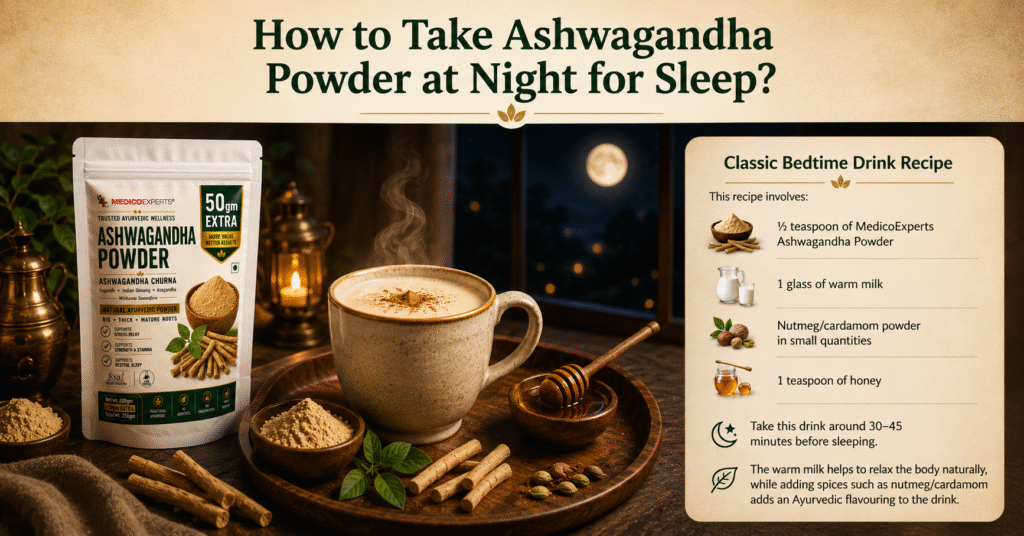
Classic Bedtime Drink Recipe
This recipe involves:
- ½ teaspoon of MedicoExperts Ashwagandha Powder
- 1 glass of warm milk
- Nutmeg/cardamom powder in small quantities
- 1 teaspoon of honey
Take this drink around 30–45 minutes before sleeping.
The warm milk helps to relax the body naturally, while adding spices such as nutmeg/cardamom adds an Ayurvedic flavouring to the drink.
Wish to Sleep More Peacefully? Naturally?
MedicoExperts Ashwagandha Powder comprises natural root powder without any adulterants.
- ✔ FSSAI Approved
- ✔ 100% Natural
- ✔ Traditional Preparation Method
Buy Our MedicoExperts Ashwagandha Powder Now!
How Long Does Ashwagandha Take to Improve Sleep?
Popular belief is that herbal treatments will act immediately. But ashwagandha may need some time to be efficient in its impact since the herb promotes a better functioning of the physiological reaction to stress in the body.
Below is a generalized timeline for when people start experiencing the effects of taking the supplement:
Week 1–2
Week 3–4
Week 6–8
It is important to understand that ashwagandha cannot be considered a quick solution to sleep problems. The supplement affects the person’s stress levels and nervous system to improve sleep quality.
Who May Benefit Most From Ashwagandha for Sleep?

All people have problems sleeping for different reasons. In most cases, the main problem is not lack of sleep but overthinking, too much tension, or inability to relax. It can be assumed that people whose sleeping difficulties are associated with stress will get more positive results from taking ashwagandha for sleep.
The list of people who can potentially get help from ashwagandha includes the following:
- If you are a stressed professional under work pressure, facing deadlines, burnout, or spending long hours at the computer.
- If you are an overthinker with problems turning off your mind before bed.
- If you are a light sleeper and are having trouble sleeping through the night, and are always feeling insufficiently rested.
- If you are suffering from stress-related insomnia, meaning that falling asleep due to anxiety becomes problematic.
- If you are waking up tired after sufficient sleep.
- If you are having an irregular schedule due to lifestyle factors or work-related reasons.
- If you are exhausted emotionally or mentally.
This herbal medicine may not be effective for all, but research shows that people who suffer from sleep problems due to stress can be helped by ashwagandha.
Who Should Be Careful Before Taking Ashwagandha?
Ashwagandha is known to be a natural herbal supplement used to treat anxiety and insomnia and promote overall well-being. There are some people who should seek consultation from a healthcare practitioner before using this supplement.
Pregnancy
Thyroid Drugs
Sedatives and Sleep Medication
Autoimmune Disorders
The Right Way To Go About It
Ashwagandha vs Sleeping Pills: What’s the Difference?
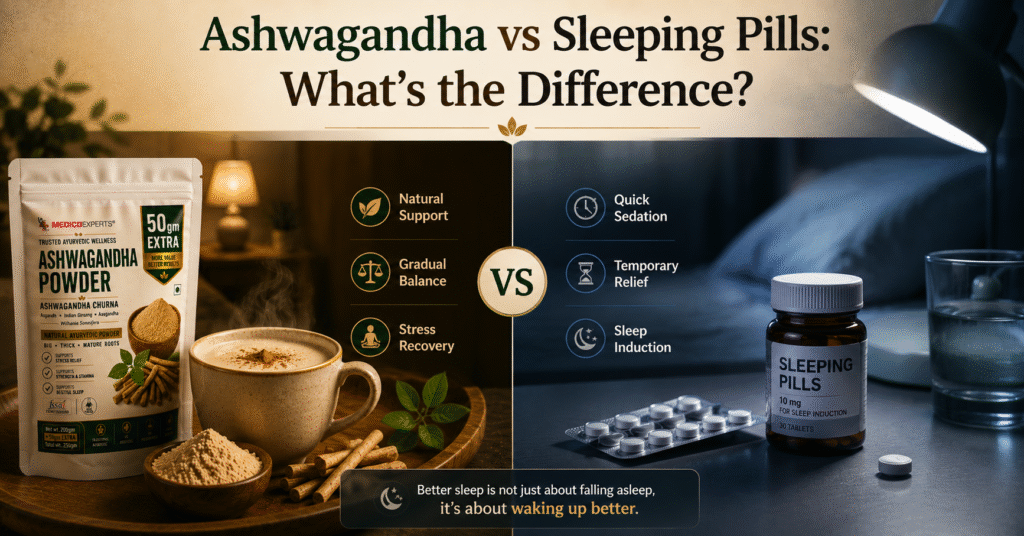
Ashwagandha and sleeping pills are not the same thing, nor do they have similar mechanisms of action.
Many types of sleeping pills are aimed at inducing sleep or making it more effective. They are often sedatives, that is, they make your brain slow down its activity, making it easier to sleep. Even though they help some people get to sleep quickly, in some cases, sleeping pills may result in some unpleasant consequences like tiredness during the day, addiction, and others.
How does ashwagandha differ?
First, ashwagandha is not classified as a sleeping pill at all. Rather, the plant is known for its ability to help support proper stress responses and manage nervous system functions. Some users of the herb report feeling more relaxed and calm before going to bed.
Why?
Sleep problems are often associated with:
- stress
- worrying thoughts
- being unable to relax and calm down at night
This means that ashwagandha helps with sleep indirectly, and the major distinction between the two lies in the fact that
Sleep-inducing medicines are basically meant to put the body to sleep. Ashwagandha helps balance the nervous system by supporting stress management.
But then, reactions might differ depending on individual circumstances. Those suffering from insomnia or any other sleep-related problem need to consult a doctor before using any of these alternatives.
Final Takeaway

Sleep becomes an ordeal when the brain doesn’t get a chance to stop working after dark. The trouble is a constant state of mental stress and strain and an inability to relax at bedtime.
It is for this reason that more and more people are beginning to consider natural solutions to sleep-related problems, such as ashwagandha. Ashwagandha, being a natural herb, is unlikely to act as a sedative, and its regular intake will allow one to cope better with daily stress and achieve nervous stability.
The effect won’t be instantaneous, but with regular consumption combined with proper sleeping habits, it is likely that you will achieve some degree of relaxation during bedtime and more stable sleep in general.
If stress-induced lack of sleep, overthinking, and restlessness have become a constant companion in your life, the introduction of a proven Ayurvedic herb into your bedtime regimen is a small but important step toward improving your situation.
Struggling To Find Your Inner Peace Before Sleeping?
Are you finding yourself feeling stressed or overwhelmed, unable to relax? It might be possible to enhance your quality of sleep through some healthy habits each day.
Ashwagandha Powder by MedicoExperts is designed to manage stress and promote relaxation.
- ✓ Crafted from Pure Ashwagandha Root Powder
- ✓ Does Not Contain Any Fillers or Additives
- ✓ Based on Traditional Ayurveda Formulations
- ✓ Quality Assured with an FSSAI Certificate
If you want to achieve relaxation or wish to help your body handle stress better, then this ashwagandha powder can assist you in achieving that goal.
Frequently Asked Questions (FAQs):
Q1. Can Ashwagandha improve sleep?
A. Based on research findings, it seems like ashwagandha has the potential to improve one’s sleep as well. This is due to the role it plays in regulating the stress response and keeping cortisol levels balanced in the body.
Q2. When should Ashwagandha be taken for sleep?
A. It would be ideal to consume ashwagandha about 30-60 minutes prior to bedtime, especially when taken in its pure powder form. It is also common practice for individuals to drink warm milk mixed with ashwagandha to induce relaxation.
Q3. How many grams of Ashwagandha should I consume before bedtime?
A. One popular remedy used within Ayurveda is the consumption of about ½ teaspoon (about 3-5 grams) of ashwagandha powder in warm milk just before bedtime.
Q4. Is Ashwagandha with milk at night good for sleep?
A. Yes. Ashwagandha with milk at night is a traditional Ayurvedic practice. Warm milk may promote relaxation, while ashwagandha may help reduce stress-related mental overactivity that can interfere with sleep.
Q5. Is Ashwagandha churna for sleep effective?
A. Ashwagandha churna for sleep has been used in Ayurveda for centuries to support relaxation and nervous system balance. It may be particularly helpful for people whose sleep difficulties are linked to stress and mental fatigue.
Q6. How long does Ashwagandha take for sleep benefits?
A. Some people notice a greater sense of calm within 1–2 weeks. But research suggests that more noticeable improvements in sleep quality may take 4–8 weeks of consistent use.
Q7. Can Ashwagandha help with deep sleep?
A. Ashwagandha may support deeper and more restorative sleep by helping the body manage stress more effectively. While individual results vary, some studies have reported improvements in overall sleep quality and sleep efficiency.
Q8. Is Ashwagandha for insomnia a good option?
A. Ashwagandha may be beneficial for people with stress-related insomnia, especially when racing thoughts, anxiety, or difficulty relaxing make it hard to fall asleep. It should not replace medical treatment without professional advice.
Q9. What are the main Ashwagandha benefits for sleep quality?
A. Potential ashwagandha benefits for sleep quality include easier sleep onset, fewer nighttime awakenings, improved relaxation before bed, better sleep efficiency, and feeling more refreshed upon waking.
Q10. Is Ashwagandha one of the popular natural sleep remedies in India?
A. Yes. Ashwagandha is one of the most widely used natural sleep remedies in India. Its long history in Ayurveda and growing scientific interest have made it a popular choice for people looking for natural support for stress management and sleep wellness.
Q11. Can Ashwagandha replace sleeping pills?
A. No. Ashwagandha is not a sleeping pill and does not work like a sedative. Instead, it may support stress regulation and nervous system balance. Anyone taking prescribed sleep medication should consult a healthcare professional before making changes to their treatment plan.
Q12. Is Ashwagandha known to make you sleepy during the day?
A. The herb isn’t known to be a sedative drug. People aren’t prone to feeling sleepy during the day when taking it according to instructions. The substance is likely to help promote a calm stress response, allowing for better nighttime rest.
Q13. Can I take Ashwagandha each day?
A. Many people use ashwagandha as a regular supplement. Nonetheless, the optimal dose and period of usage may depend on individual factors and needs. Those having health problems or on some medications are advised to contact healthcare specialists regarding long-term consumption.
Q14. When is it recommended to refrain from using Ashwagandha for sleep?
A. Pregnant women, those under thyroid medication, taking sedatives, or having specific autoimmune diseases shouldn’t start consuming the substance without a doctor’s consultation.
Q15. Can Ashwagandha work if sleep issues are linked to stress?
A. Most often, studies consider its impact on sleep disorders caused by anxiety, overthinking, work stress, and other types of stress that affect one’s ability to fall asleep.
References
Relevant Articles For You
Ashwagandha for Stress & Anxiety
The feeling of deadlines piling up, traffic jams, family obligations, and, let’s not forget, the never-ending buzz of…..Read More
10 Ways To Reduce Stress At Work
Do you know that you can fight victoriously the stress and resultant frustration and anxiety at your workplace? Yes, it’s…..Read More
How Stress Affects Your Sexual Performance?
Stress has a strange way of showing up in your life. Sometimes it affects your mood, sometimes your sleep, and…..Read More
Impact of Stress and Anxiety on Your Intimate Life
Have you ever wondered how stress and anxiety gradually spoil the joy of your sexual experiences? Yes, it’s a…..Read More
How to Take Ashwagandha Powder to Increase Testosterone?
If you’re wondering how to take Ashwagandha powder to increase testosterone, you’ve come to the…..Read More
Top Benefits of Ayurveda for Male Health
Reclaiming sexual health for males isn’t just about quick fixes. Pills can mask the symptoms. Real wellness begins…..Read More
Ashwagandha vs Shatavari
You are tired all the time. Your stress levels are high, and somewhere between office deadlines, late nights, and…..Read More
Recommendations To Understand Different Treatments
MedicoExperts Ashwagandha Powder
Long work hours, screen fatigue, irregular sleep, mental overload, and demanding schedules can leave you feeling drained physically and…..Read More
Medically Reviewed by MedicoExperts Editorial & Clinical Review Board on 2 June 2026
Medical Disclaimer: This content is for informational purposes only and is not intended as medical advice, diagnosis, or treatment. Always seek the advice of your physician or other qualified healthcare provider regarding any medical condition or dietary needs.