
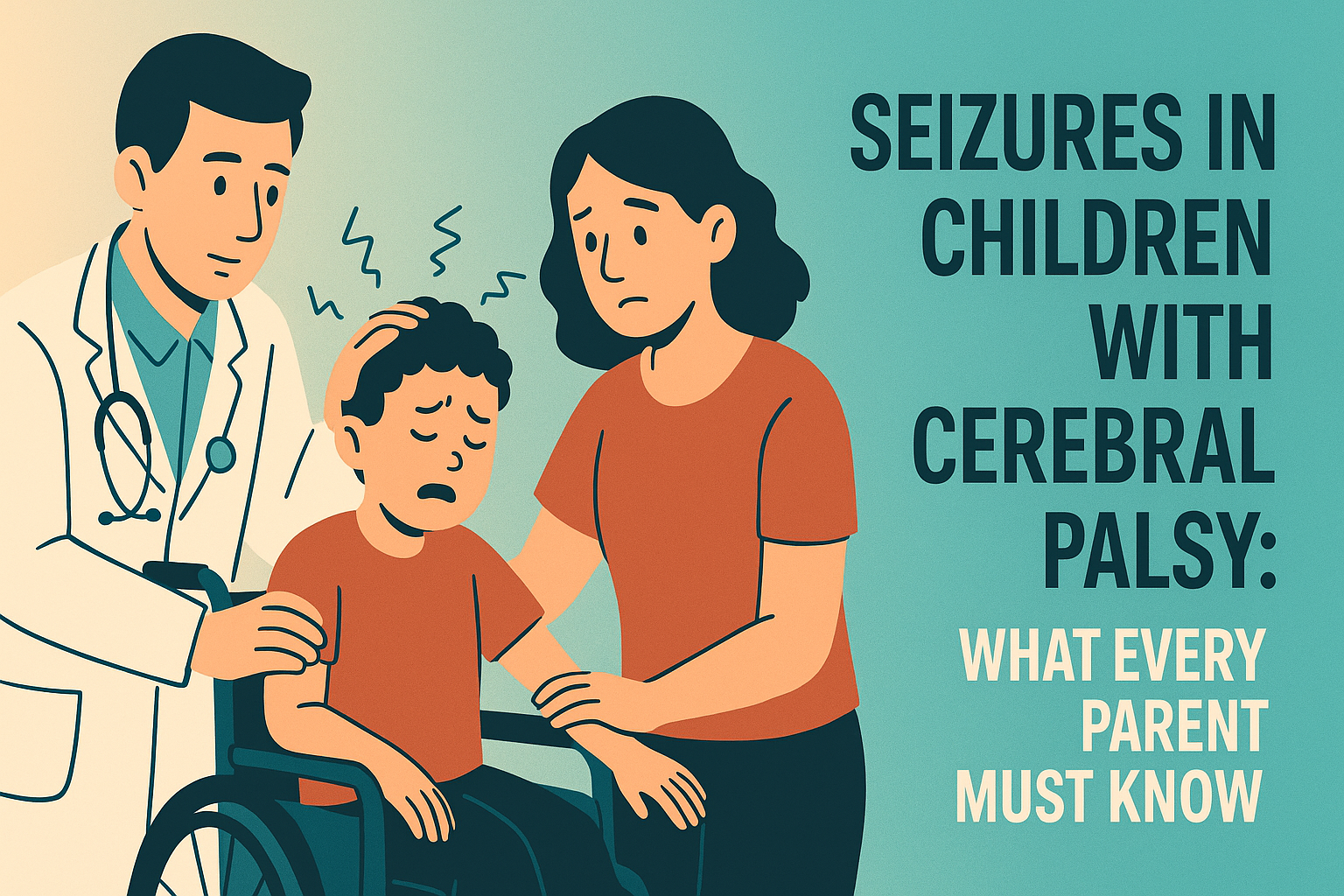
Seizures in children with cerebral palsy can make you anxious, and you may feel helpless
It may start with one unexpected episode, and suddenly you find yourself full of fear and anxiety whenever there is a sound or a movement.
Your every night’s sleep becomes worrisome.
Like you, it happens to most parents who have children with cerebral palsy.
Parents struggle because seizures don’t always look the same. Some are obvious. Some are silent. And most families don’t get clear, simple guidance on what to watch for or how to respond calmly.
That’s why we have created this guide to help you understand why seizures happen, the signs you should never ignore, and the steps you can take to keep your child safe, prepared, and more comfortable every day.
Worried about your child’s seizure symptoms? Get expert guidance from a pediatric neurologist.
Understanding Seizures in Children With Cerebral Palsy
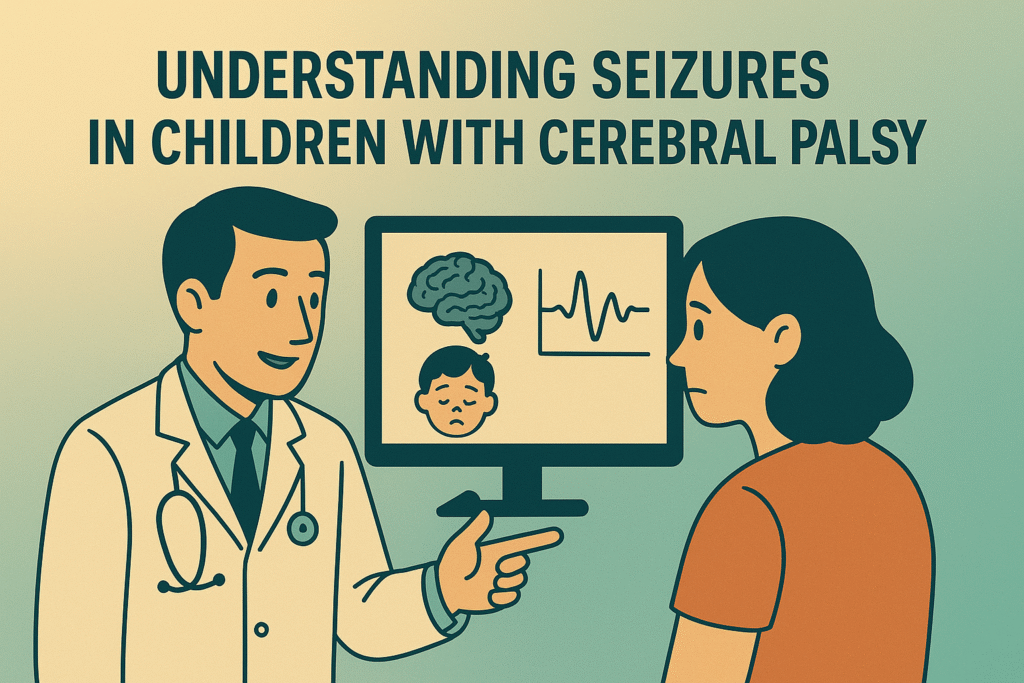
Seizures in children with cerebral palsy are a common symptom. This happens because the areas of the brain that control movement, coordination, or communication are affected in cerebral palsy.
A seizure happens when there is a sudden burst of abnormal electrical activity in your child’s brain, causing changes in their movement, behaviour, awareness, or sensations.
Some children have dramatic seizures, so it is easy for their parents or caregivers to understand.
But with some others, they may be subtle. Staring spells, lip-smacking, sudden stiffness, or brief moments of confusion are some of the signs. It is not so obvious.
These subtle signs are noticed by most parents and caregivers, and it is important for them to know these signs so that they can take the right actions on time.
Also, you need to know that children with cerebral palsy experience different types of seizures.
Why do Seizures Occur in Cerebral Palsy?
Seizures in cerebral palsy happen because the brain has areas that didn’t develop normally or were injured before, during, or shortly after birth.
These affected regions can interrupt the way electrical signals flow in the brain, making it easier for sudden bursts of abnormal activity to occur.
These are some of the causes of seizures in CP:
Early Brain Injuries
Structural Brain Changes
Scarring in the Brain
Imbalanced Brain Chemicals
Signs of Seizures in Children with Cerebral Palsy
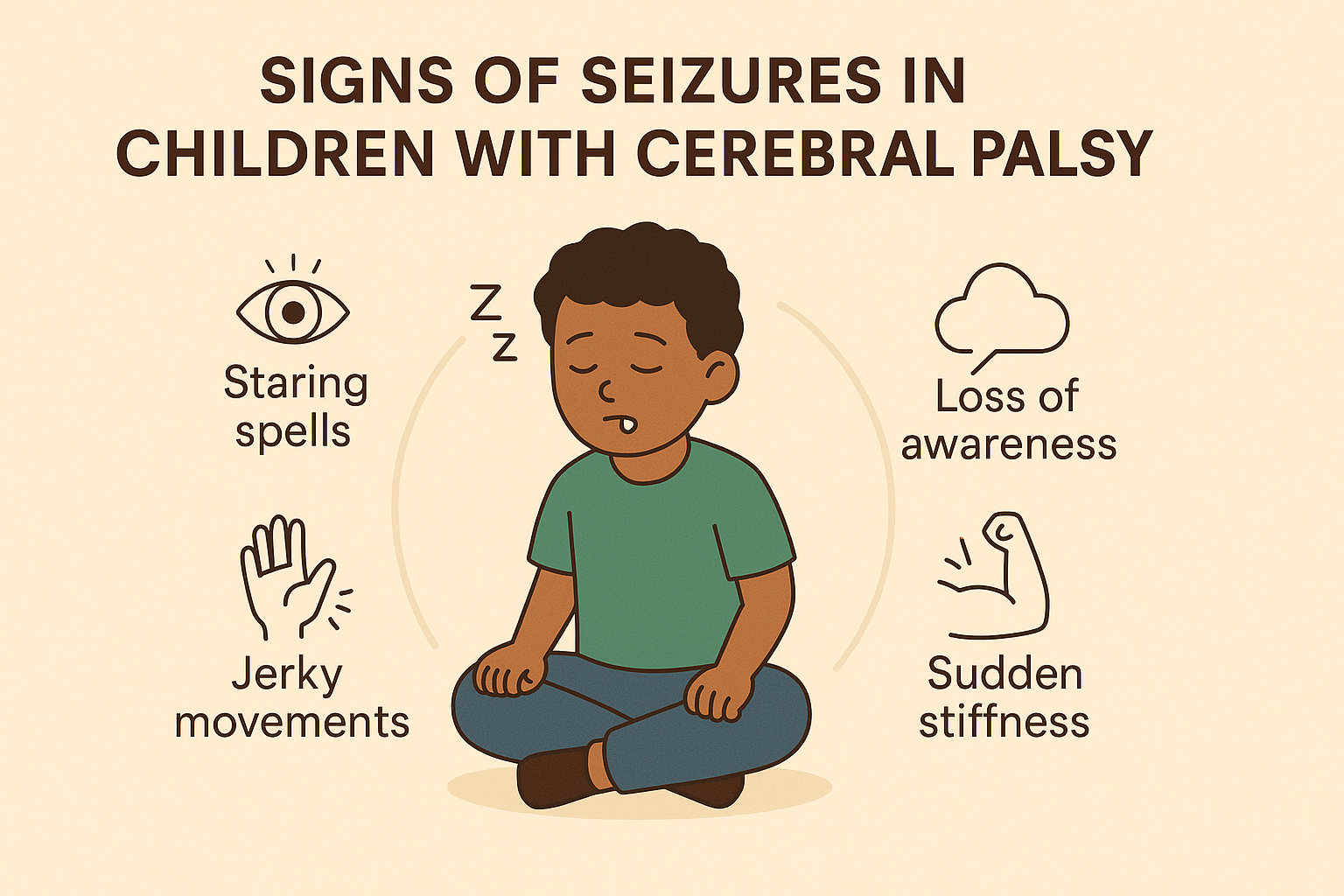
Seizures in children with cerebral palsy may look different from child to child, and sometimes the signs are so subtle that you may not realize what’s happening.
That’s why here are the signs that you should not ignore if you notice them in your child:
1. Sudden Stiffening or Jerking: Your child’s body may suddenly stiffen, or their arms and legs may jerk uncontrollably for a few seconds to a few minutes.
2. Brief Episodes of Staring: Your child may stop what they’re doing and stare blankly into space. They might not respond when you call their name during these moments.
3. Repetitive movement: The child may show rhythmic movements like lip-smacking, chewing motions, blinking, tapping fingers, or repeated swallowing.
4. Loss of awareness: Your child may appear confused, dazed, or disconnected from their surroundings for a short period.
5. Sudden Loss of Muscle Tone: Your child may suddenly go limp and fall or drop their head due to a seizure.
6. Temporary Breathing Changes: You may notice irregular breathing, brief pauses, or changes in your child’s skin colour (like turning pale or bluish) during a seizure.
7. Post-Seizure Fatigue or Confusion: Your child may feel sleepy, confused, or irritable or may not remember what happened after a seizure.
Not sure if your child’s symptoms are seizures? Our specialists can help you understand what’s happening and what to do next.
Common Seizure Triggers in Children with Cerebral Palsy
You may find your child’s seizures unpredictable. You may also notice situations or changes that make your child more likely to have a seizure.
These are called seizure triggers. By understanding these triggers, you can respond early, reduce risks, and support your child’s daily routine with more confidence.
These triggers can differ from child to child, but some patterns are common in children with CP. Here are the most common ones to be aware of:
Fever and Acute Infections
Missed or Irregular Antiseizure Medication (ASM) Doses
Sleep Problems and Sleep Deprivation
Metabolic Disturbances
Severe Stress, Pain, or Sudden Changes in Routine
Photosensitivity/Flashing Lights
Hormonal Changes
Medication Interactions and Certain Medicines
Want a personalised plan to reduce seizure triggers? Speak with MedicoExperts and get a child-specific action plan.
How to Diagnose Seizures in Children with CP?
Diagnosis of seizures in children with cerebral palsy (CP) needs different observations, medical tests, and discussions with doctors.
Because some seizures can be very subtle, a proper diagnosis helps doctors choose the safest and most effective treatment.
Detailed Observation by Parents or Caregivers
Medical History Review
Physical and Neurological Examination
EEG (Electroencephalogram)
Brain Imaging (MRI or CT Scan)
Blood Tests
Rule Out Other Conditions
Need an EEG or an MRI for your child? MedicoExperts helps you access trusted neurologists and child-friendly diagnostic centres.
What to do when a Child with CP has a Seizure?
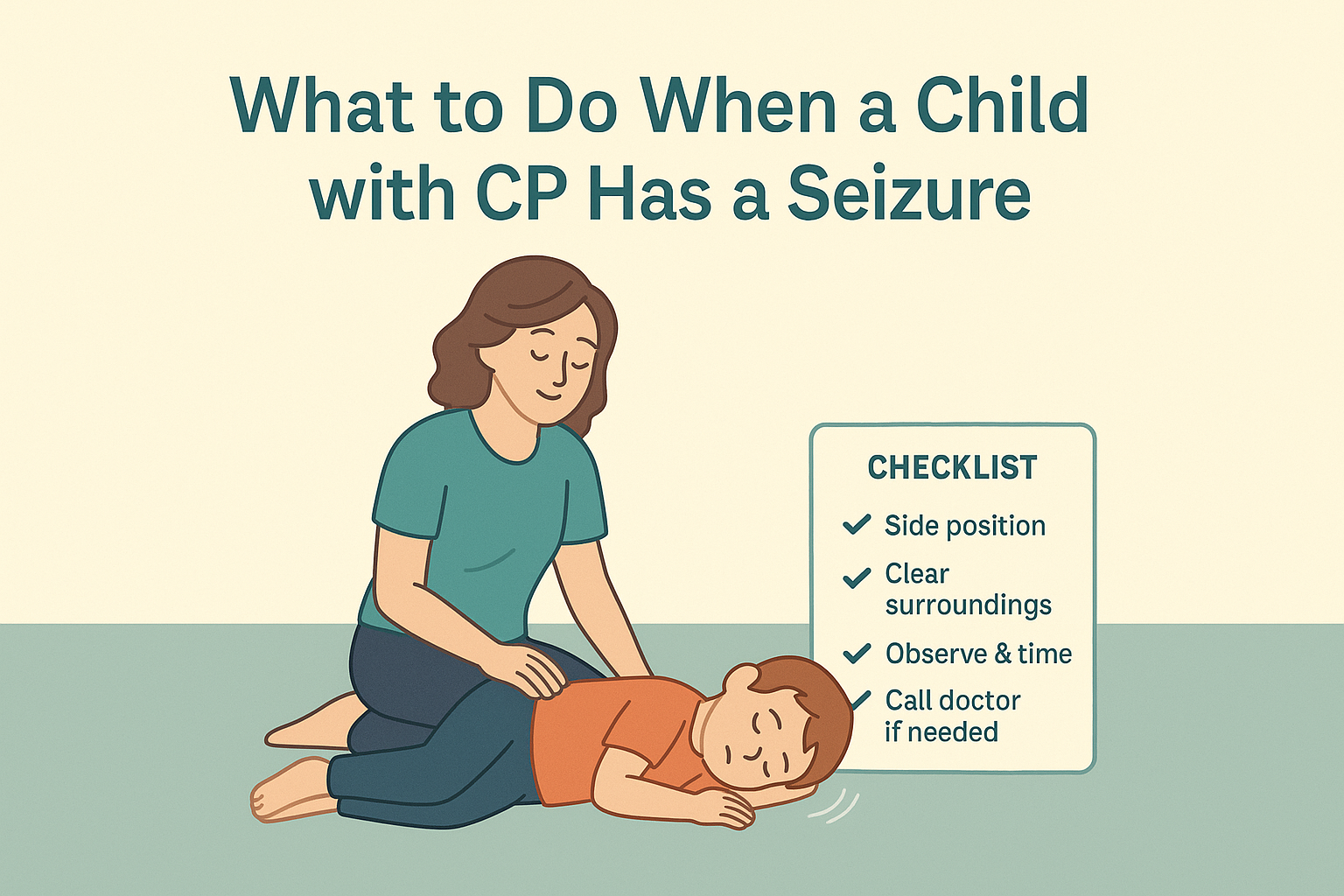
Seeing your child with cerebral palsy have a seizure can be frightening for you, and you may feel helpless and confused about what to do. These are the first aid that will protect your child from injuries and harm.
So, here are the steps to follow:
- Stay calm and stay with your child because if you panic, the situation may worsen. Focus on keeping the child safe until the seizure ends.
- You need to lay the child on their side. This position helps keep the airway clear and prevents choking if they drool or vomit.
- Protect their head. Place something soft, like a folded cloth, pillow, or your hand, under their head to prevent injury.
- Loosen your child’s tight clothing. If there is something tight around the child’s neck (like a buttoned shirt), gently loosen it so they can breathe more easily.
- Also, remove dangerous objects nearby. Clear the area around the child so they don’t hit sharp or hard objects during jerking movements.
- Do not put anything in their mouth. This is important because it can injure them. Additionally, do not try to hold their tongue, give water, or put fingers/objects in their mouth. It can cause injury.
- Use your phone to check how long the seizure lasted. Most of them last within 1-2 minutes.
- After it stops, the child may be sleepy, confused, or scared. Stay close, comfort them, and let them rest.
- If this is their first seizure or if something feels unusual, call the doctor. Share what happened, the duration, symptoms, and any video you may have captured.
- If they’re standing or sitting, carefully help them lie down to prevent falls or injuries.
How to Manage Seizures in Cerebral Palsy?
You can manage your child’s seizures with the help of a combination of the right medical care, daily routines, and knowing what triggers to avoid.
Right planning can help you reduce seizures in your child and give them better health. So, here are some tips to manage seizures:
1. Follow the Treatment Plan Consistently
2. Identify and Avoid Triggers
3. Maintain a Regular Sleep Schedule
4. Manage Fever and Illness Quickly
5. Ensure Good Nutrition and Hydration
6. Create a Safe Environment
7. Use Rescue Medication When Prescribed
8. Regular Check-Ups with a Pediatric Neurologist
9. Keep School and Caregivers Informed
10. Ask for a Seizure Action Plan
If your child recently had a seizure, don’t wait. Talk to our neurology team for urgent guidance.
Treatment Options: Antiepileptic Drugs for Cerebral Palsy
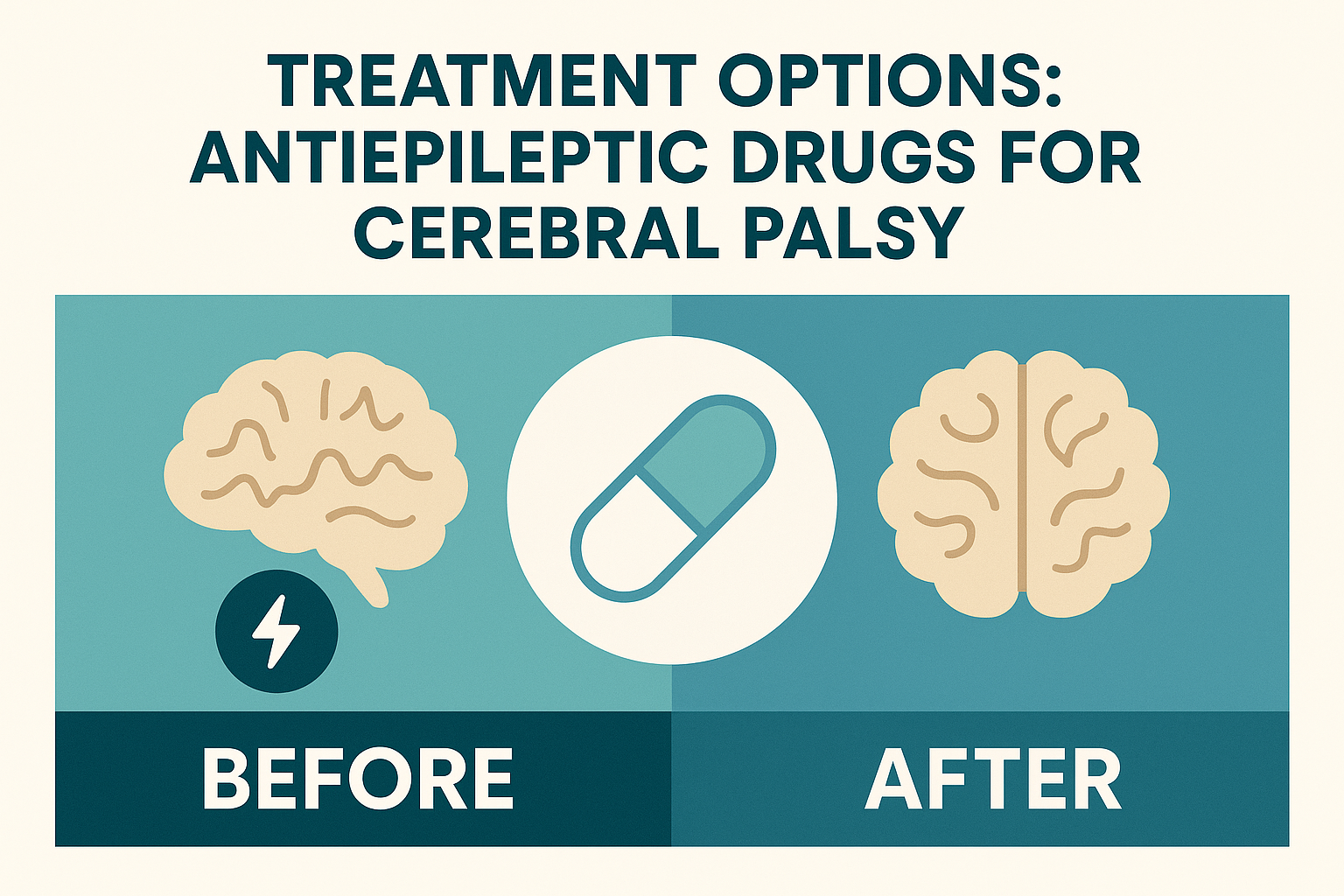
Antiepileptic drugs (AEDs) are also called antiseizure medications. They are the most common and effective way to manage seizures in CP. These medicines help stabilize your child’s brain’s electrical activity so seizures occur less and with less intensity.
They can:
- Reduce how seizures occur
- Make seizures shorter and milder
- Improve alertness and daily functioning
- Support better sleep and learning
- Lower the risk of seizure-related injuries
Your child’s doctors will select a medication based on their seizure type, age, medical history, and how their brain has developed.
This is how doctors choose the right medicine.
| Factor | What Does it Mean for Treatment? |
| Type of Seizure | Medicine is chosen based on whether seizures are focal, generalized, or mixed. |
| EEG Findings | Shows abnormal electrical activity and helps match the medicine to the seizure type. |
| MRI or Brain Scan | Helps identify structural differences or injuries guiding drug selection. |
| Child’s Age and Weight | Dose is adjusted carefully as the child grows. |
| Other Medical Issues (CP-Related or General) | Prevents interactions with other treatments like muscle-relaxing medicines. |
| Response to Previous Medicines | The doctor adjusts treatment based on what has or hasn’t worked before. |
Long-Term Care and Prevention Strategies for Seizures in CP
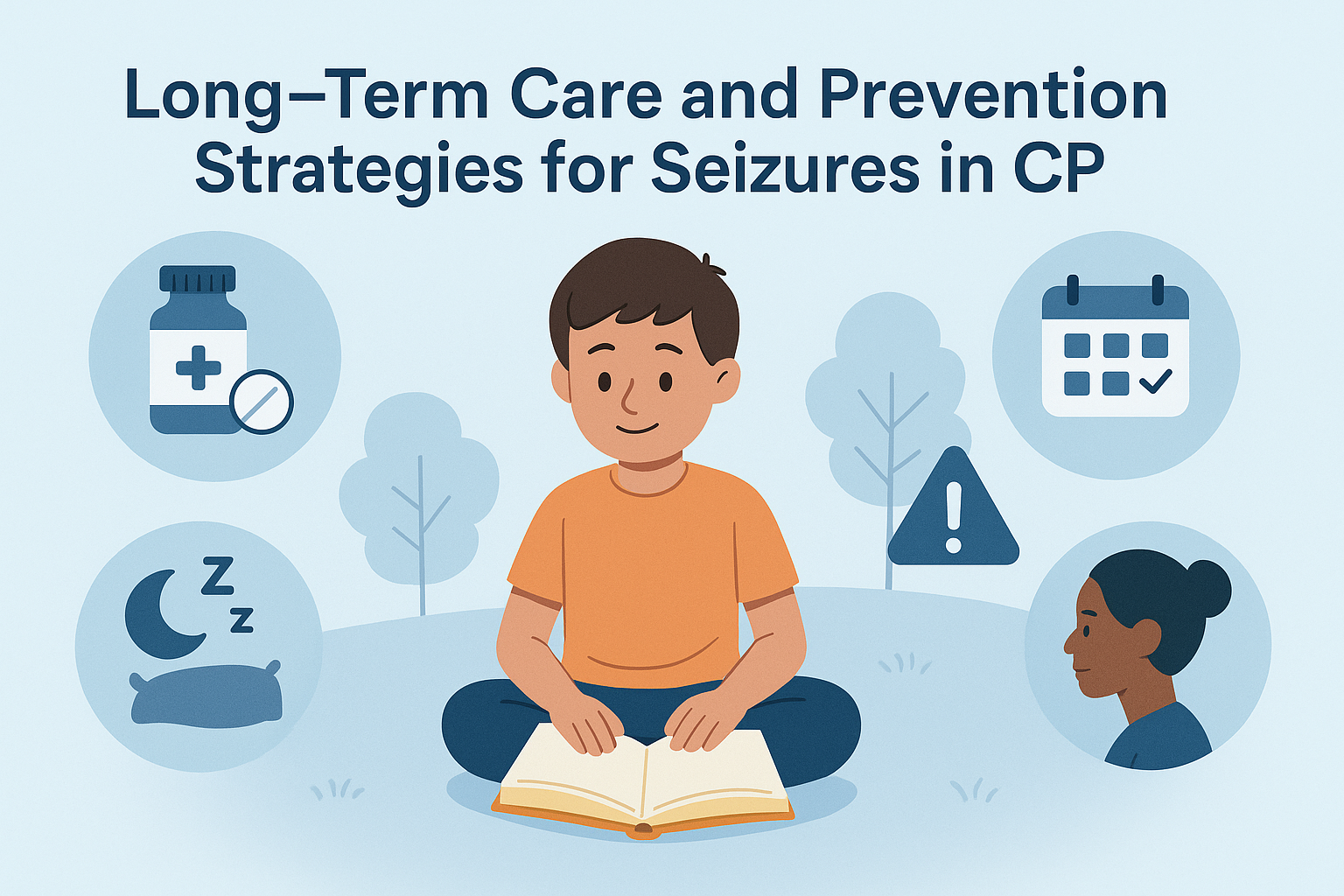
Managing your child’s seizures in cerebral palsy needs more than just treating episodes when they happen.
You need to build long-term habits that reduce seizure risk, support brain health, and improve your child’s daily life. You can successfully do that with consistent care and small lifestyle changes.
- Maintain medication routine. Give medicines at the same time every day. Use reminders or pill organizers if needed. Also, refill prescriptions before they run out.
- Schedule regular neurological checkups. Children with CP grow quickly, and medication doses must change accordingly.
- Keep a tab on when seizures happen, what the child was doing before it, their sleep patterns, any possible triggers, and any side effects.
- Prioritize good sleep hygiene. A consistent bedtime, a quiet, dim sleep environment, and limiting screen time before bed are the best ways to help them sleep better.
- Manage illness, fever, and infections quickly, as they increase the risk of complications.
- Encouraging regular water intake, offering nutrient-rich meals, and avoiding long gaps between meals is important to avoid low sugar and dehydration.
- Minimize stress and overstimulation by maintaining calm routines, using sensory breaks, introducing activities slowly, and practicing deep-breathing or relaxation exercises.
- Your child needs therapies that improve muscle tone, breathing, and circulation and indirectly support brain health.
- Regular exercise or physiotherapy can help the body stay balanced and reduce triggers like fatigue and stress.
- Since seizures can be unpredictable, long-term prevention also means injury prevention.
Consider:
- Corner guards on furniture
- Safety rails
- Non-slip mats
- Avoiding high-risk heights unless supervised
When to Seek Emergency Medical Help?
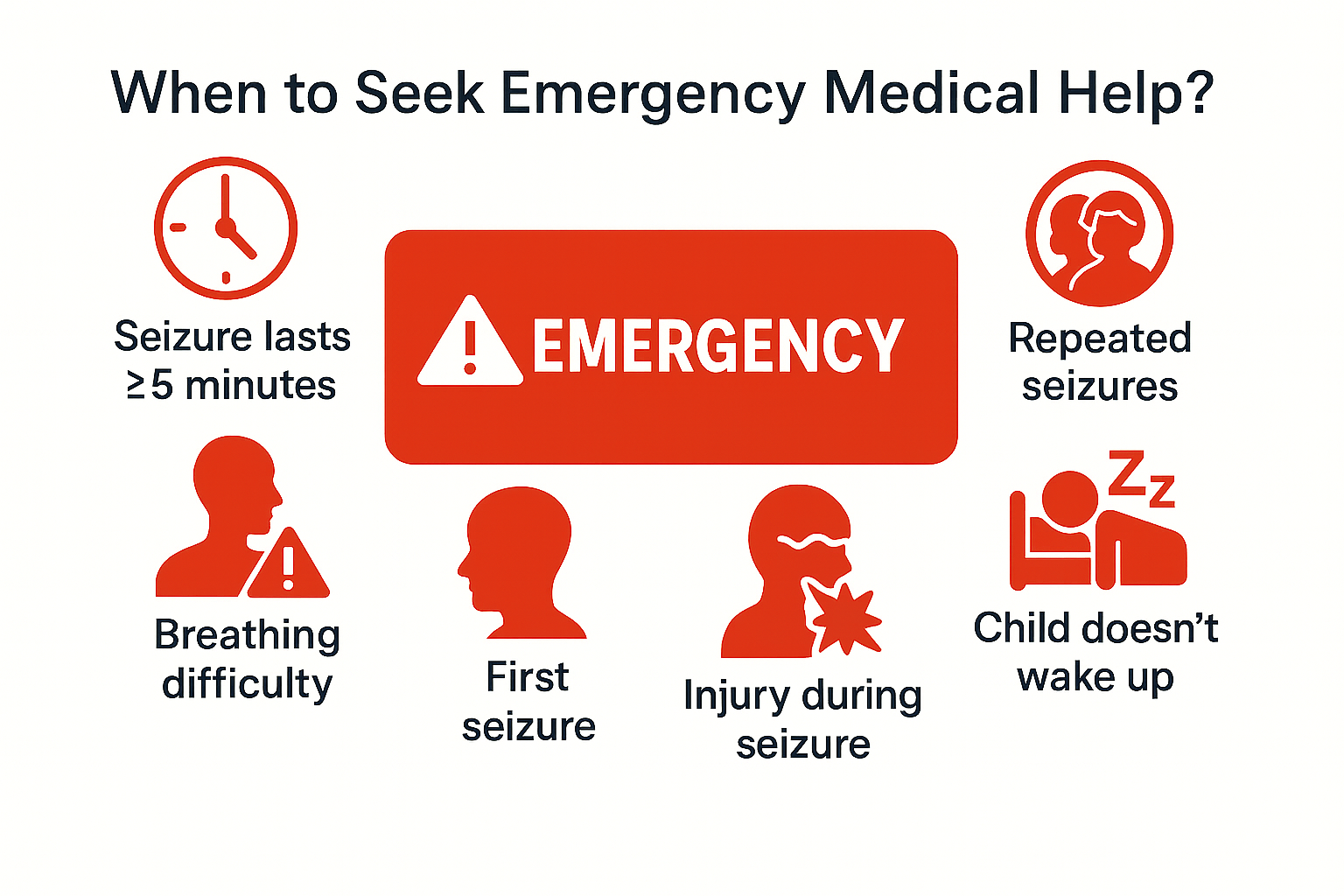
Not all seizures need emergency care, but some situations can be dangerous for your child. Here’s when you should opt for emergency medical help:
- If the seizure lasts for more than 5 minutes, you need emergency help to avoid serious complications.
- If the child has difficulty breathing or turning blue
- If the child gets injured during the seizure
- If it’s your child’s first seizure
- If your child doesn’t wake up or respond after the seizure ends
- If your child has repeated seizures within a short time without full recovery between them
- If the child has a stiff neck, fever, or vomiting repeatedly (indicating infections like meningitis)
- If you are not sure what to do or are uncomfortable with the situation
Takeaway: Your Child’s Safety Improves When You Act Early
Seizures in children with cerebral palsy are unpredictable, but that doesn’t mean you should stay unprepared. Knowledge brings that preparedness. Also, you can help your child live a better life with the right diagnosis, timely intervention, and a personalized seizure management plan.
You need the right medical team that helps you support your child confidently. MedicoExperts will connect you with experienced pediatric neurologists, advanced diagnostics, and a long-term seizure management strategy.
If you notice any of the signs mentioned above, don’t waste time and reach out to our team. Our experts will guide you on preventing complications, reducing risks, and giving your child the best chance at a healthier, more stable future.
Reach out to MedicoExperts for expert care, accurate diagnosis, and a long-term plan that supports your child’s safety and comfort.
Frequently Asked Questions (FAQs):
Q1. Can a child outgrow seizures associated with cerebral palsy?
A. Some children may experience fewer seizures as they grow, especially with the right treatment and as their brains develop. However, this varies widely. A neurologist can monitor long-term patterns and adjust medications and therapy accordingly.
Q2. Are seizures in CP always lifelong?
A. Not always. Some children may need long-term treatment, while others may experience temporary seizure phases triggered by growth, illness, or hormonal changes. That’s why continuous follow-ups help determine if medication can be reduced over time.
Q3. Can therapies like physiotherapy or occupational therapy help reduce seizure frequency?
A. Yes, they help indirectly. Therapies improve muscle tone, sleep quality, stress levels, and overall brain-body balance, all of which can lower seizure risk.
Q4. Should my child with CP avoid sports or physical activities because of seizures?
A. Not necessarily. With safety precautions and a clear action plan, many children safely enjoy activities like swimming (with supervision), cycling with helmets, or indoor play. Your doctor will suggest safe options based on your child’s seizure type.
Q5. Can changes in puberty worsen seizures in children with CP?
A. Hormonal changes during adolescence may temporarily affect seizure patterns. You should consult your neurologist, as they may adjust medications or monitoring during this stage.
Q6. What should I do if my child’s seizures suddenly increase in frequency?
A. This is a red flag, and you should not wait to consult the doctor because it can indicate medication issues, infection, incorrect dosing, or new triggers.
Q7. Does cerebral palsy cause epilepsy in children?
A. Yes, cerebral palsy can increase the risk of epilepsy in children because of early brain injuries that affect how the brain’s electrical signals work.
References
Relevant Articles For You
Parents’ Guide To CP Prevention
Do you want to protect your child from cerebral palsy (CP)? You should know about cerebral palsy prevention to keep your…..Read More
Cerebral Palsy & Ayurveda
What makes cerebral palsy tough is the motor challenges. Stiff muscles, poor coordination, and uncontrollable movements…..Read More
Recommendations To Understand Different Treatments
Causes and Risk Factors of CP
Has your child been diagnosed with cerebral palsy, and you are thinking what could have caused it? You are not…..Read More
CP Treatment Options
Every parent wants to give their children the best chance at a fulfilling life. That dream can be overshadowed by…..Read More
Stem Cell Therapy for CP
Stem cell therapy lessens the symptoms, prevents complications in the future, and maximizes the independence of…..Read More
Combination Therapy for CP
Cerebral palsy affects movement, muscle tone, and coordination. Relying on a single therapy often falls short because CP impacts…..Read More
Homeopathy for CP
Homeopathy is a system of medicine that stimulates the body’s innate healing mechanisms using diluted natural substances. It’s built on…..Read More
Ayurveda for CP
In Ayurveda, CP is linked to an imbalance in the Vata dosha, which governs movement and coordination. When Vata is out of…..Read More
Medically Reviewed by MedicoExperts Editorial & Clinical Review Board on 12 December 2025
Medical Disclaimer: This content is for informational purposes only and is not intended as medical advice, diagnosis, or treatment. Always seek the advice of your physician or other qualified healthcare provider regarding any medical condition or dietary needs.