
Last updated on September 8th, 2026 at 12:31 pm
People always want to know: how long does stem cell therapy take to work? It’s a fair question. You won’t see instant results with this kind of treatment.
Usually, the body starts responding after a few weeks, but the tangible improvements tend to show up between two and six months. That said, there’s no set timeline. Everyone’s different.
Stem cell therapy isn’t like popping a painkiller and waiting for the ache to fade. Instead, it starts with different, slow biological changes, like tissue repair, new cell growth, and improvements to your immune system.
These processes take their own time. Most people notice small shifts at first and then bigger, more obvious progress as the months go on.
Some factors shape how quickly you recover and what results you get. The disease you’re treating matters, since some conditions respond better than others. How advanced the problem is makes a difference, too.
Where the stem cells come from, your age, and even the way the cells are delivered, all of these can speed things up or slow them down. In short, patience is key. It’s worth it, but you need to give your body time to do the work.
Let’s learn about how long stem cell therapy takes to work in detail.
Regulatory Framing Note – Read more
How Stem Cell Therapy Works Inside the Body
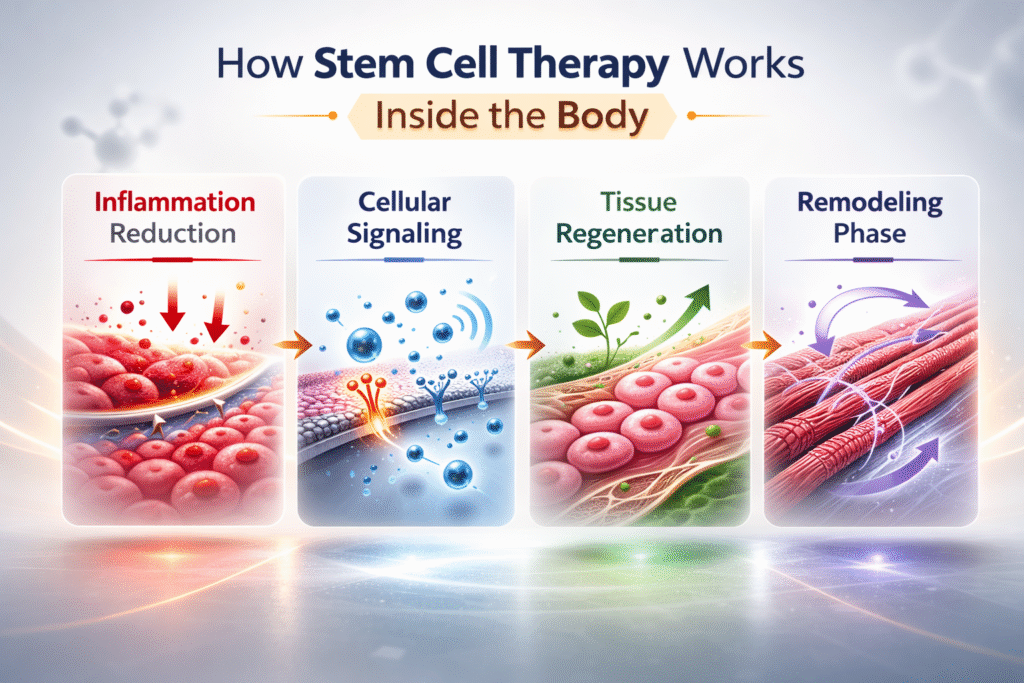
Stem cell therapy works by starting a chain of biological reactions in your body. It doesn’t do instant structural fixes. After doctors introduce stem cells, the cells adapt to their new environment first, and then the healing happens in a few different ways.
1. Inflammation Reduction
They start by reducing inflammation. Stem cells release special molecules that help keep your immune system in check. This calms down runaway inflammation, which usually comes with tissue damage and tends to slow down healing.
2. Tissue Regeneration
Then there’s tissue regeneration. Here’s where stem cells really shine. They can either turn into the specific cells your body needs or push your own cells to work harder at repairing what’s broken.
3. Cellular Signaling
Communication is a big part of the process, too. Stem cells send signals to nearby cells, boosting their ability to recover, function better, and protect themselves.
4. Remodeling Phase
Finally, once the initial healing wraps up, your body enters a remodeling phase. During this time, the repaired tissue gets stronger and adapts to its new job. That’s why you often see steady improvements long after the treatment. It’s a gradual rebuild.
Stem Cell Therapy Recovery Timeline: What to Expect
The recovery timeline for stem cell therapy is not the same for everyone. Results can be different, so it’s important to keep your expectations grounded. Stem cells work inside the body in ways you just can’t rush, and you can’t predict when you’ll notice any changes. People’s experiences aren’t all the same, either. It depends on the person, the condition, and the treatment itself.
First 24–72 Hours After Treatment
Week 1–4: Early Healing Phase
Month 1–3: Noticeable Functional Improvement
Month 3–6: Progressive Regeneration
Month 6–12: Long-Term Stabilization
No two recoveries look the same, so regular check-ins with your doctor are still the best way to track what’s really happening.
How Long Does Stem Cell Therapy Take to Work for Different Conditions?
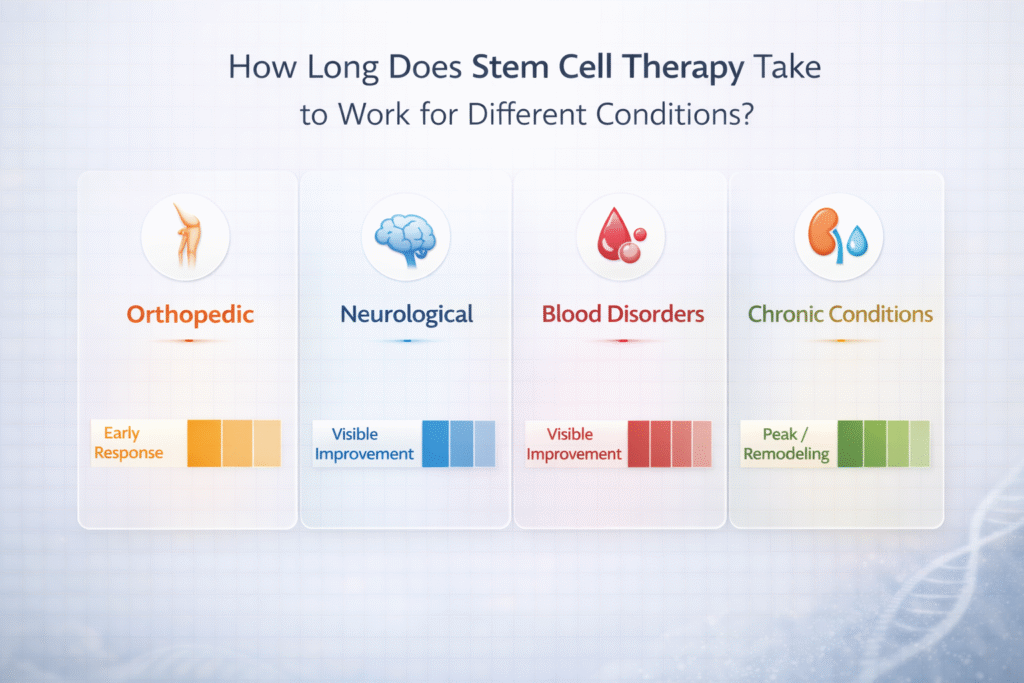
It depends on what you’re treating, and the time required is highly condition-specific. You may notice small improvements early on, but big changes, if they happen, usually take time. So, don’t lock yourself into a strict schedule. These are general patterns, not hard-and-fast rules.
Stem Cell Therapy Recovery Time for Knee & Joint Problems
If you’re hoping stem cells will help your knees or other joints, patience is key. Cartilage, for example, doesn’t repair itself overnight. Even if things are going well, real regeneration usually takes months, not weeks.
Early on, you might just feel a little less pain or stiffness, rather than seeing major structural changes. Physical therapy matters a lot during this period.
The more you move and strengthen the area, the better your chances for a good outcome. Of course, results vary depending on how bad the joint was to start, your overall health, and even how you move.
Note: knee/joint applications are also in the research stage.
Neurological Conditions
Then there are neurological conditions, like cerebral palsy, autism, or spinal cord injuries. These remain in the research and clinical trial stage in India, not an approved standard treatment. Here, the nervous system moves at its own slow pace. Any real changes, if they come, tend to show up gradually, based on what’s been reported in research and trial settings. Everyone’s different, and progress can look very different from one person to the next.
Chronic Conditions (CKD, Diabetes, ED)
If you’re dealing with chronic conditions like kidney disease, diabetes, or erectile dysfunction, things get even less predictable. As with the neurological conditions above, these remain research-stage applications rather than approved treatments. Sometimes, doctors use several rounds of treatment, and it can be tough to say when results will show. A lot depends on how far the disease has progressed and what other treatments you’re getting at the same time.
Stem Cell Transplant Recovery Timeline (Blood Disorders)
Stem cell transplants for blood disorders are completely different from the rest. Here, about getting new cells to take over and start making healthy blood again.
This process, called engraftment, is intense and requires close medical supervision. In hematopoietic stem cell transplantation (HSCT), recovery centers around the engraftment timeline, where transplanted cells establish and restore blood cell production.
It’s a totally different experience from outpatient regenerative injections, which focus more on repair than on replacing your whole blood system.
Factors That Affect How Quickly Stem Cell Therapy Works
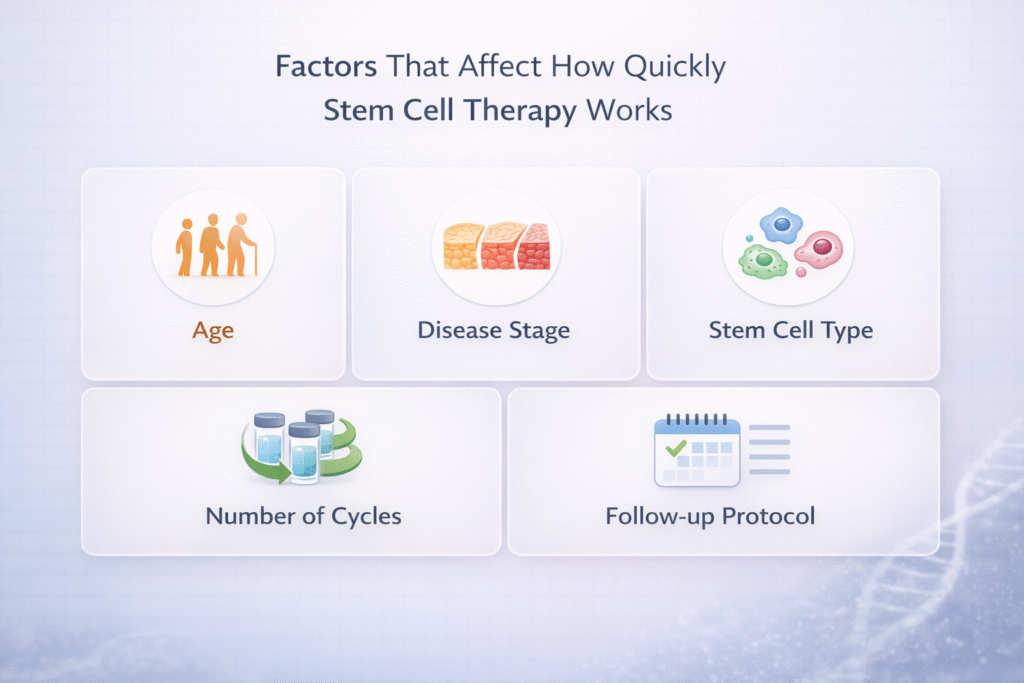
People don’t all respond to stem cell treatments the same way. Different clinical and biological factors shape how fast you’ll see any real changes. Knowing what affects the process helps set the right expectations from the start.
- Age: Younger people usually bounce back faster because their cells repair themselves more easily. Older people, on the other hand, tend to heal more slowly.
- Disease Stage: Early-stage conditions respond better to this therapy. Once damage sets in and sticks around for a while, it’s tougher for stem cells to make a difference.
- Stem Cell Type (Autologous vs Donor): It matters whether the stem cells come from your own body (autologous) or someone else’s (donor). Each type behaves a little differently depending on what you’re treating.
- Number of Cycles: Some treatments call for more than one round. The effect tends to build up with each cycle, depending on how the treatment plan is set up.
- Follow-Up Protocol: Sticking to your stem cell therapy follow-up schedule makes a big difference. Regular check-ins and rehab help your doctor track your progress, keep you safe, and adjust things if needed.
Exploring regenerative treatments can raise many practical questions. For a clearer understanding of treatment availability, protocols, and patient considerations, you can review our detailed resource on stem cell therapy in India, covering commonly discussed approaches, cost factors, and eligibility aspects.
When Will You See Maximum Results?
Understanding what to expect after stem cell therapy helps you know what’s ahead. Results don’t show up overnight. It’s a slow, biological process, and everyone’s body reacts a little differently.
Here’s the timeline of results you will notice:
Early Observations (2–4 Weeks)
Most Noticeable Changes (2–3 Months)
Full or Stabilized Effects (6–12 Months)
What Can You Do to Improve Recovery?
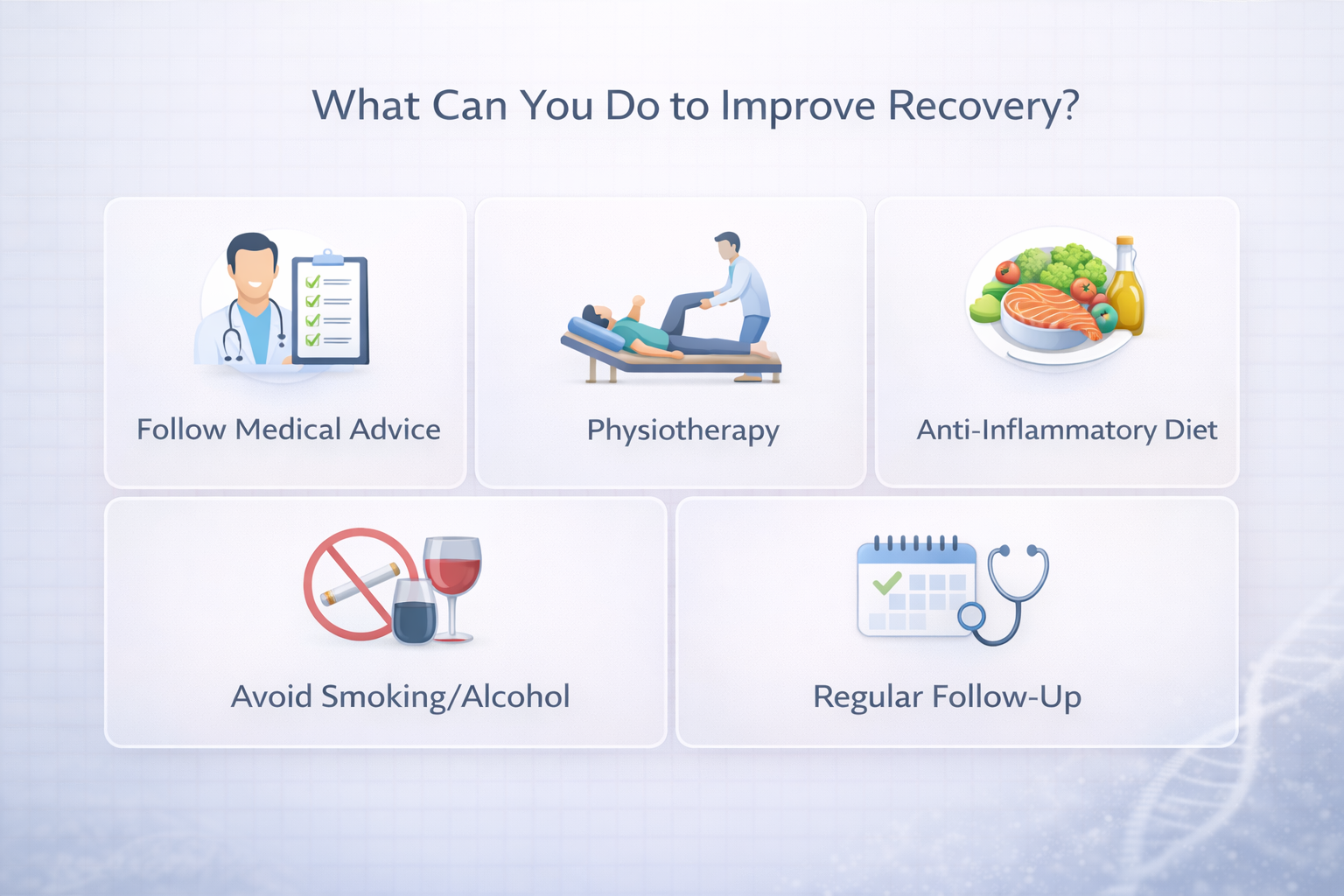
Post stem-cell therapy care makes a difference in how well you recover. It helps you keep track of your progress, too. Sure, everyone’s experience looks a little different, but there are a few things that almost always help.
- Follow Medical Advice: Stick to what your medical team tells you about activity, medication, and any precautions. It’s not just about following rules; it’s about staying safe and making sure you’re actually getting better.
- Physiotherapy: If your doctor or therapist recommends physiotherapy, go for it. Rehab helps you get your strength and mobility back, especially if you’re dealing with joint or muscle issues.
- Anti-Inflammatory Diet: Focus on whole foods and a balanced diet. Eating well isn’t just about feeling good; it can actually help keep inflammation down and support the healing process.
- Avoid Smoking/Alcohol: Smoking and drinking slow down your body’s natural healing. Avoid them while you recover.
- Regular Follow-Up: Don’t skip your follow-up appointments. These visits let your doctor see how you’re doing, answer any questions, and tweak your recovery plan if needed. Regular check-ins really keep your recovery on track.
Conclusion

Recovery after stem cell therapy will be different for different people. You may notice changes fast, or it may take longer, depending on factors like what you’re dealing with, how far along the disease is, your unique biology, and even which treatment plan you’re following.
The body’s repair process isn’t quick or simple, so don’t expect a neat, predictable timeline.
It’s better to trust your doctor’s advice than to latch onto some set idea about when you’ll see results. Staying in touch with your medical team and getting regular checkups is how you keep your healing journey on track.
If you’re thinking about stem cell treatment, talk to a doctor who has proven experience in the field. They can look at your personal situation, lay out what’s possible (and what’s not), and help you figure out what comes next. When it comes to understanding your recovery, nothing beats a plan that’s built just for you.
Stem cell therapy decisions benefit from reliable, well-structured information. If you would like deeper insights into treatment pathways, safety considerations, and planning factors, our comprehensive guide on stem cell therapy in India offers additional clarity to support informed choices.
Frequently Asked Questions (FAQs):
Q1. How many stem cell cycles are usually required?
A. There is no fixed number of cycles. The requirement depends on the medical condition, treatment protocol, and individual response. Some patients undergo a single session, while others may be advised multiple cycles based on clinical evaluation and therapeutic goals.
Q2. Is pain normal after stem cell therapy?
A. Mild discomfort, soreness, or localized swelling can occur after the procedure and is generally temporary. These effects are commonly attributed to the injection process rather than to the stem cells themselves. A clinician should assess persistent or severe pain.
Q3. Can I resume work immediately?
A. Return-to-work timing varies by procedure type and treatment site. Many patients resume routine activities within a short period, but physically demanding tasks may require temporary restrictions. Follow the treating physician’s guidance for safe recovery.
Q4. How do I know if the therapy is working?
A. Treatment response is typically evaluated through symptom changes, functional assessments, and clinical follow-up rather than immediate sensations. Improvements, when they occur, may develop gradually over weeks or months.
Q5. Does age affect recovery speed?
A. Age can influence biological healing capacity. Younger individuals may show faster regenerative responses, while older patients may experience slower recovery. However, outcomes depend on multiple health and disease-related factors.
Q6. Is stem cell therapy approved for my specific condition?
A. It depends on the condition. Hematopoietic stem cell transplantation (HSCT) is approved as standard-of-care treatment in India, but only for a defined list of blood and immune conditions. For other conditions – including joint problems, neurological conditions, and chronic diseases like CKD, diabetes, or ED – stem cell therapy is currently available only through registered clinical trials, not as routine treatment. Your specialist can clarify where your specific condition stands.
References
Relevant Articles For You
Stem Cell Therapy in India
Stem cell therapy is a regenerative medication that employs stem cells to revitalize, replace, or repair lost or…..Read More
List of Diseases Treated by StemCell
Stem cells are unique, undifferentiated cells capable of self-renewal and differentiation into specialized cell…..Read More
How Does Stem Cell Therapy Work?
Stem cell therapy offers hope for treating diabetes, especially type 1 diabetes (T1D). T1D is a long-term condition where…..Read More
Questions About Stem Cell Therapy
Will Stem Cells work for your kid? There are so many instances where patients are not able to see the…..Read More
Advantages of Stem Cell Therapy
Stem cell therapy is a promising and rapidly growing field of medicine that has the potential to revolutionize the…..Read More
Recommendations To Understand Different Treatments
Stem Cell Therapy in India
Stem cells have some unique properties. These cells can turn into all other cells of your body with different functions such as…..Read More
Stem Cell Therapy for MD
Muscular dystrophy is considered one of the most harmful genetic disorders, which leads to progressive muscle…..Read More
Stem Cell Therapy for CP
Stem cell therapy repairs and regenerates the tissue that has been damaged, restoring operations in the impacted region and…..Read More
Stem Cell Therapy for Autism
Stem cell therapy uses your body’s regenerative power. These cells can transform into specialized cells and…..Read More
Medically Reviewed by MedicoExperts Editorial & Clinical Review Board on 08 September 2026
Medical Disclaimer: This content is for informational purposes only and is not intended as medical advice, diagnosis, or treatment. Always seek the advice of your physician or other qualified healthcare provider regarding any medical condition or dietary needs.