
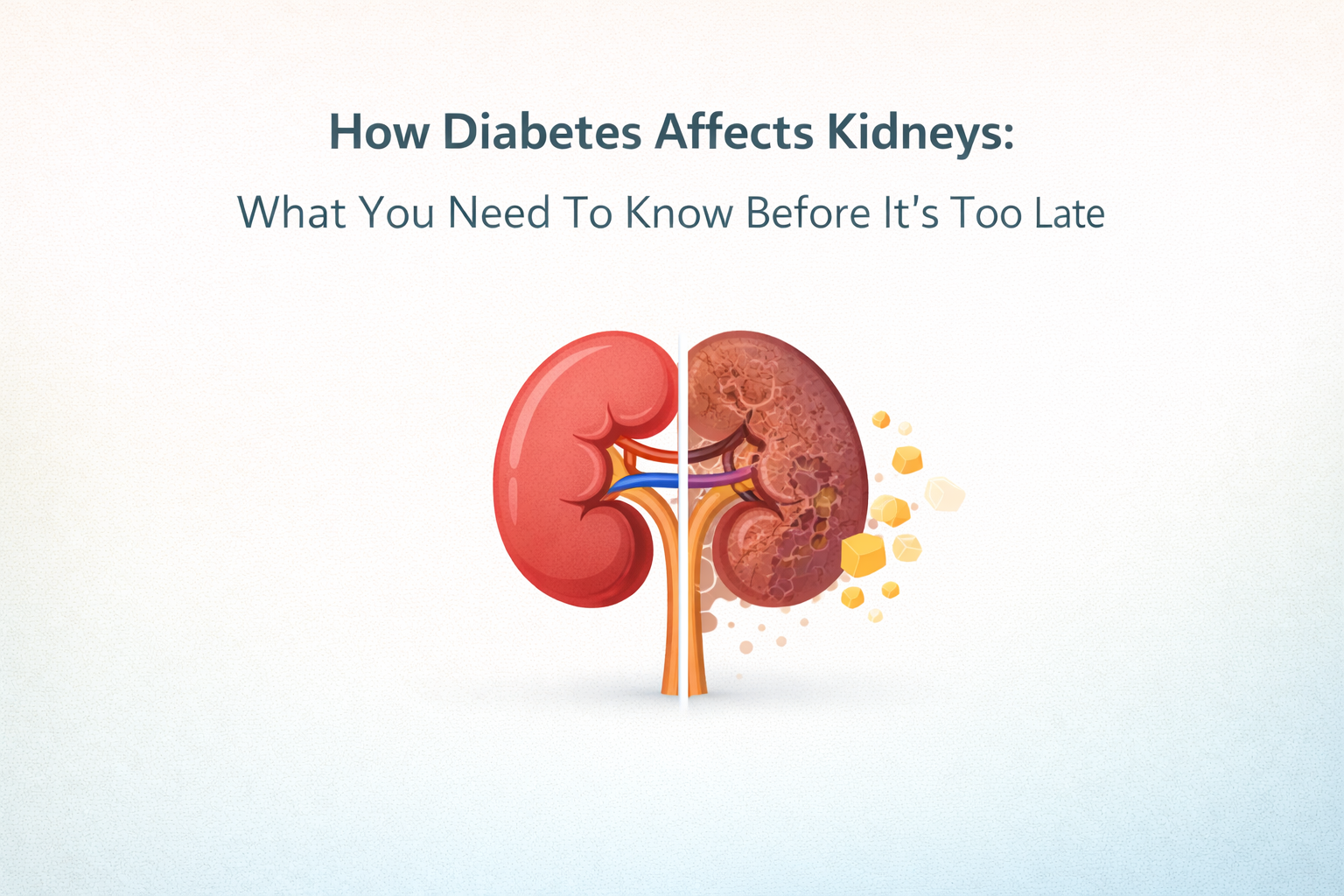
India tops the world in diabetes cases, and that’s not just a statistic; it’s a real, everyday challenge for millions. What’s even more concerning is how diabetes affects kidneys because many people are developing kidney issues without realizing it.
Currently, more than 101 million Indians have diabetes, and nearly 40% of them end up with diabetic kidney disease. Even worse, most never get checked for kidney issues, so the damage just keeps piling up behind the scenes.
If you’ve just learned you have diabetes, it’s easy to feel overwhelmed. All those medical terms, “creatinine,” “eGFR,” and “chronic kidney disease,” can sound confusing and maybe a little intimidating.
But here’s the bottom line: diabetes is the leading cause of chronic kidney disease and kidney failure in India. It’s behind about 62% of all cases, and people usually don’t realize something’s wrong until it’s really serious.
But you don’t have to accept this fate. Stick around, and you’ll find out exactly how diabetes affects your kidneys, spot the warning signs early, and learn what you can do, starting today, to look after your kidney health.
How Diabetes Affects Kidneys & What Is Diabetic Nephropathy?
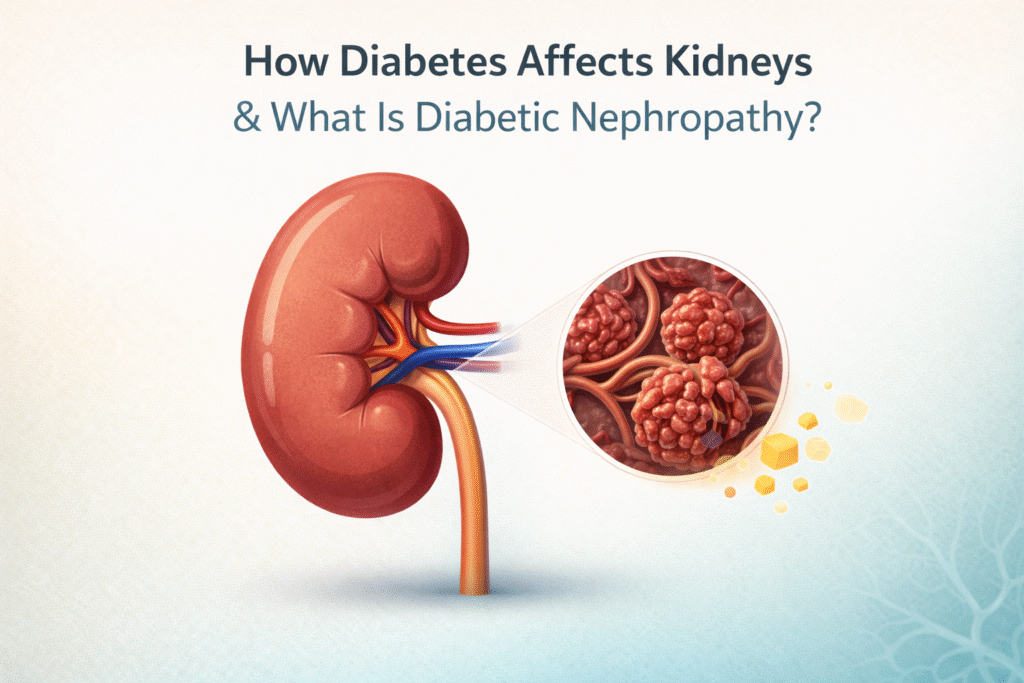
Diabetic nephropathy happens when your kidneys are damaged because your blood sugar has been high for too long. When there’s too much sugar in your blood, it slowly wears down the tiny filters in your kidneys, and soon, they can’t clean waste up as they should. Doctors call it diabetic kidney disease (DKD) to describe this condition.
The greatest challenge is that this damage happens slowly and silently. You can feel fine and 100 percent normal while your kidneys are getting damaged.
That’s why so many people only find out there’s a problem when the condition has developed into a serious stage. In fact, about four out of ten people with diabetes develop some form of diabetic kidney disease at some point, and most don’t even know it until later.
Both Type 1 and Type 2 diabetes can lead to diabetic nephropathy, but in India, Type 2 is way more common, and most cases start there.
Here’s something that confuses many people: “diabetic nephropathy” means kidney damage caused by diabetes, impacting the kidneys directly.
If someone with diabetes has chronic kidney disease (CKD), though, it’s not always because of diabetes. It might be from high blood pressure, an infection, or something else entirely. Knowing what’s going on matters because it shapes how doctors treat it.
How Exactly Does Diabetes Damage Your Kidneys?
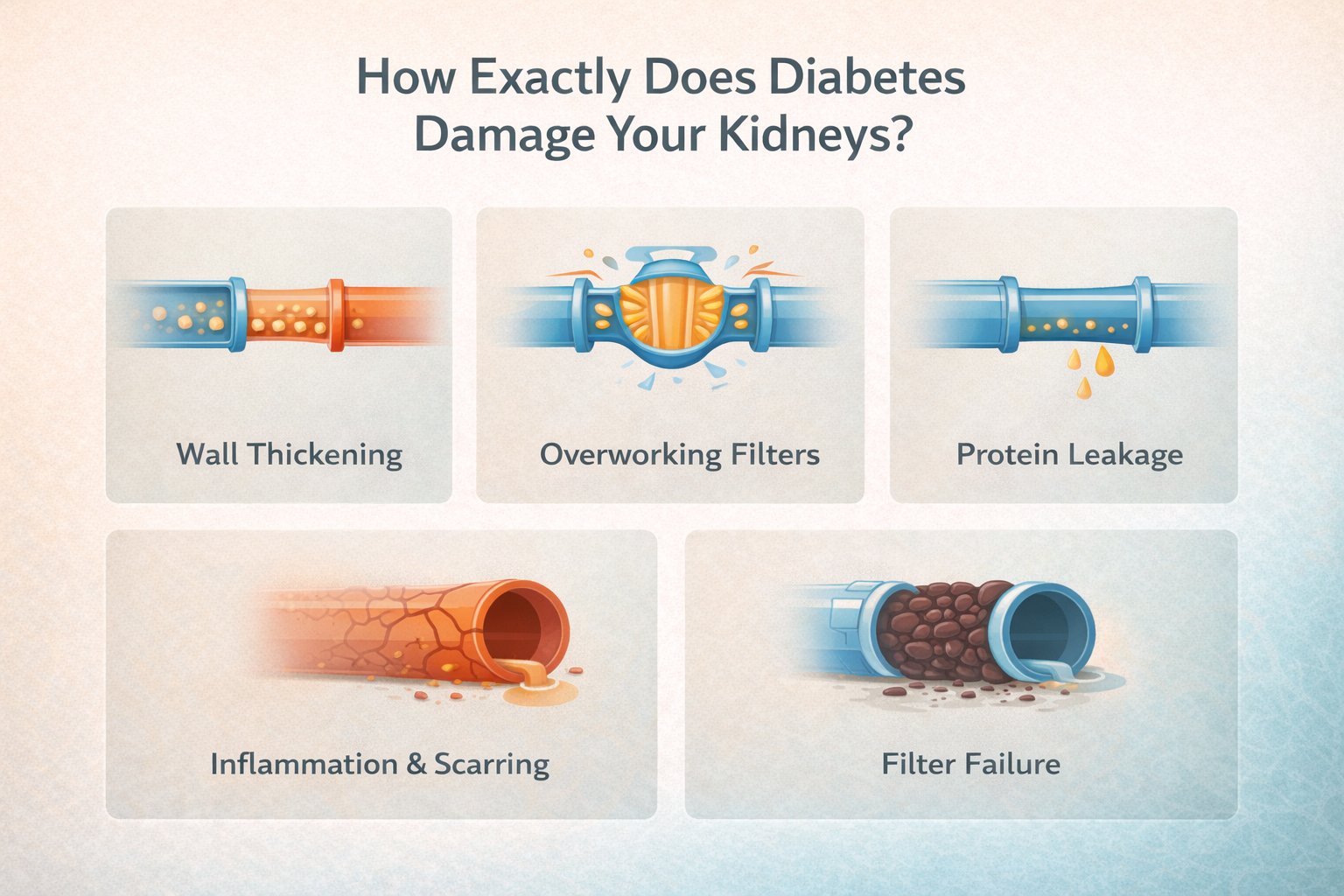
Your kidneys have a highly efficient filtration system that cleans your blood and gets rid of waste through urine. They have millions of tiny filters, almost like a bunch of miniature sieves. When blood sugar stays high because diabetes isn’t under control, these little filters start to break down.
Here’s how high blood sugar damages the kidney filters:
- First, the filter walls get thicker and harder. Constant high sugar makes them stiff, so they don’t do their job as well.
- At this stage, the kidneys attempt to compensate. They work even harder, but that extra effort strains and swells the filters.
- As that stress builds, the filters lose their tight seal. Protein, which should stay in your blood, starts slipping into your urine. Detecting protein in urine is one of the earliest red flags.
- The damage doesn’t stop there. The constant irritation kicks off inflammation, then scarring. Scar tissue takes over healthy areas, and here’s the thing: it doesn’t filter anything.
- Little by little, more filters fail. The kidneys fall further behind, and waste begins piling up in your body.
High blood pressure, which is super common in people with diabetes in India, only makes things worse. It puts extra strain on kidneys that are already struggling, so the damage speeds up.
This process happens slowly and without any symptoms over the years. That’s why most people don’t notice a thing until the damage is far along.
The 5 Stages of Diabetic Nephropathy: From Silent Damage to Kidney Failure
Knowing the different stages helps you learn about where you are and what steps to take next. Here you need to remember that if you catch stages 1 to 3 early, you can reverse or at least manage the problem. Acting quickly helps in saving your kidneys from serious damage.
| Stage | What’s Happening | Key Test Result | Symptoms | Action |
| Stage 1 — Hyperfiltration | Kidneys overwork to compensate. GFR is actually higher than normal (>90) | UACR normal or borderline, GFR elevated | None — completely silent | Strict blood sugar and BP control. Annual testing. |
| Stage 2 — Silent Damage | Early structural damage to kidney filters. Still no protein leak | Microalbuminuria: UACR 30–300 mg/g | None | Tighten HbA1c target. Start ACE inhibitor/ARB. Lifestyle changes. |
| Stage 3 — Overt Nephropathy | Significant protein spills into urine. GFR begins to fall | Macroalbuminuria: UACR >300 mg/g, GFR 30–60 | Possible swelling, fatigue, foamy urine | Nephrology referral. Strict multifactor management. CKD diet begins. |
| Stage 4 — Severe CKD | Significant loss of kidney function. Waste builds up in blood | GFR 15–29, high creatinine | Swelling, fatigue, loss of appetite, nausea | Prepare for kidney replacement therapy. Explore all options. |
| Stage 5 — Kidney Failure (ESRD) | Kidneys have failed. Cannot filter blood adequately | GFR below 15 | Severe symptoms — nausea, confusion, reduced urine | Dialysis or kidney transplant required. |
Warning Signs & Symptoms of Diabetic Nephropathy You Should Not Ignore
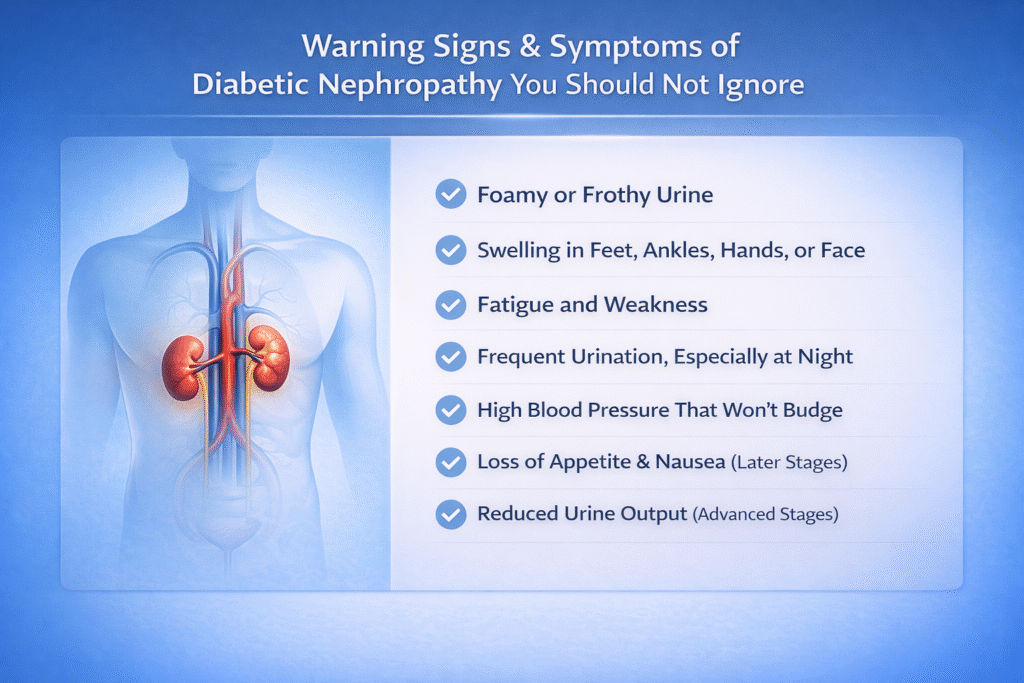
Kidney damage from diabetes happens silently. It remains undetected in the early stage in many cases, without any visible signs. But as the problem gets worse, your body starts dropping hints. You just have to pay attention.
- Foamy or Frothy Urine: If your pee suddenly looks bubbly, it’s probably nothing. That happens when protein leaks into your urine, which is a sign your kidneys aren’t filtering properly.
- Swelling in Feet, Ankles, Hands, or Face: When your kidneys don’t clear out extra fluid, you’ll notice puffiness in your body, sometimes in your feet or face.
- Fatigue and Weakness: If you feel wiped out all the time, that might mean your kidneys aren’t getting rid of waste, so toxic stuff builds up and drains your energy.
- Frequent Urination, Especially at Night: Suddenly, you’re up to pee more often, especially in the middle of the night. That’s your body trying to tell you something’s off.
- High Blood Pressure That Won’t Budge: Damaged kidneys make blood pressure harder to control, even if you’re taking your meds regularly.
- Loss of Appetite and Nausea (Later Stages): When toxins build up, food loses its appeal. Sometimes you feel nauseous for no clear reason.
- Reduced Urine Output (Advanced Stages): If the problem keeps getting worse, your kidneys start making less urine, a big warning that their function is seriously dropping off.
Here’s what people often miss: in the beginning, there are zero symptoms. You can feel perfectly normal while your kidneys are quietly taking a hit.
That’s why it’s so important to get your kidneys checked if you have diabetes. Waiting until you feel something is a bad plan. Catching kidney problems early gives you a real shot at slowing, stopping, or even reversing the damage.
Who is at Highest Risk? Risk Factors Beyond Just Blood Sugar
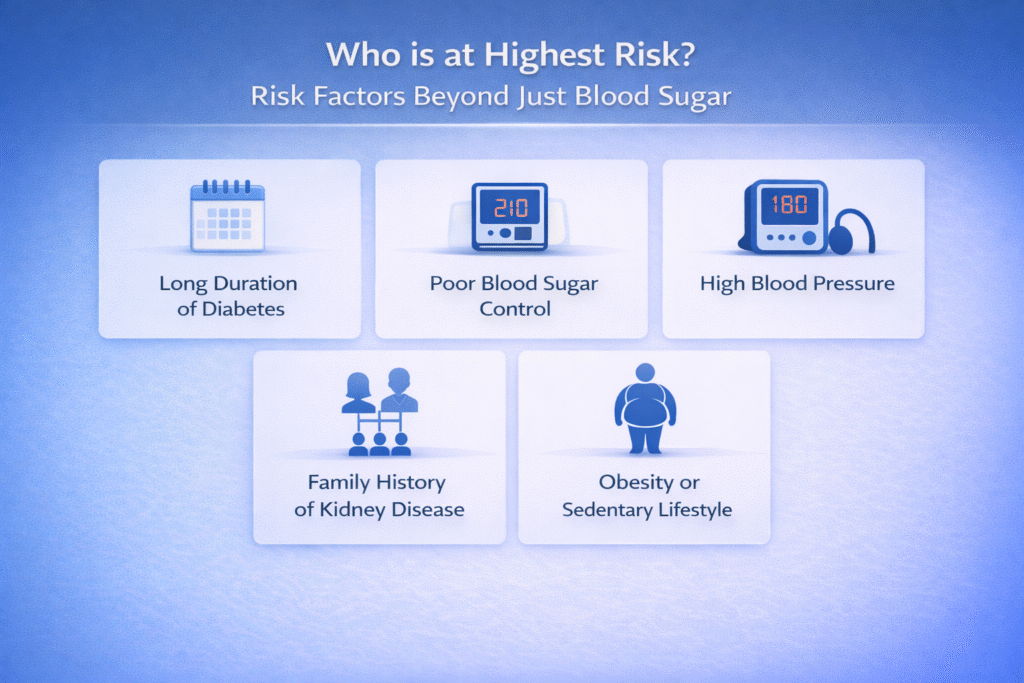
Who’s most at risk for diabetic kidney disease? Sure, high blood sugar is a big deal, but it’s not the only thing you have to worry about. There are other risk factors, and honestly, a lot of them are things you can actually change.
Let’s look at what you can control:
- If your HbA1c numbers are constantly high, your kidneys take the hit faster.
- High blood pressure? That’s a big one. It speeds up kidney decline.
- Smoking doesn’t help, either. It disrupts blood flow and adds more damage.
- Carrying extra weight means your kidneys and your blood sugar control have to work harder.
- Diet matters, too. Consuming too much salt or protein can push already stressed kidneys over the edge.
- Also, painkillers like NSAIDs, which people in India take. Using them too often harms your kidney function.
The following factors are beyond your control:
- If you’ve had diabetes for a long time (especially past the 10-year mark), risk goes up.
- A family history of kidney disease sets you up to be more vulnerable.
- If you’re South Asian, especially Indian, there’s a higher genetic risk for diabetic kidney complications.
One pattern stands out: when high blood pressure, obesity, and high cholesterol happen together, kidney damage is much faster. This combo is really common among Indian diabetics and can progress quietly unless you tackle it early.
There’s more to it than just keeping your blood sugar in check. If you stay on top of these other risk factors, you can slow down or even prevent kidney damage.
How is Diabetic Nephropathy Diagnosed? Tests Your Doctor Should Order
Regular testing is the only way to know if your kidneys are having trouble. If you’re living with diabetes, here’s what your doctor should be checking:
Urine Albumin-Creatinine Ratio (UACR)
eGFR Blood Test
Blood Pressure Monitoring
One mistake people make is relying only on serum creatinine. It seems convenient, but creatinine doesn’t budge until there’s already significant damage. The UACR test is way better for catching trouble early.
Can Diabetic Nephropathy Be Reversed or Stopped? What the Evidence Says

It’s a question people ask all the time, and the answer depends a lot on how far the disease has progressed.
If you catch it early, what doctors call “microalbuminuria” or stages 1–2, you’ve got a chance. With strict control of your blood sugar and blood pressure, you can stop kidney damage right there. In Stage 3, the situation becomes complicated, but proper treatment and lifestyle changes still slow the disease down a lot.
Once you’re in the advanced stages, the main focus shifts. Now it’s all about hanging on to the kidney function you have left and holding off on dialysis as long as possible.
Research backs this up. Keeping your HbA1c between 6.5 and 7% cuts your risk of kidney complications by as much as 21% to 60%.
Therefore, your primary goal should be to detect it early and take swift action, which can significantly alter the course of the disease.
Want to learn more? Check out our guide: Diabetes management in CKD and the combination therapy approach.
Treatment Options for Diabetic Nephropathy: From Lifestyle to Modern Medicine
Treating diabetic nephropathy takes a combination of lifestyle changes, the right medications, and staying on top of your health. Your goal should be to keep your kidneys working as well as possible and stop things from getting worse.
Blood Sugar Control
Blood Pressure Control
Diet and Lifestyle Changes
Holistic and Complementary Approaches
Takeaway
Living with diabetes, whether you’re just finding out or have been dealing with it for years, means your kidneys need attention. Checking your kidney health is one of the smartest things you can do. Quick tests like urine albumin and eGFR can catch problems way before you feel anything wrong.
At MedicoExperts, we’re here for you regardless of where you are in your journey. We combine modern treatments with homeopathy and Ayurvedic care to help keep your kidneys safe, and our goal is always to cut your risk of needing dialysis.
Ready to get started?
Frequently Asked Questions (FAQs):
Q1. How long does it take for diabetes to damage the kidneys?
A. Kidney problems from diabetes usually start quietly, about 5 to 10 years after diagnosis. For many people, especially with type 2 diabetes, it’s closer to 10 to 20 years before serious kidney disease shows up.
But this timeline is not fixed. By diligently managing your blood sugar and blood pressure, you can extend the timeline and postpone the damage. If you don’t manage diabetes well, kidney trouble can come faster.
Q2. What are the first signs of kidney damage from diabetes?
A. There aren’t any clear symptoms at first. The earliest sign is little bits of protein, called albumin, leaking into your urine. That’s microalbuminuria. Only a lab test can diagnose this.
Later on, you might notice:
1. Foamy or frothy urine
2. Swelling in your feet or ankles
3. High blood pressure
4. Feeling tired
Because you don’t feel anything in the beginning, it’s smart to get your kidneys checked regularly, even if you feel fine.
Q3. What is the best treatment for diabetic nephropathy?
A. There isn’t a single magic fix. You need a mix of things:
1. Tight blood sugar control (aim for HbA1c below 7%)
2. Keep your blood pressure down, usually with ACE inhibitors or ARBs
3. Eat a kidney-friendly diet, less salt, moderate protein
4. Skip using too many painkillers
5. Consider newer meds like SGLT2 inhibitors, which protect the kidneys
In India, some folks look to integrative approaches alongside regular medical care. If you’re thinking about that, always talk it over with your doctor first.
Q4. Is foamy urine always a sign of diabetic kidney disease?
A. Foamy urine can mean you’re leaking protein, and that might point to diabetic kidney disease. But not every bit of foam is a red flag; sometimes it’s just because of a strong urine stream or mild dehydration. If it keeps happening, get your urine checked, especially if you have diabetes.
Q5. Which test is better for detecting early diabetic nephropathy: creatinine or urine albumin?
A. Urine albumin testing, specifically the albumin-to-creatinine ratio (UACR), does a much better job of spotting early kidney issues from diabetes.
Creatinine levels rise only when you’ve already lost a big chunk of kidney function, about half. Microalbuminuria shows up long before that, and it’s easy to catch with a urine test.
So anyone with diabetes needs a urine albumin test at least once a year. Don’t rely just on creatinine.
Q6. What is a kidney function test and why is it important?
A. A kidney function test is a group of simple blood and urine tests that check how well your kidneys are working. These tests help measure how effectively your kidneys filter waste, balance fluids, and maintain essential minerals in the body.
The most common components include:
1. Serum Creatinine (Blood Test): Shows how well your kidneys are filtering waste
2. eGFR (Estimated Glomerular Filtration Rate): Estimates overall kidney function
3. Urine Albumin Test (UACR): Detects early protein leakage in urine
Kidney function tests are especially important for people with diabetes, high blood pressure, or a family history of kidney disease, as kidney damage often develops silently without symptoms in the early stages.
Regular testing helps detect problems early when they are most treatable and can prevent or delay the progression to serious kidney disease.
References
Relevant Articles For You
Diabetes Management in CKD
Only depending on medicines to maintain blood sugar will not be an effective strategy to manage blood…..Read More
Cell-Based Therapy for Diabetes
Cell based therapy has emerged as a safe, and viable alternative to reverse diabetes and its progression. By utilizing…..Read More
Recommendations To Understand Different Treatments
Combination Therapy for CKD
Chronic Kidney Disease affects every patient differently. Our personalized care model blends advanced…..Read More
Stem Cell Therapy for CKD
Knowing the stages of CKD is essential for you because when you know them and see the symptoms, you will…..Read More
Homeopathy for CKD
Homeopathy views CKD as a chronic constitutional disorder that affects not just the kidneys but the entire…..Read More
Ayurveda for CKD
Ayurveda, the ancient Indian system of medicine, offers time-tested therapies for chronic kidney disease. Using a…..Read More
Medically Reviewed by MedicoExperts Editorial & Clinical Review Board on 2 April 2026
Medical Disclaimer: This content is for informational purposes only and is not intended as medical advice, diagnosis, or treatment. Always seek the advice of your physician or other qualified healthcare provider regarding any medical condition or dietary needs.