
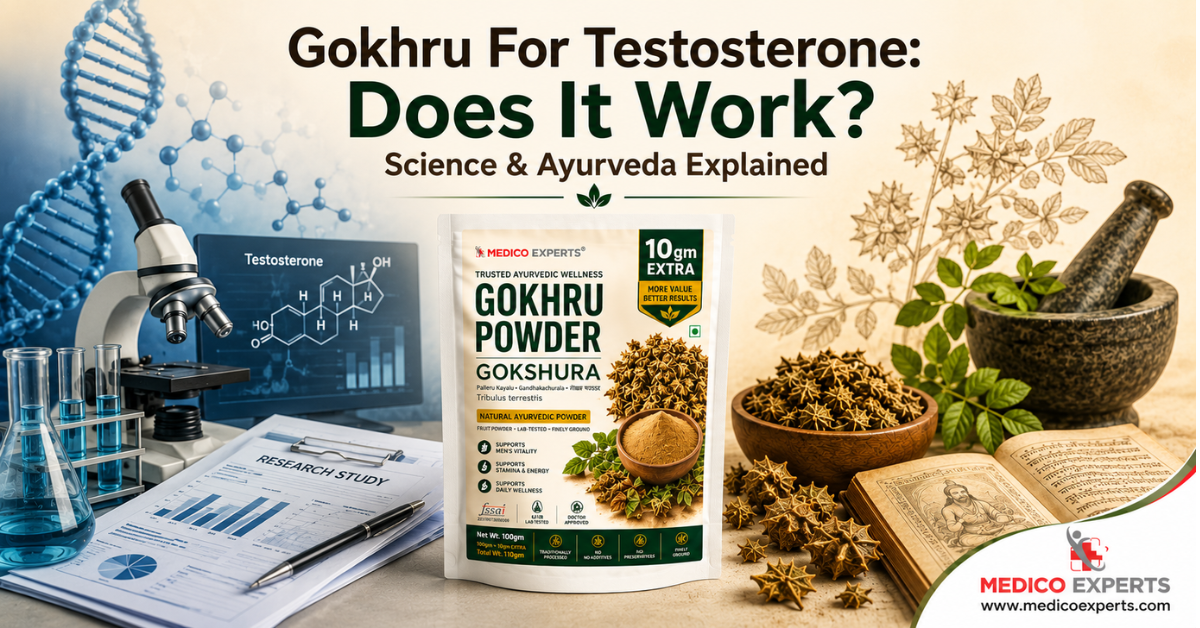
You begin to research “Gokhru for testosterone” when you first observe some key signs, like a dip in energy levels, taking a little longer to recover post-workout, decreased physical stamina, and even a loss of libido.
It’s natural to ask if this is due to the aging process or if it might be indicative that your testosterone production is less than what it used to be.
Jump online, and you’ll discover hundreds of claims suggesting that Gokhru can increase testosterone naturally.
So what’s the truth behind the buzz? Let’s learn about it. Gokhru has been used in Ayurveda for centuries to promote male vigor and vitality, but what do recent scientific findings say about its effects on testosterone and male health?
What exactly is gokhru, how it might impact testosterone and men’s health, what the evidence actually says, who should be using it, how it should be consumed, and safety measures you should be aware of before taking this.
Gokhru for Men: What the Science Actually Says About It & Testosterone
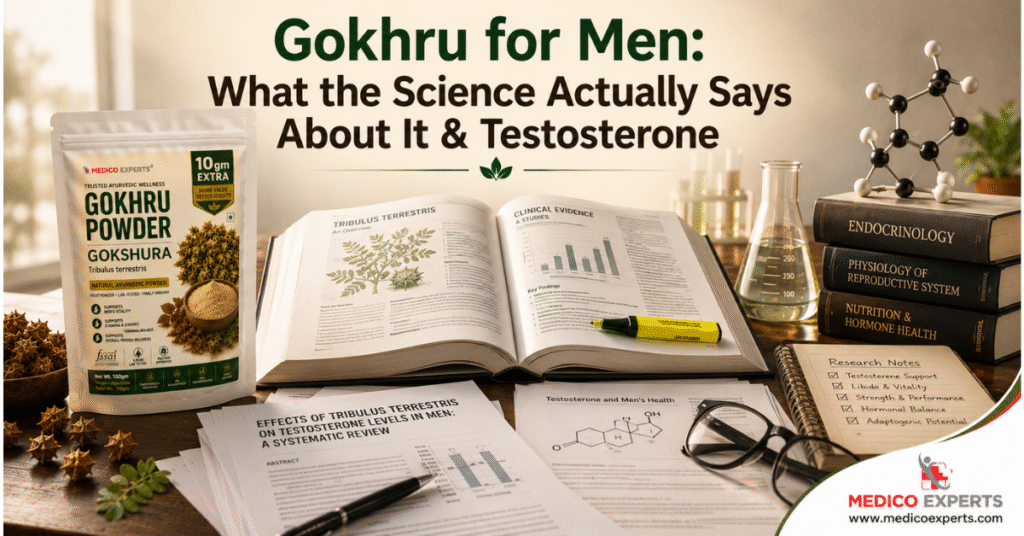
The Gokhru (Tribulus terrestris) herb has traditionally been used in Ayurvedic medicine as a Rasayana (rejuvenative) herb known for promoting vigor, reproductive health, and bladder health. Because of that, this herb is marketed for its potential ability to enhance testosterone production. But scientific research has not confirmed this claim in humans.
Some research has noted that Gokhru might enhance sexual arousal, erection quality, physical activity, or aspects of male fertility. These effects are not believed to be linked to an increase in testosterone.
Though research does not confirm Gokhru as a proven and reliable testosterone booster, if it is being used specifically for raising your levels of testosterone, you may consider it a key ingredient in promoting men’s well-being, vitality, and reproductive functions as part of your lifestyle and take this herb with the advice of your expert.
Selecting and consuming a standardized product under the guidance of a health expert will also help you get the most out of it.
How Gokhru Works: The Testosterone Mechanism Explained
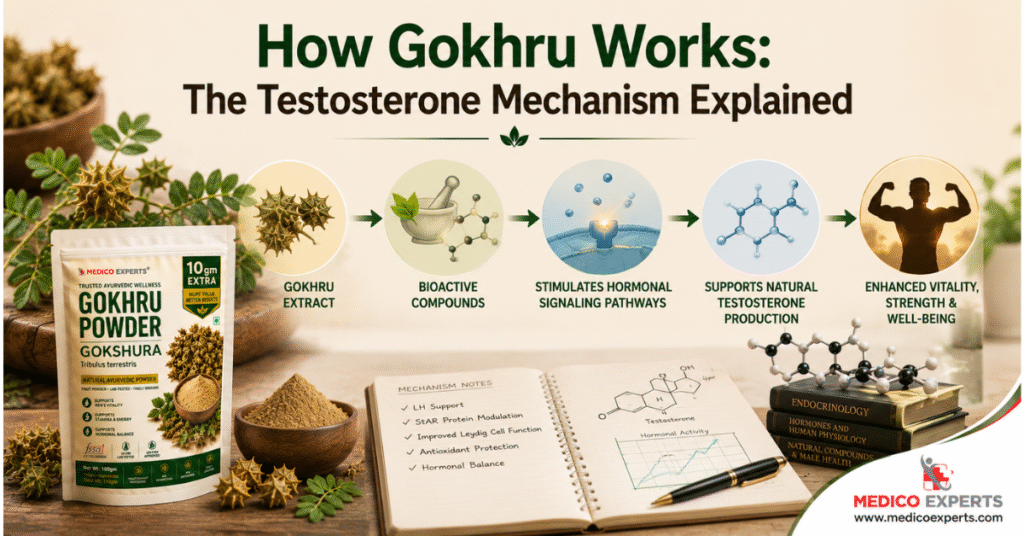
Gokhru (Tribulus terrestris) is an herbal supplement with several phytochemicals (natural compounds produced by plants to protect themselves from environmental threats) that have been researched regarding their ability to affect the male reproductive system.
It is currently unknown exactly how this compound works, but the effect on male vitality occurs through several biological pathways, not just testosterone production in all people taking it.
1. Protodioscin: The Most Well-Examined Bioactive Component
Among the well-studied bioactive components in Gokhru is protodioscin, which is a steroidal saponin. Much interest has been shown in this component due to early animal and laboratory investigations that showed that it might affect sex hormones and sexual behaviour.
The concentration of protodioscin differs greatly depending on the species of Tribulus, the place of growth, and commercial preparations. Perhaps the reason for this difference is that many clinical trials provided conflicting results.
It is believed that protodioscin contributes to some health benefits associated with Gokhru, but there is no evidence showing increased levels of testosterone in humans.
2. Luteinizing Hormone (LH): An Indirect Mechanism Possible
Testosterone secretion in males mainly involves the hypothalamic-pituitary-gonadal (HPG) axis.
This is how it happens:
Brain (Hypothalamus) → Secretion of GnRH → Stimulation of the pituitary gland → Secretion of luteinizing hormone (LH) → LH stimulates the Leydig cells in the testes → Testosterone is secreted.
Some studies in animals and laboratories have indicated that certain compounds in Gokhru may affect this mechanism. However, in human trials, there has usually not been a consistent increase in LH or testosterone levels in healthy men.
3. Why It Could Be of More Benefit to Men with Lower Testosterone Levels Than Normal Men
Another point worth mentioning is that men who have lower testosterone levels or sexual problems or who suffer from infertility seem to benefit more from the use of Gokhru than young, healthy men with normal levels of hormones.
Several reasons could be provided in this regard:
- People with reproductive or hormonal disorders might have a higher scope of improvement in their physiology.
- The impact of Gokhru on these patients’ bodies could be supportive rather than stimulative, optimizing the reproductive system functions but not increasing the level of testosterone above the normal one.
- Libido, erectile function, or fertility could be improved by Gokhru without an increase in testosterone levels.
4. The Nitric Oxide (NO) Pathway
One of the more convincing theories regarding the mechanism of action of Gokhru is that it involves nitric oxide (NO) and not testosterone itself.
Nitric oxide is a messenger that acts to dilate blood vessels and enhance blood flow. Proper nitric oxide signaling is required for an erection to occur.
There is evidence from experimental studies that Gokhru may facilitate nitric oxide synthesis or function. This might be responsible for the improvement in erectile dysfunction noted in clinical trials, even without a change in testosterone levels.
5. DHEA and Neurosteroid Activity: An Emerging Field of Research
Scientists are further investigating if Gokhru can modulate the activity of DHEA and some other neurosteroids involved in mood, stress responses, energy, and sexual functions.
The fact is that DHEA acts as a precursor, which the body can metabolize to produce testosterone and estrogen if necessary. Despite some early studies indicating Gokhru’s ability to modulate these processes, there is not enough reliable data on this effect in humans.
Who Actually Benefits From Gokhru for Testosterone?
It is important to note that not everybody will have the same results from taking Gokhru. The effects of this plant may be affected by age, health status, hormonal balance, and the reason why it is being taken. Here is what the available data suggests for different categories of men.
Age-Related Testosterone Levels Drop in Men Over 35-40 Years Old
Men With Clinically Low Testosterone (Hypogonadism)
Men with Normal Testosterone
Gym Members and Bodybuilders
Gokhru for Testosterone in Ayurveda: The 3,000-Year View
Testosterone as a term was not around in the times when Ayurveda referred to the welfare of men as vitality, fertility, and longevity through the lens of balancing the body and all its functions.
Gokhru (Tribulus terrestris), known in Ayurveda as Gokshura, has been used throughout history for its rejuvenating properties and improved urinary, reproductive, and overall wellness.
As Ayurveda tries to establish harmony within the body’s systems rather than focusing on just one hormone, here is what Gokshura stands for in Ayurveda.
Vajikarana: Sexual Vitality Science
Rasayana: Supporting Healthy Aging
Shukra Dhatu: Nurturing Reproductive Tissues
Balya: Building Physical Strength
Gokhru in Classical Ayurvedic Textbooks
How to Use Gokhru for Testosterone Support: Dosage & Timing
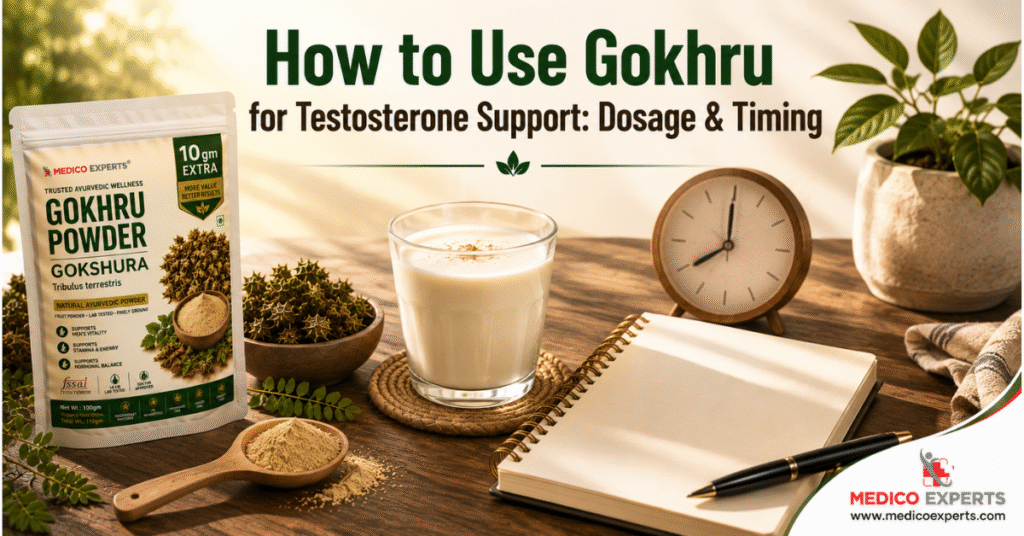
To get all of the testosterone-related or other health benefits that Gokhru can bring, the method of consumption is just as important as the plant itself.
Right now, there is no scientific evidence that suggests Gokhru can boost testosterone. But Ayurveda and some clinical research indicate that consuming the plant regularly, using the right dosage, and living a healthy life are key factors for obtaining the health benefits of Gokhru.
Dosage Recommendations
The exact dosage of Gokhru cannot be specified for boosting testosterone because different researchers use different amounts and preparations of Gokhru.
But you can have
- Gokhru powder (Churna): 3-6 grams per day in one or two doses.
- Standardized extract: follow the dosage indicated on the supplement label or prescribed by your healthcare practitioner.
Do not exceed the indicated dosage without consulting your healthcare practitioner.
When Should You Take It?
According to Ayurveda, Gokshura should be taken in the following way:
- After meals for better digestion.
- With either warm water or milk, depending on the person’s constitution and needed effects.
- At a fixed time every day.
What Else Boosts Testosterone Naturally (Beyond Gokhru)
Although Gokhru can help boost some areas of male reproductive health, it must be seen as one part of a broader way of life. Scientific studies prove that daily activities have a much more significant effect on the maintenance of proper testosterone levels compared to the intake of any herbs.
Resistance Exercise and Sleep
Stress & Cortisol
Fat Body & Diet
Role of Gokhru
Gokhru Safety & When to See a Doctor

The herb Gokhru (Tribulus terrestris) has been in use in the field of Ayurveda for many years and is deemed safe for most people who are in good health when used in the recommended dose. However, this herbal supplement does not suit everyone and should never be used as a substitute for medical treatment in case of any diagnosed medical condition.
Is Gokhru Safe?
The majority of clinical studies conducted have reported few to no side effects with short-term usage. In case there are any, they are likely to be the following:
- Mild stomach discomfort
- Nausea
- Diarrhea
- Bloating
However, severe side effects are rare, although there has been little research into its long-term effects. It is crucial to buy a good-quality and tested supplement.
Gokhru Is Not for Everyone
Consult your physician before using Gokhru in case of the following:
- Pregnancy or lactation.
- Ages less than 18 years.
- Kidney or liver disorders.
- Endocrine system disorders.
- Surgery is on the cards.
- Diabetes medication, blood pressure pills, and anticoagulants (blood thinners).
If you have any underlying health issues, do not use Gokhru as a replacement for prescribed medicine without prior approval from your doctor.
When Should You See Your Physician?
In case you are using Gokhru due to the presence of signs that may indicate low testosterone levels, it is necessary to undergo a complete examination performed by a specialist beforehand.
See your doctor if you are suffering from:
- Low libido or erectile dysfunction.
- Fatigue in spite of sufficient sleep.
- Weakness and loss of muscle mass or muscle strength.
- Infertility problems.
- Depression or lack of motivation.
- Signs that continue despite making changes in the way of living.
These symptoms may occur not only because of testosterone deficiency but also due to a number of other reasons, such as thyroid diseases, diabetes, obesity, sleep apnea, depression, some medications, and other diseases.
The Bottom Line: Should You Take Gokhru for Testosterone?
If you are looking to consume Gokhru for testosterone, you must set realistic expectations as well. According to current clinical data, Gokhru does not increase testosterone levels in healthy men.
But according to some studies, it helps maintain male sexual health, sex drive, erection ability, fertility, and virility, especially in men who have been affected by aging or have reproductive issues.
From the Ayurveda point of view, Gokshura is considered a Rasayana, which is a rejuvenative plant that works by bringing balance within your body. In case you opt to take Gokhru, it is crucial to note that you will need to be consistent with the intake of this herb, as most traditional herbs need at least 4–6 weeks.
Are you on the lookout for an excellent-quality Ayurvedic remedy? Then MedicoExperts Gokhru Powder, which comprises 100% pure Gokhru powder and is FSSAI certified, may be a good choice to enhance men’s virility and general well-being in a healthy lifestyle.
Frequently Asked Questions (FAQs):
Q1. Does Gokhru raise free testosterone levels?
A. There is currently no evidence to suggest that Gokhru is effective in raising free and total testosterone in healthy males. But there have been several positive results in relation to increasing testosterone in men suffering from fertility problems or erectile dysfunction.
Q2. Can Gokhru help improve one’s libido even without increasing testosterone?
A. Yes, it can do that. There have been several studies that show that gokhru may improve libido, erection ability, and sexual satisfaction of some men regardless of their testosterone levels. These benefits are thought to be due to increased blood flow and/or nitric oxide levels, among others.
Q3. Is Gokhru safe to use daily?
A. Gokhru can be taken safely on a daily basis by most healthy adults. However, some people may suffer from mild gastrointestinal side effects such as nausea and stomach upset. If you suffer from an underlying health condition, talk to your doctor about using Gokhru.
Q4. Is the intake of gokhru allowed when ashwagandha is being consumed?
A. Yes, gokhru and ashwagandha can be used together in Ayurveda since they complement each other in traditional use. The primary function of Ashwagandha is that of an adaptogen that helps combat stress, while Gokhru is used to increase vitality and improve the condition of the reproductive system. Despite this, there is little scientific evidence of this.
Q5. Which one is better – Gokhru churna or Gokhru extract?
A. There is no evidence regarding which form is better. Gokhru churna is popular in Ayurvedic medicine, whereas the Gokhru extract is widely used in clinical trials because it allows measuring the content of the active substance. The key things here are the high quality of the product and proper dosing.
Q6. Is Gokhru useful for building muscles?
A. There is little to no proof that Gokhru builds up muscles by boosting testosterone levels. The effect on physical activity is bound to be small and must supplement, not substitute, training, proper nutrition, and rest.
Q7. What signs tell me that I have low levels of testosterone?
A. Some common signs may be a lack of sexual drive, problems with achieving an erection, fatigue, muscle wasting, weight gain, depression, and inability to concentrate. But there are many reasons for those signs, and the only way to prove that your testosterone level is too low is by medical examination.
Q8. Does Gokhru help increase male fertility?
A. Certain scientific studies indicate that Gokhru can help enhance some semen-related parameters like sperm count or motility in some infertile males. However, different studies vary in their level of quality, and Gokhru cannot be used to substitute for a visit to a fertility specialist.
Q9. What should I keep in mind while purchasing the Gokhru supplement?
A. You must select an item that has only Gokhru (Tribulus Terrestris) extract, which provides a clear list of its contents, has been produced by a credible company, and complies with quality standards like FSSAI and GMP certification. Do not buy items that claim to provide high levels of testosterone production and muscle gain.
Q10. What are Tribulus Terrestris Saponins, and why are they important?
A. Saponins are naturally occurring plant compounds found in Tribulus terrestris (Gokhru) and are believed to be responsible for many of its biological effects. The most studied saponin is protodioscin, which has been investigated for its potential role in supporting male reproductive health, libido, and physical performance. However, the concentration of saponins can vary depending on the plant species, growing conditions, and manufacturing process. While laboratory and animal studies have shown promising results, current human research does not confirm that Tribulus terrestris saponins consistently increase testosterone levels. When choosing a Gokhru supplement, look for a high-quality product from a reputable manufacturer rather than relying solely on a high saponin percentage.
Q11. Gokhru vs. Ashwagandha for Testosterone: Which Is Better?
A. Current research suggests that ashwagandha has stronger clinical evidence for supporting healthy testosterone levels, particularly in men experiencing stress, infertility, or low baseline testosterone. Gokhru, on the other hand, is traditionally used in Ayurveda to support male vitality, libido, and reproductive health, but it has not consistently been shown to increase testosterone in healthy men. Rather than viewing them as competitors, they may serve complementary roles as part of a balanced lifestyle and Ayurvedic wellness routine.
Q12. What are the common low testosterone symptoms in men?
A. Common low testosterone symptoms in men include reduced libido, erectile dysfunction, fatigue, loss of muscle mass, increased body fat, low mood, and difficulty concentrating. However, these symptoms can have many causes besides low testosterone, such as stress, poor sleep, obesity, or certain medical conditions. If you experience persistent symptoms, consult a healthcare professional, as a blood test is the only reliable way to diagnose low testosterone.
References
Relevant Articles For You
Gokhru Benefits For Men
Gokhru is a small, low-growing annual herb from the Zygophyllaceae family. It grows wild across India, particularly in…..Read More
Ayurvedic Testosterone Booster
Ayurveda, the ancient system of holistic healing from India, offers a wealth of natural remedies to support…..Read More
Best Treatments for Early Discharge in India
In Ayurveda, there are several herbs and formulations that are believed to help with early discharge, also…..Read More
Recommendations To Understand Different Treatments
Gokhru Powder For Men’s Vitality
Gokhru (Gokshura) is the fruit of Tribulus terrestris – a single Ayurvedic herb used for centuries as the foundational daily support for men’s testosterone, stamina, sexual vitality, and…..Read More
Medically Reviewed by MedicoExperts Editorial & Clinical Review Board on 14 July 2026
Medical Disclaimer: This content is for informational purposes only and is not intended as medical advice, diagnosis, or treatment. Always seek the advice of your physician or other qualified healthcare provider regarding any medical condition or dietary needs.